Wicca, a modern pagan religion, embraces an enigmatic and spiritual approach to the afterlife. Rooted deeply in the belief that the soul is immortal, practitioners of Wicca perceive death not as an end but as a pivotal point of transition. Central to this belief is that existence spans beyond the physical, encompassing a non-material realm where souls journey post mortem. This holistic view holds material reality and the spiritual realm in a reverent balance, celebrating physical life as a cherished gift from the gods while anticipating the soul’s adventure that lies beyond.
Within the Wiccan cosmos, visions of the afterlife are as diverse as the leaves upon an ancient oak. Some followers speak of the Summerland, a place of rest and rejuvenation for souls between incarnations. This pastoral haven, lush with tranquil beauty, is where spirits reflect upon their earthly experiences. Not bound by uniform dogma, other Wiccans may believe in reincarnation, with each new life seen as an opportunity for learning and spiritual evolution. Encircled by the mysteries of nature, death in Wicca is a transformation, a sacred passage filled with potential for personal growth and deeper community connections.
Key Takeaways
- Wicca views death as a transformation, leading to another realm or new life.
- The concept of the Summerland embodies a place of rest for the Wiccan soul.
- Beliefs in reincarnation reflect Wicca’s emphasis on continual learning and spiritual evolution.
Wiccan Belief System

In the shimmering web of modern Pagan religions, Wicca holds a distinct place with its own set of beliefs and practices that draw from both ancient and contemporary sources.
Core Principles
Central to Wiccan spirituality is the Rule of Three, which suggests that what one puts out into the world—be it good or ill—will return to that individual threefold. This guides Wiccans in their actions and their relationship with the world. Moreover, one will find at the heart of Wicca the Wiccan Rede, a statement that advises, “An it harm none, do what ye will.” This ethos encourages personal freedom but with a strict caveat against causing harm to others or oneself.
Reverence for Nature
At its core, Wicca is steeped in a deep reverence for nature, recognizing it as a source of the sacred. Wiccans celebrate this divine energy through rituals tied to the Wheel of the Year, a cyclical calendar that honors the changing seasons and their corresponding Sabbats, which punctuate the harvests and solstices. Nature serves not only as a church but a wise teacher, an eternal library of truths whispered with every leaf rustle and ocean wave.
Moral Framework
Wiccans weave their moral compass using threads of personal responsibility and the laws of nature. They believe that moral choices are not inscribed on stone tablets but rather arise from the careful consideration of the consequences of one’s actions. While there is no dogmatic set of commandments, many follow the Wiccan Rede’s counsel for ethical living. Wiccans may also work within a coven, a group that provides fellowship and guidance for both their craft and spiritual path. The coven can be a crucible for ethical growth, where collective wisdom enlightens the individual’s journey.
Many who seek the Wiccan path find solace in its recognition of the divine as immanent within the natural world, offering a spiritual experience that is as cyclical and dynamic as the seasons themselves.
Concepts of the Soul

In the Wiccan worldview, the soul is a luminous essence, bridging the material and the metaphysical, asserting its immortality through the cycle of life, death, and rebirth.
Soul’s Journey
Within Wicca, the journey of the soul is not linear but a spiraling path, intertwining with the natural world and the cosmos. Upon the mortal vessel’s cessation, the soul embarks on a transition, believed to be a continuation rather than a conclusion. This journey is perceived as a seamless movement between planes, where the soul travels to realms unseen but deeply interconnected with the living.
Reincarnation Beliefs
Rebirth is fundamental in Wiccan thought, closely associated with the Wheel of Life, which continuously turns through the seasons and cycles of existence. Wiccans often embrace the belief that souls reincarnate, emerging anew in different forms to fulfill varied experiences and lessons. It’s a dance of spiritual evolution where each life is a step toward greater understanding and enlightenment, shaping the soul’s eternal narrative within life after death.
Afterlife Visions in Wicca
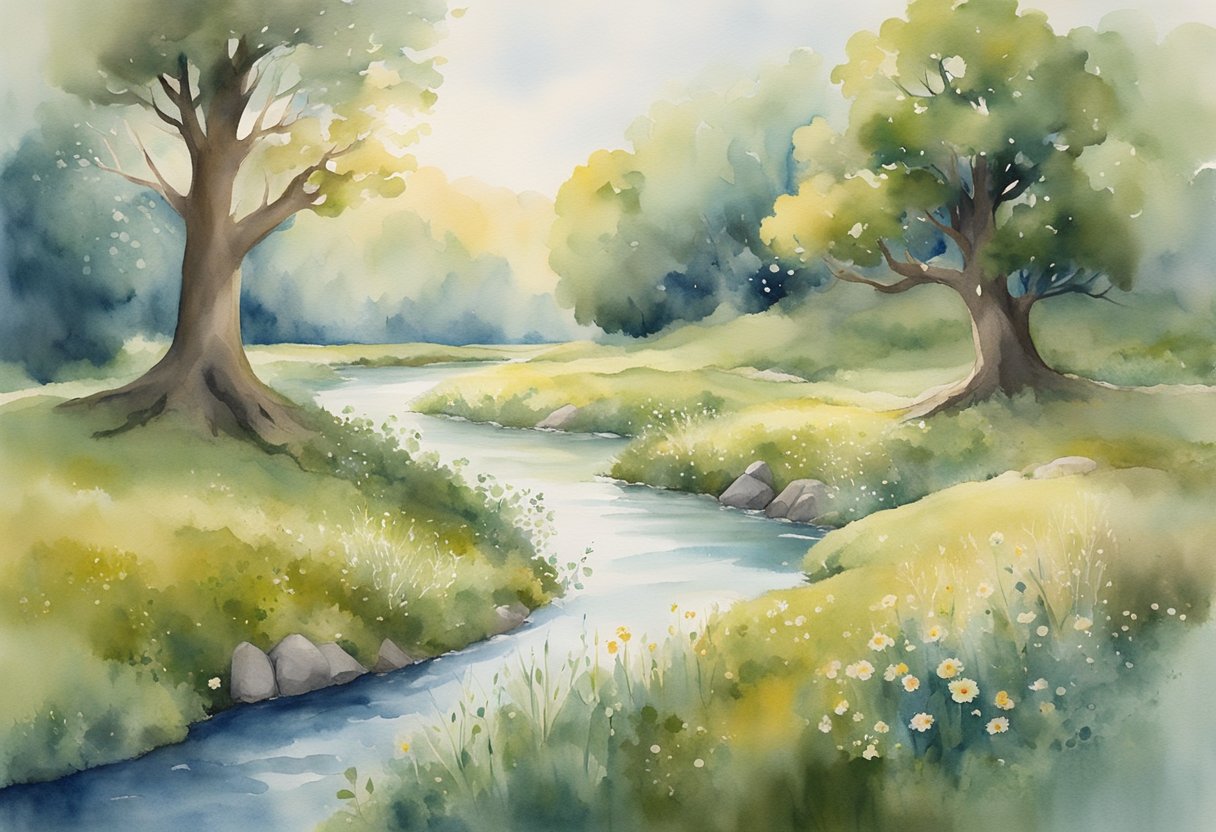
Wiccan beliefs paint a rich mosaic of the afterlife, weaving concepts of rest and renewal along with the journey of the soul. Each vision of the hereafter offers a unique perspective on the cycle of life, death, and rebirth, embedding deep within it the core tenets of this earth-centered faith.
The Summerland
A gentle realm bathed in eternal spring, The Summerland stands as the quintessential haven where spirits of the dead find solace. It’s a place radiant with peace, a lush sanctuary where souls repose and reflect upon their earthly experiences. In this realm, it is believed that souls recuperate before plunging into a new incarnation, carrying with them the wisdom of lives past.
Other Realms
While The Summerland is a prevalent concept, Wicca honors a diversity of afterlife vistas much like the variegated petals of an ever-blooming flower. Some hold that spirits might travel to realms akin to the mythic Valhalla or Hel, each fulfilling a role in the grand cycle of existence. Unlike the Christian view of heaven as a final resting place, Wiccan afterlife posits that the soul’s journey is far from over, it’s simply resting, like the moon concealing itself only to wax once more.
Death and Transition
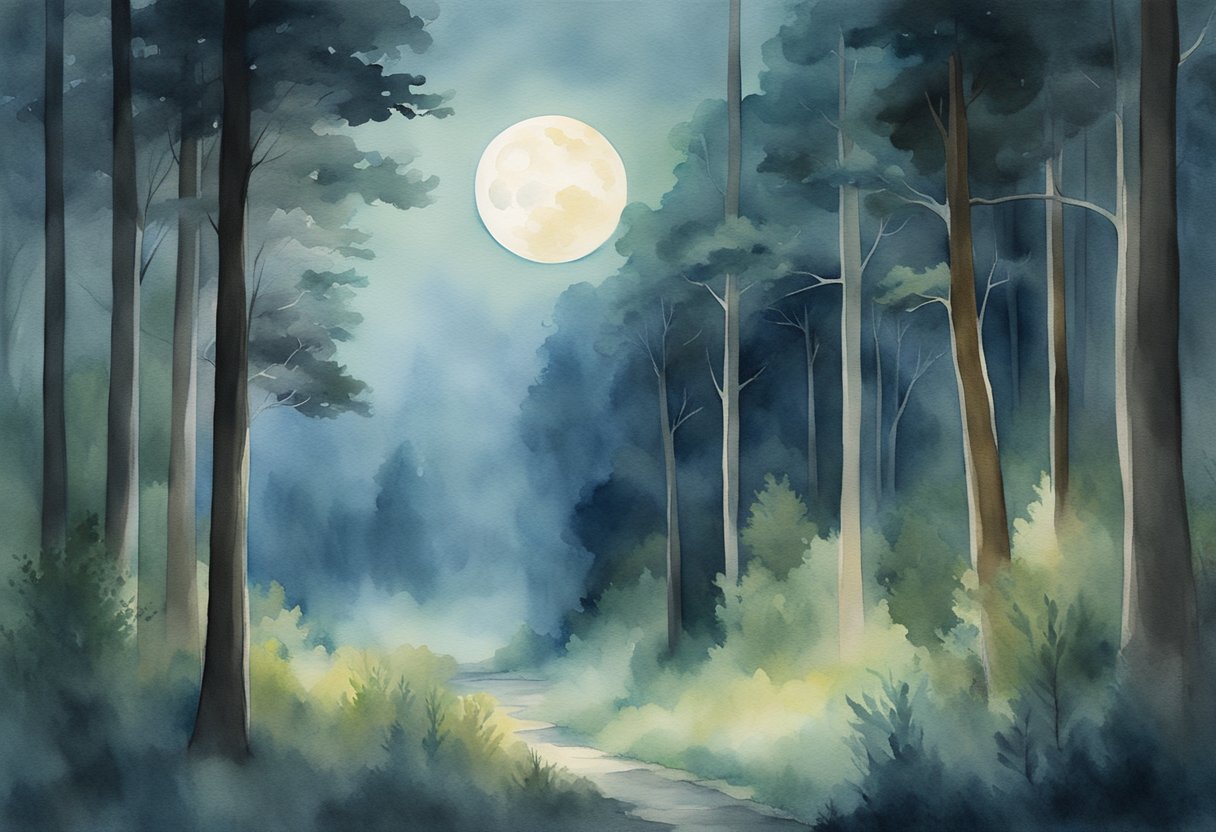
In the Wiccan tradition, death serves not as a finale but as a transition from the physical to the spiritual realm. This profound metamorphosis is observed with a rich blend of rites and celebrations, reflecting a philosophy that venerates the cyclical nature of life and death.
Passage Rites
When an individual crosses the threshold of death, Wiccans honor the moment with passage rites. These sacred ceremonies are designed to facilitate the soul’s journey from the material world to the afterlife. Often an altar is adorned with symbolic items such as candles, photographs, and personal keepsakes, serving as focal points to guide the deceased’s spirit. Mourning is intertwined with the belief in rebirth, and the funeral is typically imbued with this profound sense of continuity rather than finality.
Mourning and Celebration
For Wiccans, mourning the loss of a loved one is accompanied by the celebration of their life and passage. The funeral serves as a pivotal point where sorrow meets joyous remembrance. Loved ones gather not only to grieve but to commemorate the departed’s transition, reflecting on the belief that the veil separating life and death is a mere curtain fluttering in the wind of eternity. A Wiccan funeral may be personalized to honor the unique spirit of the individual, with death rituals facilitating a powerful connection between the living and those who have crossed over into the realm beyond.
Wiccan Funeral Customs

Wiccan funeral customs celebrate the transition of the soul with rituals that honor the Earth and recognize the cyclical nature of life and death.
Funeral Practices
Within the Wiccan community, when the veil between the worlds is at its thinnest, they gather to bid farewell to the departed. The funeral is typically led by a priest or priestess who casts a sacred circle as a space for worship and protection. This circle serves as a threshold between the realms, allowing the community to connect with the spiritual world. Mourners may bring personal tokens or natural offerings to place on an altar, carefully arranged to represent the elements and honor the deceased’s journey. Wiccan funerals focus on the individual’s wishes, ensuring the rituals reflect their beliefs and traditions.
Key elements of Wiccan Funeral Practices:
- Sacred circle casting by a priest or priestess
- An altar adorned with tokens and offerings
- Personalized rituals aligned with the deceased’s beliefs
Eco-Friendly Burials
The belief in life’s interconnectivity with nature often leads Wiccans to choose eco-friendly burials. These green farewells gently return the body to the Earth with minimal environmental impact. Instead of conventional coffins, the deceased may be enfolded in simple biodegradable shrouds, allowing the body to become one with the soil swiftly. Traditional burial plots are eschewed in favor of natural settings, where the essence of the departed can nourish new life as they decompose gracefully under the watchful eyes of the elements.
Aspects of Eco-Friendly Burials:
- Biodegradable burial materials (shrouds, caskets)
- Natural settings for the body’s return to the Earth
- Consideration for the environmental impact and fostering new life
Historical and Cultural Influences
Celtic Roots
The ancient Celts, with their profound connection to nature and the seasons, significantly color Wiccan views on the afterlife. Samhain, a festival now embraced by Wiccans, marks the end of the harvest season and the onset of winter. Under the Celts’ watchful eye, this period was seen as a thinning veil between worlds, where communication with ancestors was at its peak. Wiccans, walking in their footsteps, view Samhain not only as a time for remembrance but as a celebration of the cycle of life, death, and rebirth.
Irish mythology and its otherworldly realms, like Tír na nÓg, also reflect in Wiccan philosophy. They perceive the afterlife as an eternal place of youth and beauty, which can be reached through spiritual enlightenment and living harmoniously with the Earth.
Comparative Religion Views
Wicca’s perspective on the afterlife draws from a mosaic of religious beliefs, discerning shared threads among different traditions. They hold a respectful acknowledgement of Hades from Greek mythology, envisioning the afterlife as a multifaceted realm not unlike the Greek underworld—a place of many conditions and possibilities.
In Egyptian tradition, Anubis, the guide of souls, oversees a journey not dissimilar to the Wiccan belief that death is a transition. Much like the guidance Anubis provides, Wiccans believe in helping spirits find their path in the afterlife. This aligns with the role of psychopomps found in various cultures, akin to Odin from Norse mythology, who shepherds souls to their appropriate final resting place.
Wicca also shares elements with Catholicism, but rather than a dichotomy of heaven and hell, Wiccans often perceive the afterlife as a space for learning and spiritual progression, where souls may eventually reincarnate. This cycle speaks to the importance of honoring one’s ancestors and learning from past lives, a value deeply embedded in the tradition.
Through these rich and varied historical influences, Wiccans construct their intricate understanding of the world beyond, a mystical tapestry that echoes across time and tradition.
The Role of Rituals and Practices

Death Rituals
When the shadow of death wraps its arms around a soul, Wiccans invoke the Craft to cast a light on the path ahead. Funeral rites are not mere ceremonies but a sacred canvas where the essence of the departed is honored. Mourners may gather in a circle, often outdoors to be in nature’s embrace, and use symbols like the Wheel of the Year to represent the eternal cycle of birth, death, and rebirth. The presence of a candle may signify the light of the spirit, guiding the deceased to the Summerland, where souls are believed to rest and rejuvenate.
- Elements used:
- Candle: A beacon for the soul’s journey
- Wheel of the Year: Symbolizing the natural cycle of life
In these moments, Wiccans perform the Craft to weave a ritual tapestry that enables growth from grief. Mourning is transformed into a celebration of the life that was and a ritualistic embrace of the cycle of life, acknowledging that death is but a door to another form of existence.
Celebratory Customs
With hearts beating to the drum of the Earth, Wiccans rejoice in the richness of life through celebratory customs. They mark the turning of the seasons with festivals from the Wheel of the Year, each punctuating the continuous growth and change inherent in nature and in the self. Such celebrations are vivid reminders that every ending ushers in a new beginning.
- Festivals include:
- Samhain: A time to remember the ancestors
- Yule: Welcoming the rebirth of light
During these festivals, flames dance atop candles as Wiccans cast circles with reverent whispers, paying homage to the wheel’s turn, from the slumber of winter to the vitality of spring. Each custom reinforces the Wiccan understanding of life’s perpetual renewal, excising the dread commonly associated with death and replacing it with a mystical appreciation for the eternal round of the cosmos.
Personal Growth and Wicca
In the journey of life, Wiccans perceive aging and dying not as an end but as important facets of a spiritual continuum. This perspective underscores the belief in the soul’s immortality and the auspicious role of death in personal and communal evolution.
Aging and Dying
For Wiccans, the progression of life towards aging is a sacred evolution. They envision one’s spirit gaining wisdom as the body matures, mirroring the cycles of nature that show both growth and decay. Aging, within this context, provides a reflection of the continuing cycle of life, death, and rebirth. Scott Cunningham, a revered voice in Wiccan literature, speaks to the honor of witnessing the wheel of the year turn in one’s own life, emphasizing the natural transitions that mark the spirals of one’s earthly journey.
Lessons from the Afterlife
Wiccans draw lessons from the realm beyond, where the spirit is believed to linger and learn before reincarnating. The concept of Summerland, an interim place of rest and rejuvenation for the soul, illustrates the Wiccan afterlife as a place of profound growth. Starhawk, a well-respected figure in the community, captures this with the imagery of the soul weaving through experiences, each thread a lesson from lives lived. From this vantage, death serves as a counsel, imparting wisdom that one carries forth into the next cycle of life.
The Wiccan Community
In Wiccan traditions, the community serves as both a sanctuary for spiritual growth and a bastion of support during life’s pivotal moments. This section explores the communal aspect that reinforces the Wiccan way, particularly how support structures manifest and the roles of individuals and groups within the faith.
Support in Times of Loss
In the delicate dance of life and death, Wiccans find solace within their community. When the shadow of loss envelops a witch or a practitioner, their fellows act as a lighthouse, guiding them back to the shore through the murky waters of grief. The collective embraces a role much like a warm hearth in a cold night, fostering an environment where respect for the journey of the soul is paramount and where rites and rituals serve to honor the departed.
Covens and Solitary Practitioners
A coven stands as an enclave of like-minded witches, bound by shared rites and an oath taken under the watchful eyes of a High Priest or Priestess. Each coven operates like a constellation, glittering threads of individual stars weaving a community with shared purpose and intimate connection. Initiation into a coven is more than mere formality; it’s a passage through a spiritual gateway where the witch intertwines their fate with the collective’s tapestry.
Conversely, some witches walk the path of solitude, bathed in the silver glow of the moon, forming a singular connection with the divine. A solitary practitioner, like a lone wolf under a velvet sky, practices in private, often developing unique interpretations and personalized rituals. They, too, contribute to the broader Wiccan community by sharing their individual insights and experiences.
Both covens and solitary witches excel in their own realms, with the former fostering collective growth and the latter nurturing personal autonomy. They exist in a balance, each a vital organ within the greater body of the Wiccan faith.
Evolution of Wiccan Afterlife Views
The Wiccan afterlife, often referred to as the Summerland, is a concept that has grown and morphed through time, shaped by texts, leaders, and the ever-evolving practice of the craft itself. With each transformation, its portrayal has become a mirror reflecting the diverse perspectives within the tradition.
Influential Texts and Leaders
In the annals of Wiccan tradition, the afterlife is frequently envisioned as a resting place for spirits, a stopover in the soul’s cyclical journey. Starhawk, an influential figure in modern Wicca, presents the afterlife as an ethereal realm where souls prepare for their next earthly incarnation. Through her works, readers can unearth a spectrum of interpretative gems, broadening the spectrum of Wiccan cosmology.
Scott Cunningham is another cornerstone in the Wiccan edifice whose writings continue to illuminate the path for practitioners. Cunningham’s vision of the Summerland deftly bridges the ancient and the contemporary, translating the essence of the afterlife in a manner that resonates with the individual yet deeply rooted in collective lore.
Modern Interpretations
As Wicca has woven its way into the fabric of the 21st century, the portrayal of its afterlife has acquired a more personal hue. Wiccans today may encounter a variety of accounts, with some perceiving the Summerland as a literal destination, while others see it as symbolic of an inner transformation that occurs post-mortem.
Contemporary witchcraft narratives often emphasize the organic and transformative aspects of the afterlife. Wiccans typically perceive death not as the extinguishing of life, but as a transition into another state of being where the spirit is nurtured and renewed.
The evolution of the Wiccan afterlife demonstrates the fluidity with which it adapts to modern sensibilities, without losing its essence. It remains a multifaceted belief that continues to inspire and offer solace to those following the Wiccan way.
Ethical Considerations and the Afterlife

Concepts of Sin and Karma
Wiccans do not typically subscribe to the traditional concept of sin as seen in some monotheistic religions. They perceive the ethical framework of the universe more in terms of karma—a law of moral causation that posits every action, positive or negative, influences the future of one’s soul. Like ripples on a moonlit pond, every deed casts forth waves that echo back, touching the soul’s progression through lifetimes.
The Impact of Actions
Personal responsibility is paramount in Wicca; it is believed that the divine spark exists within all, and thus one crafts their destiny through actions. Wiccans hold that what one does in this life will pave the path in the afterlife, and potentially in future incarnations. As a gardener carefully tends their plot, ensuring that no weeds stifle the growth of the plants, a Wiccan is mindful that their actions must foster positivity to secure a harmonious state in the afterlife and any subsequent rebirths. Fear is not the motivator here; rather, it is the pursuit of ethical integrity and harmony with the natural world.
