
Embarking on a spiritual journey often leads seekers to the verdant groves and moonlit clearings of Wicca—a faith that intertwines the threads of modern paganism with ancient witchcraft. Wicca appeals to those who wish to harmonize with the rhythms of nature and the elemental forces. It’s a path full of mystique and personal empowerment, offering a deeply spiritual experience that encourages a direct connection with the divine. The flexibility of Wiccan practice allows practitioners, or Wiccans, to weave their own rituals and beliefs into the broader fabric of Wiccan tradition, making it a highly personal religious experience.
As a belief system that celebrates the duality of the divine, Wicca honors both the God and the Goddess, embracing a theology replete with rituals, holidays, and moral guidance. It is a path that champions ethical living and personal responsibility. For those pondering whether this path aligns with their spirit, considering the compatibility of Wiccan beliefs and practices with one’s own values and lifestyle is a vital step. Wicca insists on self-discovery and understanding one’s own morals, requiring initiates to reflect deeply on their principles and the natural world’s influence on them.
Key Takeaways
- Wicca is a nature-centric spiritual path that offers flexibility in personal practices and beliefs.
- It centers on a dualistic theology and places a strong emphasis on ethics and personal responsibility.
- Pursuing Wicca requires a commitment to harmonious living and continual self-reflection.
Understanding Wicca

Origins and Beliefs
Wicca emerged in the mid-20th century, inspired by pre-Christian traditions and the teachings of figures like Gerald Gardner. Believers embrace the idea that the universe is alive with energies, interweaving the fabric of life into a sacred dance of existence. They see themselves as part of this cosmic web, living in harmony with the natural world.
Wiccan Deities
Central to Wiccan spirituality are the Goddess and the God, representing the feminine and masculine energies of the universe. These deities encompass many aspects, viewed as both separate entities and as two halves of a whole. Wiccans may form deeply personal connections with these deities, honoring them in various forms across different traditions.
Nature and Reverence
Nature takes a seat of honor at the Wiccan altar, serving as both a temple and a text from which to learn. The cycles of the sun, moon, and seasons mirror the cycles within and are celebrated with festivals known as Sabbats and Esbats. Such reverence fosters a profound respect for the environment and the creatures dwelling within it.
Wiccan Rede and Ethics
The Wiccan Rede, encapsulated by the phrase “An’ it harm none, do what ye will,” sets the foundation for Wiccan ethics. It urges Wiccans to consider the impact of their actions on others and the world. This simple yet profound statement emphasizes personal responsibility and ethical conduct in the pursuit of one’s will.
The Role of Magic
Magic in Wicca is viewed as a natural, not supernatural, practice. It involves directing natural energies to bring about change and is often performed through rituals and spells. This manipulation of energy is done with the intent of achieving balance and promoting positive outcomes, aligning individual will with the greater movement of universal energy.
Practices and Rituals

Rituals and Ceremonies
Wiccans perform a variety of rituals that vary in complexity and structure based on individual or coven preferences. These sacred practices often involve casting a circle to create a protective and consecrated space for worship and magic. Elements like herbs, candles, and symbols are used to enhance the ritual’s purpose and to honor deities or elemental forces.
Sabbats and Esbats
The Wheel of the Year turns with eight Sabbats — solemn festivals honoring the changing seasons and the Earth’s fertility. Sabbats celebrate significant transitions such as solstices and equinoxes. Esbats, on the other hand, are associated with the lunar cycle, with full and new moons being the focal points for reflection, thanksgiving, and sometimes spell-casting.
- Sabbats: Samhain, Yule, Imbolc, Ostara, Beltane, Litha, Lughnasadh, Mabon
- Esbats: Monthly full moon ceremonies
Rites of Passage
He, she, they, who tread the Wiccan way may mark life’s milestones with rites of passage. This includes Wiccaning (similar to a christening), coming of age, handfasting (wedding), and parting rituals (funeral services). These rites are personalized to reflect the beliefs and wishes of the individual or coven.
Spell-Casting and Magick
Spell-casting in Wicca is an intentional process, often involving the use of rituals and tools like wands, athames, and pentacles. Practitioners channel their will and energy, often calling upon natural elements and deities, to manifest change. Magick in Wicca is seen as a natural, harmonizing force, not a supernatural one, and is used for healing, protection, and personal growth.
Divination and Tools
Divination practices are cherished in Wicca for gaining insight and guidance. Tools such as tarot cards, runes, and crystals are commonly employed to explore potential paths and the impact of one’s actions. The interpretation of these divine aids is deeply personal and requires an attuned intuition, which many Wiccans develop with time and experience.
Wiccan Traditions
Diverse Paths in Wicca
In the garden of spirituality, Wicca blossoms with variety. One may encounter several traditions, each with distinct roots and rituals. Gardnerian and Alexandrian Wicca honor the lineage passed down by their founders, requiring formal initiation and adherence to a degree system. On the other hand, Dianic Wicca embraces a feminist perspective, focusing on the divine feminine. Eclectic Wicca offers a freedom akin to a spiritual mosaic, allowing practitioners to piece together elements that resonate with their personal spirituality.
Covens vs Solitary Practice
Covens provide a family of sorts, a circle of practitioners who gather to perform rituals and share knowledge. They often involve a structured setting with a degree of hierarchy and collective worship. In contrast, solitary practice empowers an individual to embrace the Craft on their terms, fostering a deeply personal connection with the divine. Covens and solitary witches alike cherish their autonomy, yet share an understanding of the importance of community and self-discovery within Wicca.
Festivals and the Wheel of the Year
Throughout the Wheel of the Year, Wiccans celebrate seasonal festivals, marking the Earth’s journey around the sun. Embarking on a spiritual sojourn, they honor eight Sabbats, including Samhain, Yule, Imbolc, Ostara, Beltane, Litha, Lughnasadh, and Mabon. These festivities connect them to the cyclical nature of life, death, and rebirth, with each turn of the wheel deepening their bond with the rhythms of the natural world.
Initiation and Advancement
Wiccans often view initiation as a doorway to deeper mysteries. Formal initiation rites mark one’s entry into a coven or a particular tradition, symbolizing spiritual rebirth. Advancement through varying degrees evidences personal evolution and mastery. However, not all traditions require formal initiation; some provide a more fluid approach, allowing adherents to chart their own spiritual course, and acknowledging that each journey is as unique as the individual who walks it.
Living as a Wiccan

Incorporating Wicca in Daily Life
For those who tread the Wiccan path, every dawn greets them with the fresh possibilities of incorporating spiritual practice into routine activities. They may start by cleansing their abode with sage or meditating to forge a deeper connection with the natural world. Rituals and spell-casting align with personal intentions, sowing the seeds of magic in the fertile soil of mundane life.
Community and Responsibility
In Wicca, community and responsibility are intertwined vines supporting one another. Wiccans often gather to celebrate seasonal sabbats and esbats, fostering a sense of kinship. They uphold the ethic, “An it harm none, do what ye will,” ensuring their actions are weighed with responsibility to others and the Earth, a living testament to their respect for all life forms.
Teaching and Mentorship
As saplings seek sunlight, so do new practitioners look to seasoned Wiccans for guidance. Teachers play a crucial role, passing down cherished knowledge like treasured heirlooms through mentorship. This perpetuates the lineage of wisdom and tradition, ensuring that ancient practices bloom anew in the hearts of the apprentices.
Personal Growth and the Spiritual Path
Wicca offers nurturing soil for personal growth, where individuals may blossom into their fullest expression. On this spiritual path, reflection and self-discovery are encouraged, as adherents explore shadow and light within themselves. Embracing the dualities of nature, they unfurl like ferns in the forest of the divine—ever reaching, ever growing.
Theology and Cosmology

Wiccan Gods and the Divine
Wicca honors a duality in divinity, venerating both a Goddess and a God. These deities are often seen as a divine couple—the Goddess as a multifaceted Mother, Maiden, and Crone, and the God celebrated as the Horned God of the wild Earth. Their dance is one of harmony, reflecting the cycles of nature and life itself. Worship can be specific, with deities like Hecate, goddess of witchcraft, and Pan, representing the primal force, being focal figures.
Beliefs about the Afterlife
Wiccans hold diverse beliefs about the afterlife, with many envisioning a realm of peace and reflection known as Summerland. It’s a place where souls rest, bask in the warmth of divine love, and reflect upon their earthbound experiences. This belief inspires Wiccans to live harmoniously, knowing that actions here influence the quality of their journey after death.
Reincarnation and Karma
The spirit of reciprocity weaves through Wicca with the concepts of reincarnation and karma guiding ethical actions. They believe that the soul is reborn, carrying memories of past lives within the subconscious. Actions in each life ripple forward, as karma holds individuals accountable, fostering a natural balance that promotes spiritual growth and enlightenment.
Wicca and Other Beliefs

Comparison with Other Religions
Wicca often finds itself flowing in the same mystical river as other nature-based belief systems, yet it harbors its own distinct current. Unlike the more historically established Christianity, which is monotheistic, Wicca is polycultural and embraces the existence of multiple deities. A Wiccan’s altar may feature a God and a Goddess, embodying a duality of divine forces, which contrasts with the singular omnipotence revered in Christian faith. In practice, Wiccans may celebrate Sabbats and Esbats, rooted in the cycles of the earth and moon, diverging from Christian holidays that commemorate biblical events.
| Christianity | Wicca |
|---|---|
| Monotheistic | Polytheistic |
| Biblical Scripture | Personal Experience and Tradition |
| Church Services | Covens or Solitary Worship |
| Biblical Holidays | Sabbats and Esbats based on natural cycles |
Wicca and Paganism
Beneath the sprawling branches of Paganism, one finds Wicca resting like a jewel-studded nest, distinct yet part of a more extensive grove. Paganism is an umbrella term that often includes Wicca, but also encompasses a spectrum of reconstructionist paths that aim to revive ancient pagan religions. While Wicca can be viewed as a subset of Paganism, it differentiates itself with its integration of Witchcraft and Western occultism.
- Paganism: A broad category encompassing many non-Abrahamic, earth-based religions.
- Wicca: A specific religious practice within Paganism known for its ritual use of magic.
Interfaith Relations
The branches of Wicca extend in gracious respect towards the garden of world religions, fostering interfaith dialogue and understanding. Wiccans frequently engage with other faiths, cultivating awareness and appreciation for the diverse perspectives on the sacred. Acknowledging that all paths to the divine are to be honored, Wiccans uphold that one’s own journey should be both harm-free and nurturing to the soul’s evolution. They often participate in interfaith activities, highlighting the shared values across belief systems, such as the reverence for life and the pursuit of spiritual enlightenment.
- Engagement in interfaith discussions.
- Emphasizing common values while respecting differences.
Ethics and Morality

Harm None and the Threefold Law
The cornerstone of Wiccan morality is the principle “Harm none,” which gently guides Wiccans to avoid causing harm to others and themselves. Enshrined in this maxim is the Law of Three, also known as the Rule of Three, which teaches that whatever energy a person puts out into the world, be it positive or negative, will return to them threefold. This profound respect for balance ensures that each action is considered with care, as the ripples sent forth may return as a tidal wave of consequence.
Understanding Personal Responsibility
Wiccans embrace personal responsibility as a sacred pillar of their spiritual practice. Each individual is seen as a gardener of their soul, tending to the seeds of their actions with diligent care. Recognizing the link between personal choices and their impact on the broadness of life, adherents are encouraged to reflect deeply on their path, nurturing a garden where the fruits of integrity and honor can bloom.
Environmental Stewardship
In Wicca, the Earth is not just a backdrop for the human experience but a living entity deserving of reverence and protection. The call for environmental stewardship is an echo of the divine, urging Wiccans to tread lightly and with grace upon the Earth. They are the guardians of the green, tasked with preserving the sanctity of the environment, affirming the sacred duty to sustain the balance of our planet’s intricate ecosystems.
Wicca in the Modern World

The Internet and Wiccan Communities
In the age of information, the web has become a sacred grove where Wiccans from all corners of the Earth gather. Online forums, social media platforms, and resource hubs are the new gathering circles, allowing practitioners to exchange knowledge, experiences, and support. These platforms have especially been pivotal for solitary Wiccans seeking connection without physical covens.
Legal Recognition and Rights
In various parts of the globe, Wiccans have seen doors of legal acknowledgment open, with their rights now inscribed in the annals of legislation. This recognition grants them the freedom to practice their faith openly, avail themselves of religious tax exemptions, and perform legal ceremonies such as handfastings, which are Wiccan marriage rites.
Misconceptions and Media Representation
Whispers of Wicca often echo through the halls of popular culture, though they sometimes distort more than deliver truth. Films and television shows have painted Wiccans as either malevolent sorcerers or fantastical beings, overshadowing the deeply spiritual and peaceful essence of the faith. Efforts by the community to dismantle these stereotypes have led to more authentic and respectful portrayals in media.
Finding Your Path

- The Seeker: He or she embarks on a quest, prodding the veil between the known and the mysterious.
- The Teacher: This path may lead one to the role of a mentor, imparting wisdom and illuminations upon others.
Exploration is at the heart of discovering whether Wicca resonates with one’s soul. It is suggested for the seeker to delve into:
- The history and tenets of Wicca.
- The reverence for the God and Goddess.
- The celebration of the Wheel of the Year and its Sabbats.
A table of introspection can assist in this spiritual perquisition:
| Inquiry | Reflections |
|---|---|
| Personal beliefs | Do they align with Wiccan values? |
| Connection to nature | Is there a profound affinity? |
| Spiritual fulfillment | Does Wicca enrich the spirit? |
For those drawn to the path of the teacher, they will find Wicca rich with possibilities to guide and enlighten others. This role carries the torch of tradition and knowledge, passed from one mentor to the next.
Engagement with communities, both physical and virtual, provides invaluable insights. A prospective Wiccan might consider finding a mentor to illuminate the path further, fostering growth through shared experiences and sacred practice. They may also seek to educate themselves through reputable sources, ensuring the footsteps they place on this path are informed and respectful.
Embarking on this spiritual walk requires introspection, openness, and a harmonious dialogue with the internal and the external. The call of Wicca is not for all, but for some, it whispers an ancient language that speaks directly to the soul.
Tools and Symbolism

Altars and Sacred Spaces
An altar acts as a Wiccan’s sacred ground, the heart of magic and rituals. They arrange their space with items such as candles, crystals, and symbols, each resonating with specific energies. Crystals might be chosen for their perceived ability to hold and channel energies, while candles could represent the fire element, illuminating intentions and desires. Altars are deeply personal, reflecting the unique essence of their keeper.
- Crystals: Harness energy and aid in healing or protection.
- Candles: Symbolize fire, representing warmth, light, and transformation.
Symbols and Their Meanings
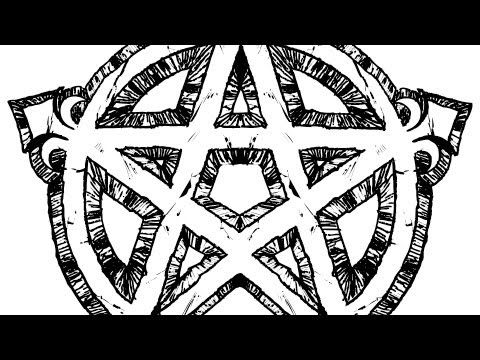
Symbols in Wicca are powerful, and their meanings draw from rich mystical beliefs. The pentagram, for example, stands for the five elements—earth, air, fire, water, and spirit—and is a protective sigil. Animals and trees often hold special significance, embodying virtues and attributes that Wiccans seek to emulate or invoke.
- Pentagram: Earth, air, fire, water, spirit.
- Animals: Embodiment of virtues, guides, or totems.
Working with Elements and Spirits
Wiccans work intimately with the elements and spirits, each tied to cardinal points. Air, felt in the whisper of the wind, relates to wisdom and communication and is often symbolized by the color yellow. Channeling these elemental forces during rituals allows for a deep communion with the natural world and its inhabitants, lifting the veil between the seen and unseen.
- Air (East): Yellow, wisdom, the mind, communication.
- Fire (South): Red, passion, creativity, willpower.
Each tool and symbol within Wicca serves as a vessel for the divine, a tangible connection to the unseen forces that guide and shape the Wiccan path. Through this sacred interplay of objects and meanings, practitioners find their spirit woven into the grandness of the universe.
