
As seekers of spiritual kinship and deeper understanding of witchcraft, many are drawn to the idea of joining a coven. Covens provide witches with a sense of community and a structured environment to practice, learn, and grow within the Craft. They vary greatly in tradition, structure, and size, offering a range of experiences from intimate gatherings to larger, more formal assemblies. The pursuit of a coven can lead to enriching partnerships that evolve into a significant part of one’s spiritual journey.
A coven is more than just a gathering; it is a fusion of shared purpose and magical synergy. This elusive alchemy happens when witches come together, uniting their energies towards common goals. For those who wish to become part of such a mystical collective, the journey begins with understanding the different facets of coven life and what it means to contribute to a close-knit circle. It involves introspection to discern what one is seeking in terms of spiritual growth, companionship, and magical practice.
Key Takeaways
- Finding the right coven requires understanding one’s own needs and the dynamics of coven life.
- The journey involves connecting with the community and assessing compatibility with potential covens.
- Commitment to a coven is a significant step that can lead to profound spiritual growth and learning.
Understanding Covens

Defining a Coven
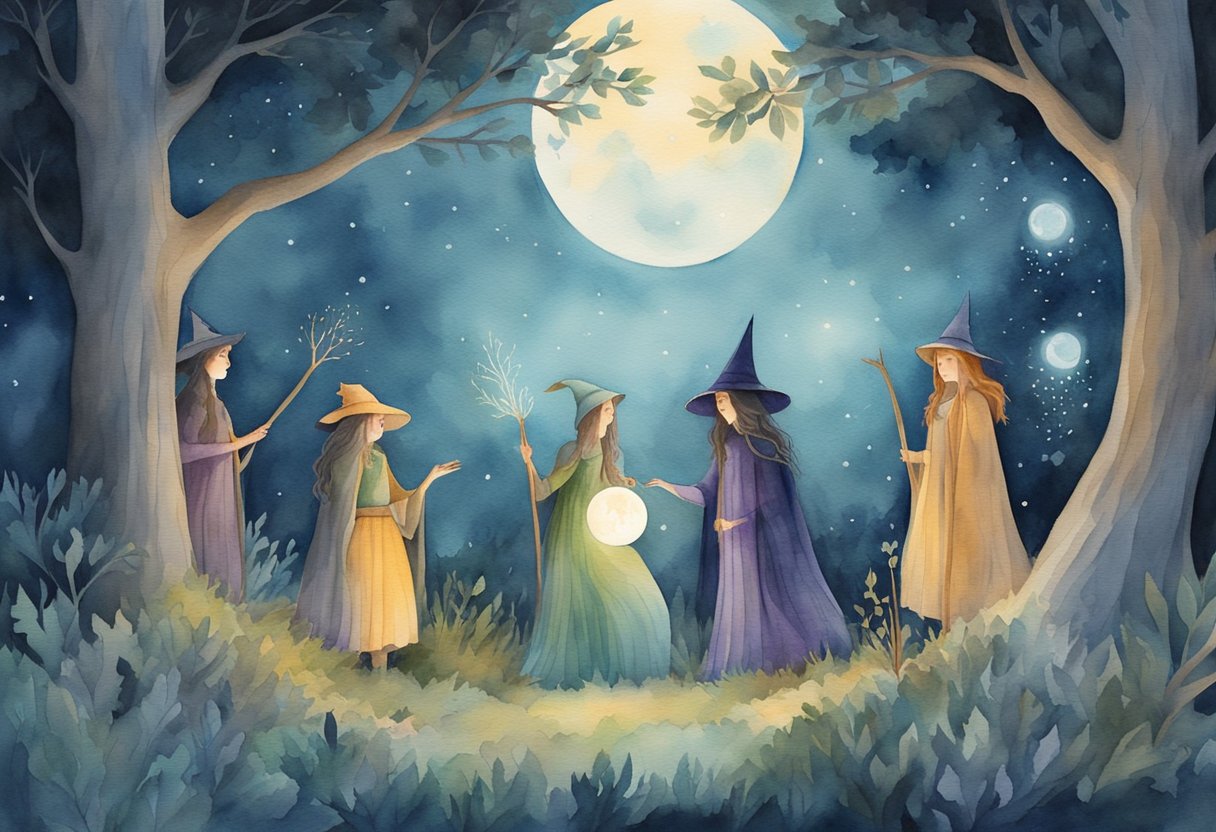
A coven is a gathering of witches, akin to a spiritual family, who come together to practice witchcraft, celebrate pagan holidays, and perform rituals. This sacred circle often requires a trusted bond among its members. Traditionally, a coven is composed of 3 to 13 members but can occasionally expand up to 20.
Coven vs. Solitary Practice
Covens and solitary practice delineate two distinct paths in the journey of witchcraft. Whereas a solitary witch practices alone, guided by personal intuition and individual will, a coven operates as a collective. This group dynamic allows for shared energy and wisdom, often making spells and rituals more potent.
Common Traditions and Types of Covens
A mosaic of practices paints the landscape of modern covens. Wiccan groups might hold Sabbats and Esbats, cycling with the moon and the sun. Other covens may focus on specific traditions such as Stregheria or Feri witchcraft. Types of covens can vary, ranging from eclectic assemblies that embrace varied magical paths, to highly structured groups bound by stringent tradition. They all, however, share the witch’s knot of community and spirituality.
Finding a Coven

Start with Research
One’s quest for a coven begins amidst the vast sea of knowledge. Local bookstores often house a trove of occult-literature that may contain clues on groups practicing the craft. Moreover, they might even host events and gatherings themselves, serving as impromptu networking hubs for potential covens.
Online Resources
In the digital realm, a plethora of networking websites offer sacred connections within the community of witches. Witchvox, a longstanding pillar of such resources, has been guiding seekers to covens with a simple click. One should explore these online sanctuaries with discernment, seeking the digital reflection of their spiritual resonance.
Local Community Exploration
A physical pilgrimage through one’s locale may unveil hidden covens. Coffee shops, community bulletin boards, and metaphysical shops often whisper tales of groups in search of members. These spaces are fertile ground for serendipitous meetings with like-minded individuals who belong to, or are aware of, the existence of nearby covens.
Evaluating Covens
Understanding Coven Dynamics
A coven’s dynamic is of energies and intentions of its members, woven tightly into a sacred circle. Witches must seek a fluid dynamic that allows for growth, learning, and positive interactions. One should observe how members interact during gatherings and rituals. A harmonious dynamic encourages members to thrive, but a single strand of discord could unravel the collective work.
Determining Compatibility
Compatibility with a coven is a key to unlocking one’s full potential within a magical community. One must evaluate if their personal practices, beliefs, and goals align with those of the coven. Witches should consider the coven’s focus; whether it’s traditional Wiccan practices, eclectic witchcraft, or something else altogether. Varying degrees of commitment are expected; coven membership might require frequent participation or offer a more relaxed involvement.
Safety and Ethics Considerations
Safety in a coven is paramount; it extends beyond the physical to encompass emotional and spiritual well-being. As seekers survey prospective covens, they should gauge the level of respect and confidentiality maintained within the group. Ethics play a critical role in magical practices and should be closely aligned between the coven and the individual. One should proceed with caution if they encounter any warning signs of manipulative or harmful behavior. It’s better to continue searching than to bind oneself to an unsuitable group.
Engaging with Covens
Attending Open Rituals and Events
One’s initial foray into the coven community often begins with public rituals and gatherings. Covens frequently host open events, allowing seekers to witness their practices and participate in communal celebrations. These occasions offer a window into the coven’s ethos and provide a rich soil for the seeds of future relationships. Attending these events allows one to observe the group’s dynamics and approach to ritual without the commitment of membership.
- What to do:
- Attend local Pagan or Wiccan events.
- Participate in public rituals.
- Observe festival celebrations.
Making Contact
After mingling at public functions, one might feel the call to make more personal contact. This is a delicate dance of introduction, requiring respect and subtlety. Seekers should craft their inquiries with care, ensuring they are polite and genuine. They may reach out via email, contact forms provided by the coven, or through an intermediary acquainted with the coven’s members. It is imperative to ask meaningful questions about the coven’s beliefs, customary rituals, and requirements for new members.
- How to reach out:
- Respectfully ask about the coven’s practices.
- Inquire about the path of potential membership.
- Show genuine interest and respect for their traditions.
Becoming an Active Seeker
The true essence of finding one’s place within a coven lies in becoming an active seeker. This means not only showing up but also engaging with the community, whether through volunteering at events or partaking in discussions. It is through these actions that one’s dedication is reflected, like the moon’s influence on the tides, subtly yet irrefutably impactful. To join a coven, one must not only show interest but also demonstrate commitment and willingness to contribute to the group’s spiritual journey.
- Path to active seeking:
- Volunteer within the community.
- Partake and contribute to group discussions.
- Demonstrate a harmonious blend of earnest desire and respectful patience.
Preparation for Coven Membership
Studying Wiccan Philosophy
In stepping toward the hearth of a coven, one’s first stride should immerse them in the rich soil of Wiccan philosophy. It’s essential for potential members to understand the Rede, the Threefold Law, and the Wheel of the Year. They should:
- Read seminal texts and writings of respected figures in the Wicca community.
- Engage in discussions with existing practitioners to deepen their conceptual grasp.
This foundational knowledge not only sows seeds of trust but also blossoms into a profound connection with the spiritual ecosystem of the coven.
Understanding Membership Expectations
Membership in a coven is a sacred dance of give-and-take, woven from individual threads of commitment. As aspirants explore the coven landscape, they should glean:
- Roles and responsibilities within the group, such as duties of a priest or high priestess.
- The level of commitment required for being an active member, which might include attendance at rituals and meetings.
- Behavioral guidelines and the ethos that the coven’s mentors and teachers uphold.
Grasping these aspects ensures that both the coven and the prospective member harmonize their melodies in the chorus of Wiccan worship.
Developing a Spiritual Practice
Beneath the moon’s silvery glow, the aspirant forges a solitary bond with the Divine. Cultivating a personal spiritual practice is key to:
- Strengthening one’s intuitive understanding of magic and ritual work.
- Aligning oneself with the cycles of nature to resonate with the coven’s collective practices.
One can cultivate this bond by:
- Regular meditation and reflection.
- Maintaining a Book of Shadows to track and refine personal practices.
By nurturing their spiritual garden, the individual weaves their unique thread into the grand network of the coven’s shared practice.
The Initiation Process
Initial Introduction to the Coven
Upon seeking to join a coven, one must first navigate the waters of introduction. Leaders consider this step a sacred bridge between the outer world and the inner sanctum of their practice. It typically comprises meeting with the coven members, imbibing the essence of the group’s dynamic, and showing sincerity in learning their ways.
Coven Leaders and Hierarchies
In this sanctified space, one does not merely encounter a gathering but discovers a structured universe with its stars being the coven leaders. These seasoned practitioners illuminate the path of witchcraft, guiding initiates through the labyrinth of age-old traditions and contemporary practices. They stand as pillars of wisdom, often holding titles such as High Priestess or High Priest, and harmonize the balance of power and spiritual responsibilities.
The Spiritual Journey of Initiation
Initiation itself is not a mere formality but a profound spiritual odyssey. This ceremonial gateway demands not just the recitation of ancient words but the weaving of the seeker’s soul with the fabric of the coven’s ethos. Through various rituals, the initiate voyages across the threshold, leaving behind the mundane and emerging reborn into a world brimming with enchantment and deeper understanding.
Navigating Coven Life
Integration into the Coven
The process of integration is akin to tenderly planting oneself in a well-tended garden, where every plant flourishes in the communal soil of shared beliefs and values. New members of a coven should approach with open hearts and minds, progressively absorbing the coven’s ethos. Patience is paramount as they gently carve out their niche within the circle, intertwining their unique strands of magic with the already vibrant loom of the community.
- Initial Introductions: Attend gatherings to meet coven members.
- Circle Dynamics: Understand the roles and relationships within the coven.
Participating in Rituals and Celebrations
The very heartbeat of a coven can be felt throbbing through the rituals and sabbats celebrated throughout the year. Each member contributes their energy to the collective, like individual notes blending to form a harmonious symphony. They journey through the Wheel of the Year, marking the change of seasons with sabbats and basking in the moon’s glow during esbats.
- Ritual Preparation: Study the significance and steps of upcoming rituals.
- Active Engagement: Immerse oneself fully in the performance of ceremonies.
Contributing to the Coven Community
To contribute to the coven community is to water the roots of the spiritual family tree, nurturing growth and resilience. Each person’s talents and energies bolster the coven’s foundation. By sharing knowledge, skills, and time, they foster a sense of belonging and mutual support that strengthens the weave of the coven’s fabric.
- Skill Sharing: Teach and learn crafts and knowledge that enrich the coven.
- Coven Support: Participate in community activities that sustain the circle.
Continued Learning and Growth
Advancement through Degrees
Covens often structure their educational framework with a system of degrees, each signifying a step deeper into the craft’s mysteries. The seeker begins as a neophyte, blossoming through guidance and rituals to elevate to higher echelons. The diligent student may rise from First Degree, an initiation into the coven’s folds, onward to Second and Third Degrees, which often represent a mastery of specific magical practices or leadership roles within the group.
Ongoing Education
The fiery heart of a coven beats with the pulse of constant learning. Education takes many forms, from moonlit workshops to afternoon tarot sessions, as pupils and mentors weave spells and share wisdom. Covens may offer:
- Astrology classes: to chart the celestial influence over one’s practice,
- Tarot readings: as mirrors reflecting the hidden depths of one’s spirit,
- Yoga sessions: entwining body and soul in preparation for the craft.
Through such varied avenues, members immerse themselves in a wellspring of esoteric knowledge.
Connecting with the Wider Pagan Community
Covens serve as singular nodes within an intricate network stretching through the vast expanse of the pagan landscape. They encourage members to extend their roots into this fertile ground, participating in pagan groups and festivals, where a symphony of different beliefs and traditions harmonize. Here, an individual may find solace in the wider community, sharing insights, and sowing seeds for a future rich with spiritual kindredship.
Exploring Specialized Paths
Dedicating to a Patron Deity
Individuals may feel a calling to dedicate themselves to a Patron Deity, immersing in the veneration of a specific god or goddess. This deep devotion weaves the practitioner’s life with the deity’s archetypal energy, often seen in the Celtic Path where reverence for ancient gods and goddesses is central. The connection to a deity can significantly shape one’s practice, infusing spells and daily rituals with the deity’s attributes.
Focusing on Specific Magickal Practices
He or she who seeks mastery over a certain aspect of the craft might focus on Specific Magickal Practices. Whether weaving spells that align with the natural energies of herbs and stones or delving into the rhythmic energies of the moon, these specialized groups allow for a deeper exploration of focused magic. For example, an all-female Greek reconstructionist group may center their practices on ancient Hellenic rituals, recreating sacred ceremonies and spellwork from that tradition.
Joining Special Interest Groups
The circle of witchcraft is inclusive, embracing various Special Interest Groups with open arms. These can include gay pagans, families and married couples, or male Wiccan circles, each offering a support structure and a shared perspective on the craft. Such specialized groups shine as constellations offering guidance and fellowship, ensuring that each member finds their place in the grand cosmos of The Craft. Whether through a shared identity or a common goal, these circles allow practitioners to celebrate and strengthen their magic in solidarity.
Coven Challenges and Resolutions
Addressing Interpersonal Conflicts
In the sacred circle where spirits converge, a clash of personalities is inevitable. Interpersonal conflicts arise as practitioners bring their own philosophies into the shared space. Conflict resolution becomes essential; it’s the ointment that heals the community’s soul. Ensuring open communication and dedicated mediation sessions can transform a discord into a chance for growth. Covens might consider:
- Establishing regular discussions to voice concerns.
- Encouraging empathy by reminding members to walk a mile with each other’s spirits in their shoes.
Evolving with the Coven
The only constant in a coven, as in life, is change. Existing members may witness the ebb and flow of rituals and traditions as they evolve. Embracing this evolution is akin to the turning of the wheel of the year; it is natural and necessary. Members should be encouraged to:
- Share their vision for the coven’s journey.
- Craft new rituals together, weaving in each member’s essence.
When to Consider Leaving a Coven
There are moments when a member’s soul path diverges from the coven’s journey. It could be a persistent philosophical misalignment or a personal transformation calling them elsewhere. Leaving a coven is a significant threshold to cross, but it can be a gateway to new beginnings. One should ponder:
- If their spiritual needs are no longer being met.
- Whether the coven’s evolution aligns with their personal creed.
Each step away from or within a coven is a petal falling from the great blossom of experience. The spiritual path is a solitary hike joined by others, and every coven, with its shared magick, must navigate the delicate balance between the collective’s harmony and the individual’s journey.
Taking on Leadership Roles
In the dance of Wiccan practice, taking on leadership roles is like stepping into the center of a ritual circle. Leaders serve as pivotal points of organization and resource, guiding the coven through rituals and decision-making processes. They are the keepers of sacred space, orchestrating the symphony of energies with grace and intent.
- Responsibilities of Leadership:
- Crafting and leading rituals
- Mediating conflicts
- Representing the coven in the greater community
Becoming a Mentor or Teacher
As the moon nurtures the night, so does a mentor or teacher enrich the coven with their wisdom. Experienced practitioners who have a rich repository of knowledge become beacons for those seeking guidance. They embody the role of teachers, sharing their insights through structured lessons or more informal, organic interactions.
- Qualities of Mentors and Teachers:
- Patience and understanding
- Depth of knowledge in Wiccan tradition
- Ability to provide constructive feedback
Creating Your Own Coven
For those whose spirits are stirred by the whisper of the wind in the leaves, the founding of a new coven may be their calling. Creating one’s own coven from the roots up is a profound act of spiritual expression. It involves gathering like-minded individuals, establishing a set of shared practices, and nurturing the group as it grows and flourishes.
- Steps in Founding a Coven:
- Defining the coven’s tradition and path
- Establishing bylaws and ethical guidelines
- Organizing rituals and educational opportunities
