
In the practice of Wicca, the Holly King and the Oak King represent powerful seasonal archetypes that embody the cyclical nature of the Wheel of the Year. They symbolize the constant dance between light and darkness, growth and decay, and the changing seasons. The Holly King, often depicted with a wintery association, reigns during the darker half of the year from midsummer to Yule. This evergreen monarch mirrors the endurance of nature through the cold, introspective winter months.
Conversely, the Oak King reigns supreme through the lighter half of the year, from Yule to midsummer, symbolizing vitality, strength, and the unfurling of the natural world during the warm, verdant summer months. In many Wiccan traditions, these dual figures are also seen as two faces of the Horned God, representing the masculine aspect of the divine. Their lore is rich with spiritual teachings that emphasize harmony with the Earth’s cycles and the importance of transition and balance.
Key Takeaways
- The Holly King and Oak King are central figures in Wicca representing the changing seasons.
- Each king reigns for half a year and symbolizes the transition from growth to decay and back again.
- Their stories serve as spiritual lessons in balance and harmony with nature’s cycles.
Historical Origins
Celtic Mythology Influence
Celtic mythology serves as fertile ground from which the figures of the Holly King and Oak King likely sprang. These characters are not direct transplants from ancient Celtic texts but are believed to be influenced by the general tenor of Celtic deities connected to nature, sovereignty, and the cycle of the seasons. The dramatic interplay of light and darkness, life and death, encapsulated by these kings echoes the Celts’ veneration of the natural world.
Robert Graves and ‘The White Goddess’
One cannot delve into the mythic resonance of the Holly King and Oak King without acknowledging the impact of Robert Graves. In his work “The White Goddess,” he presents a poetic and speculative vision, suggesting a dualistic god figure that alternates dominance in line with the solstices. While Graves’ theories are not strictly grounded in historical evidence, his narrative has captivated the imagination of many in the sphere of modern spirituality.
Interpretations by Modern Paganism
Throughout the verdant groves of modern Paganism, particularly within Wiccan tradition, the Holly King and Oak King have found renewed life. Influential figures like Sir James George Frazer provided groundwork in the study of mythology and religion with his book “The Golden Bough,” framing a context for ritual and seasonal cycles.
Symbolism and Spiritual Meanings

The Dualistic Nature
They represent two essential halves of a whole, embodying the duality found within nature and the human experience. The Oak King, reigning during the waxing year, symbolizes growth and the vibrancy of life when the sun’s power intensifies. In stark contrast, the Holly King governs the waning year, his rule a testament to introspection and the inevitability of decay as the sun’s force diminishes.
- The Oak King: Life, vigor, expansion
- The Holly King: Rest, reflection, contraction
Through this lens, Wiccans observe the harmony between light and dark, and the balance between life and death. Each king’s dominion over half the year also presents a spiritual allegory for solar light and dark — a powerful reminder of the universe’s inherent balance and the cyclical nature of all things.
Seasonal Cycles and Power Shifts
The rhythm of the year is punctuated by the solstices, those cardinal moments when the pendulum of power swings between the two kings. The Summer Solstice heralds the zenith of the Oak King’s reign, as the sun stands at its peak. Conversely, the winter counterpart marks the resurgence of the Holly King, with the shortest day and the promise of the sun’s rebirth.
- Summer Solstice: Oak King’s strength, abundance
- Winter Solstice: Holly King’s return, renewal
Their perpetual struggle reflects the seasonal cycles, an eternal dance that underscores the Wiccan belief in the importance of opposing forces — an oscillation between the waxing and waning of energies that mirrors the waxing and waning of the sun. This spirited exchange epitomizes the idea of balance, a core tenet in Wicca that celebrates the continuous cycle of life, transformation, and regeneration.
The Wheel of the Year

The Sabbats
Wiccans observe eight Sabbats throughout the year, each one marking significant points in the seasonal cycle. These are not just mere dates in a calendar but are spiritual stepping stones:
- Samhain (October 31): This marks the Wiccan New Year, a time when the veil between the worlds is thinnest, often celebrated with remembrance of ancestors.
- Yule (December 20-23): The Winter Solstice, Yule, is when the Oak King triumphs, symbolizing the rebirth of light.
- Imbolc (February 1-2): A festival heralding the first signs of spring and the reawakening of the earth.
- Ostara (March 20-23): Ostara celebrates the vernal equinox, the equilibrium and rebirth of nature.
- Beltane (May 1): A joyous festival celebrating fertility, fire, and abundant life energy.
- Litha (June 20-23): The Summer Solstice, where the Holly King rises to power, marking the longest day and the triumph of light.
- Lammas (August 1): Also known as Lughnasadh, it’s a time for harvest celebrations and giving thanks.
- Mabon (September 20-23): The Autumn Equinox, a time for balance and gratitude, as days and nights are of equal length.
Solstices and Equinoxes
The solstices and equinoxes are celestial hinges upon which the Wheel of the Year turns. These solar events are moments of deep spiritual significance:
- Winter Solstice (Yule): When darkness reigns supreme, it’s also the birth of light; the Oak King is reborn, promising the return of warmth.
- Summer Solstice (Litha): The apex of the sun’s journey, the zenith of light before the gradual surrendering to darkness, as the Holly King prevails.
Each equinox serves as a point of equilibrium; day and night embrace each other equally:
- Vernal Equinox (Ostara): Spring’s balance heralds new life sprouting from the earth’s womb.
- Autumnal Equinox (Mabon): As daylight wanes, Wiccans express gratitude for the harvest and prepare for the descent into winter.
In essence, the Wheel of the Year offers a map of the sacred cycle, with solstices and equinoxes holding the key to understanding the intimate relationship between light and shadow, life and death, and the ever-turning tides of earth’s bounty.
Rituals and Celebrations

Key Wiccan Sabbats Related to the Kings
Beltane and Samhain: Among the most significant of Wiccan Sabbats, Beltane and Samhain stand as pivotal times of the year where the Holly King and Oak King’s presence is vital. Beltane, marking the beginning of summer, celebrates the ascension of the Oak King, the embodiment of growth and vitality. This Sabbat is a time of joy, where one can feel the surge of life and energy budding in nature. Conversely, Samhain signals the transition to winter, granting dominion to the Holly King. This Sabbat embodies reflection and remembrance, as it manifests the energies of withdrawal and rest.
- Summer and Winter Solstice: The Summer Solstice, known as Litha, exalts the Oak King’s zenith, as the sun shines at its brightest. It is a celebration of light’s triumph, an apex of warmth and abundance. The community engages in fireside revelry, crafting sun wheels, and basking in the fullness of nature’s bounty. When the Winter Solstice arrives at Yule, the Holly King reigns supreme, heralding a period of introspection and conservation. The longest night is met with hope, as Yule logs burn to symbolize lingering light amidst the dark, signaling the return of the sun.
Ritual Practices and Symbolism
In the ever-turning Wheel of the Year, practitioners engage in rituals that honor the regal interchange. Altars are adorned with symbols of the Kings; oak leaves and acorns for the Oak King, holly leaves and berries for the Holly King. These rituals are not mere pageantry but a profound recognition of life’s perpetual cycle — birth, death, and rebirth.
- Ale and Spirits: The brewing and sharing of ale during these rituals serve as a communal binding, with its rich, earthy essence mirroring the deep-rooted connection between practitioners and the divine natural order. As they sip, they are reminded of the life-sustaining fluids of Earth and the spirit that animates all living things.
- Energy and Renewal: Each tradition involves the deliberate movement of energy, in dances around a maypole during Beltane, or the silent vigil of candles at Samhain. Rituals performed are imbued with intention, acknowledging the continuous cycle of life and the ever-present possibility of renewal and rebirth.
Roles in Wicca

Influence on Wiccan Gods
In Wicca, the Oak King and the Holly King are often seen as dual aspects of the Horned God, a deity of fertility and nature. The Oak King, who flourishes in strength at the height of summer, embodies growth and the expansive force of nature. He is usually associated with the waxing year, taking the throne from the Holly King at the time of the winter solstice.
The Holly King, reigning during the waning year, carries the wisdom of dark and the introspective essence that comes with the decline of light. His rule begins at the summer solstice and is marked by a period of preservation and preparation for the rebirth that follows winter’s end. They reign in opposition but are two essential halves of a whole; without one, the other could not exist.
Representations in Wiccan Traditions
Rituals and celebrations in Wicca revolve significantly around these potent symbols. Seasonal Sabbats, such as Yule and Midsummer, highlight the transition of power between the kings and thus the close relationship between the Goddess and her consort, the God. At Yule, the longest night, Wiccans honor the Goddess’s giving birth to the Oak King as the sun begins its return. Midsummer, conversely, celebrates the apex of the Oak King’s power before he concedes to the Holly King.
The Triple Goddess, another central deity in Wicca is often invoked along with the Dichotomous King; her phases of Maiden, Mother, and Crone intertwine with the continual cycle of the kings. The Triple Goddess represents the feminine divine and oversees the balance of the natural world alongside the Horned God.
In Wiccan traditions, these deities are not just abstract concepts; they play a vital role in the very fabric of Wiccan spirituality, embodying the cyclical nature of all life. Through the saga of the Holly King and Oak King, fertility, death, and rebirth are not only ensured but celebrated with reverence and a deep connection to nature.
Cultural Impact and Modern Representation

Literature and Arts
In the realm of literature and the arts, the duel of the Holly King and Oak King has been a source of inspiration across the centuries. Works like Sir Gawain and the Green Knight are literary incarnations that echo this mythos, painting the Green Knight as a figure reminiscent of the tree spirit and fertility god personas. Meanwhile, the imagery of the Green Man, often associated with natural cycles, fertility, and rebirth, appears in various forms—ranging from gothic church carvings to modern fantasy art—embodying the eternal return of life each spring.
- Representative Works:
- Sir Gawain and the Green Knight
- Green Man carvings
The vibrant tapestry of these tales has colored our perception of nature and its personification, indelibly marking its lush imagery in the collective conscience.
Neopagan and Wiccan Practices
In the spiritual sphere of Neopagan and Wiccan practices, the Holly King and Oak King are more than myth; they are deeply venerated archetypes symbolizing the waxing and waning of the year. Neopagans and modern Wiccans observe the shift of power between the two kings as part of the Wheel of the Year, which is a key aspect of their ritual practice.
- Practices and Celebrations:
- Winter Solstice: Rebirth of the Oak King
- Summer Solstice: Ascendancy of the Holly King
These deities are also linked to other figures such as Santa Claus and the Ivy King, illustrating the death and rebirth of light. Celebrations like Yule and Midsummer are tangible manifestations of the myth, as practitioners honor the changing seasons and the life-giving energy of the sun.
Characters like the Green Knight and societal icons like Santa Claus have their roots intertwined with this deep-seated lore; they have evolved in modern paganism to teach respect for the natural world and its cycles, continuously nurturing the soil of spiritual life with their stories.
Symbolic Interpretation of Key Elements

Holly and Oak in Nature and Lore
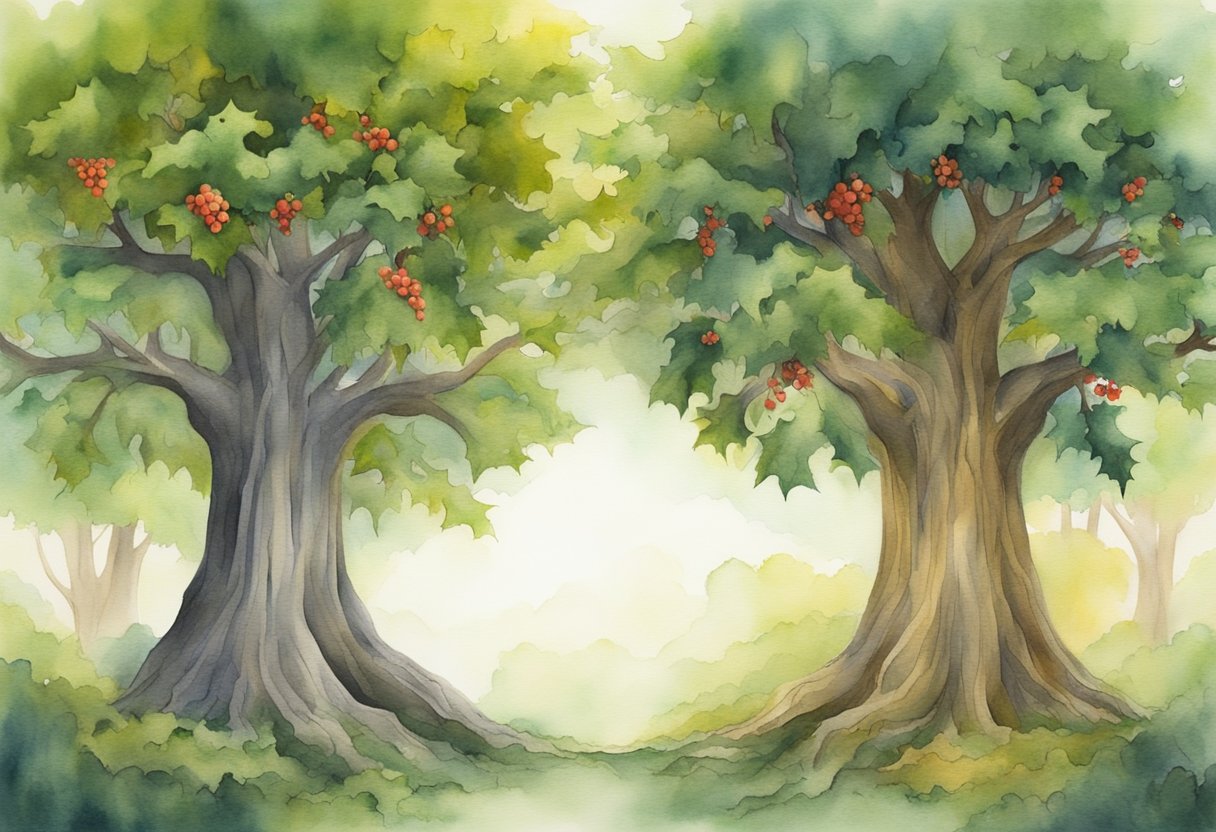
The imperishable holly with its prickly leaves and blood-red berries stands as a symbol of endurance and protection during the dark waning half of the year. In contrast, the mighty oak tree, a bastion of strength and ancient wisdom, heralds the waxing year, where light and life experience a resurgence. Both trees hold deep-rooted significance in Celtic lore, embodying the waxing and waning cycles of nature.
| Element | Tree | Season | Attribute |
|---|---|---|---|
| Earth | Oak | Waxing | Strength |
| Fire | Holly | Waning | Protection |
Legends whisper of the Oak King, reigning during times of growth and expansion when daylight lengthens, and the Holly King, who takes his throne as the landscape retreats into the embrace of shadows and cold. Their cyclical duel reflects the balance between light and darkness, a cornerstone of the ever-spinning wheel of the year.
Associations with Other Deities and Symbols
Beneath the boughs of these ancient woodland sentinels, connections to various deities and symbols unfold. The Oak King is often linked to air, a breath of insight blowing through the leaves, sowing seeds of enlightenment. Likewise, the Holly King is associated with the element of fire, his reign suffused with the transformative power of flame, guiding souls through the introspective chill of winter.
In the realm of animals, the Oak King shares his domain with creatures of vigor and expansion, such as the stag, an emblem of fertility and life’s pulsing vitality. Their presence in the lore conveys an unspoken wisdom, a serene assurance that with every turn of the wheel, life renews itself in an eternal rhythm.
Majestic in their timeless symbolism, the Holly King and Oak King are not merely remnants of ancient stories but serve as spiritual guides for those walking the Wiccan path. As they embrace nature’s mutable essence, followers gain an understanding of life’s perpetual cycle, embracing change with grace and fortitude.
The Kings Throughout the Seasons

The Waxing and Waning of Influence
Spring Equinox: As winter’s chill wanes, the Oak King gains strength. With the emergence of spring’s first bud, his light triumphs, heralding the Oak King’s rule. This marks the beginning of the light half of the year, when days grow longer and the earth awakens.
- Midsummer: The zenith of his power, the Oak King reigns supreme. Light bathes the lands, stretching days to their fullest on midsummer’s eve, before the tide of power subtly shifts.
Autumn Equinox: A transition takes root; the Holly King ascends as the light wanes, sewing the seeds of his dark reign. Here, at autumn’s threshold, the dark half of the year commences, and leaves flame out in a final, vibrant defiance.
- Winter: The realm enters the Holly King’s domain as cold fingers of frost reclaim the earth. His time peaks at midwinter, when the longest night bestows its still tranquility and a quiet strength that promises rebirth.
Depictions of Battles and Transitions
The Holly King and Oak King’s struggle, a spectacle of power and transformation, intensifies around the equinoxes. Lughnasadh, or Lammas, often marks the beginning of the Holly King’s resurgence as summer’s heat fades, a symbolic descent into the harvest season.
- Spring and Autumn Equinoxes: These are points of equilibrium where neither king holds sway; their power equals but for a fleeting moment. The battles crescendo, choreographed by the cosmos, leaving a king crowned and another in eclipse, until they meet again.
Art and legend often illustrate the kings in mid-struggle, a testament to nature’s ebb and flow. Their personas are etched into the minds of those who walk the earth with reverence: the Holly King, draped in the somber tones of winter, and the Oak King, cloaked in the vibrant green of life.
Each transition honors the intricate balance and acknowledges that neither light nor dark holds eternal rein. Through the seasons, adherents witness the duality and draw wisdom from the silent teachings of the Oak and Holly Kings.
Influence on Magic and Practices
Spells and Energies
Autumn and Winter: As the Holly King reigns, spells focusing on reflection, release, and the conservation of energy align with the waning of the sun’s power. Wiccans may cast spells to remove negative influences and to seek wisdom in the silent embrace of darkness, as this time is ripe for such magic.
- Samhain Spells: Drawing on the transition between worlds as the Holly King’s influence peaks.
- Yule: Celebrating the rebirth of the Oak King through rituals that welcome back the light.
Spring and Summer: With the Oak King’s ascent, practitioners often cast spells for growth, renewal, and strength. These energies tap into the burgeoning power of the sun and the unfurling greenery.
- Imbolc Spells: Invoking the burgeoning strength of the Lord of the Greenwood.
- Beltane: Sowing intentions with the fertile energies of summer on the horizon.
Symbolic Representations in Rituals
Wiccans incorporate symbols of the Oak and Holly Kings into rituals to honor the shifting seasons and the dual aspects of the God.
- Altar Items: Oak leaves, acorns, and holly leaves and berries serve as physical representations on altars.
- Robes and Crowns: Participants might wear robes or crowns that symbolize the current reigning king.
The potency of these symbols is believed to help attune the ritual and the practitioners to the seasonal energies, enhancing the work of magic and bringing the cycles of nature into the sacred space.
Comparative Mythology
Similar Concepts in Other Traditions
The concept of dual, battling forces is not exclusive to Wiccan beliefs but weaves its way through many cultures. In the gallant tales of Arthurian legend, Sir Gawain confronts the Green Knight, an enigmatic figure representing the regenerative forces of nature, much like the Green Man. These paired opponents in “Gawain and the Green Knight” also reflect themes of cyclicality and nature-related challenges.
- Balor and Lugh from Celtic mythology present a similar dichotomy, with Balor embodying darkness and death opposing the youthful, radiant Lugh, often associated with the sun and light.
- Santa Claus, a jolly figure emerging during the Yule season, can be seen as a modern personification of the Lord of the Greenwood, bringing life and joy during the darkest time of the year.
Cross-Cultural Examination of the Kings
In examining these twin kings cross-culturally, one observes echoes of the Oak and Holly throughout various mythologies. The fertility god motif prevalent in ancient lore often embodies characteristics of the Lord of the Green or the Green Man, a symbol of renewal, growth, and the cyclical nature of life.
- The Oak and Holly Kings themselves mirror the natural order, their sovereignty tied to the sun’s waxing and waning, paralleled in countless cultural myths where deities and heroes rise and fall with the seasons.
- This persistent theme signifies a universal acknowledgment of the balance within nature and the understanding that no force reigns supreme indefinitely, much like the enduring legend of the Oak and Holly.
