
Imagine stepping back in time to ancient Rome, where deities mingle with mortals and every natural element has its divine counterpart. There’s a certain charm in exploring these old myths and learning about Terra, the Roman goddess. Known as the personification of the Earth, she represents far more than just soil beneath your feet. She symbolizes the very essence of life and nurturance that allowed ancient Roman culture to flourish.
Dive into the world of Terra Mater, and you’ll find a rich tapestry of stories and worship that emphasize her role as the nurturing mother. She’s not just another face in the bustling Roman pantheon; her roots go deep into the bedrock of mythology and everyday life. It’s her omnipresence in the natural world that made her an integral part of Roman daily life and spiritual practices. Her temples stood as a reminder of mankind’s deep bond with the ground that yields crops, the foundation that supports cities, and the territory that defines nations.
Key Takeaways
- Terra is the embodiment of the Earth in Roman mythology and deeply interwoven with Roman culture.
- As Terra Mater, she represents nurturing and life, playing a crucial role in myths and spiritual practices.
- Terra’s worship and representation in the pantheon mirror the importance of earth and nature to ancient Romans.
[su_button url=”https://amzn.to/3YfCaUX” background=”#a62def” color=”#ffffff” size=”10″ icon=”icon: magic”]Shop Witchy Supplies[/su_button]
Terra Mater: Essence and Mythology

Origins and Comparative Mythology
Long before Romans built their empire, you had Terra Mater, or Earth Mother, already embodying the earth itself. She’s a deity with deep roots, sharing similarities with the Greek Goddess Gaia. These two Earth Goddesses form a bridge connecting Roman beliefs with Greek origins, having sprung from the same concept of creation and personification. Consider that in these ancient narratives, the Earth Goddess doesn’t just live in the world—she is the world.
Terra in Roman Religion and Practice
Imagine walking through the Forums of Rome, a city where Terra Mater’s influence flourishes. You’d witness her significance in agricultural festivals and observe her presence in civic rituals. As the personification of the Earth, she shaped how the Romans interacted with their lands, encouraging them to honor the soil that fed them. Your ancestors might have participated in rites and offerings to invoke her favor for a bountiful harvest.
Symbolism and Representation
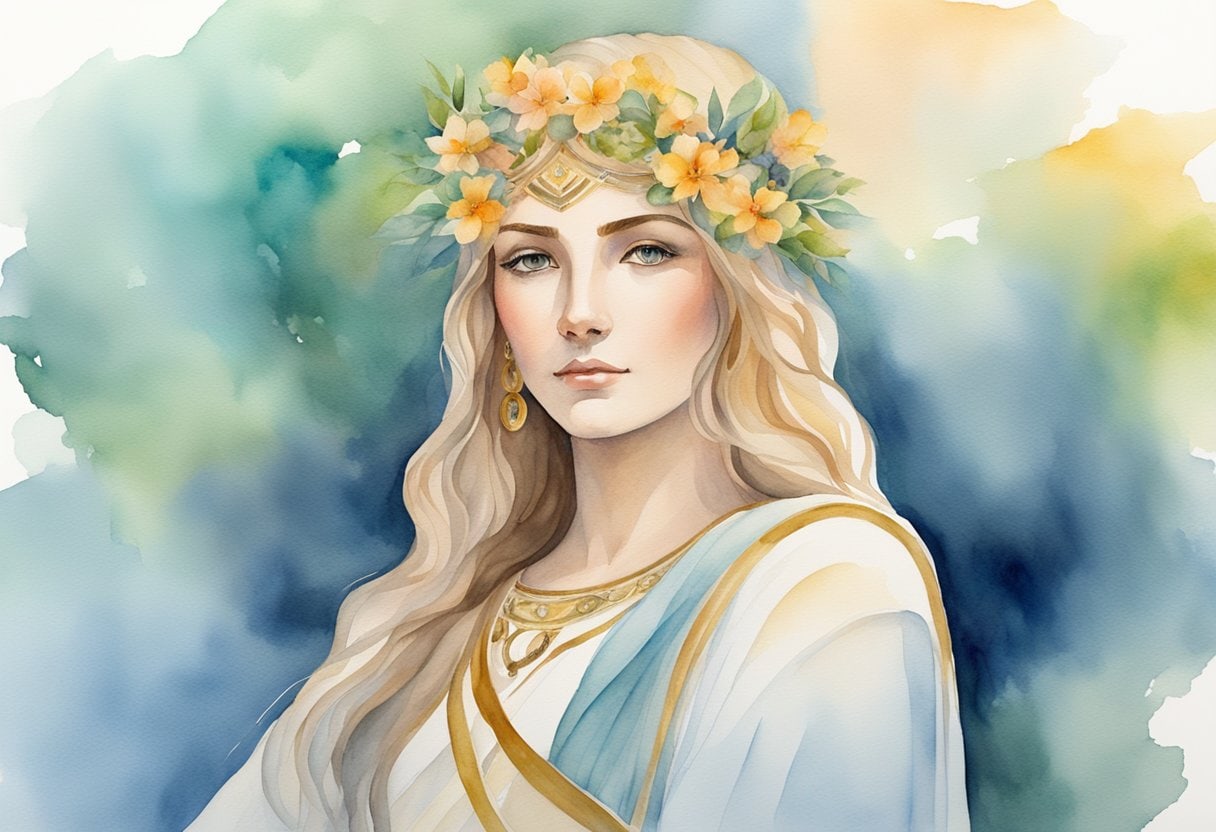
Now picture Terra Mater in sculptures and paintings of old, where she often appears as a mature, dignified woman, exuding calm and authority. You can see her dual nature: a nurturing mother who represents life-giving fertility and a timeless figure symbolizing the eternal stability of the earth. Look around and you’ll find her influence etched in the everyday lives of the Romans, in symbols that capture the boundless essence of their Earth Goddess.
Cult and Worship of Terra

Sacred Festivals and Rituals
Imagine the streets filled with the joyous sounds of celebration during Fordicidia, the spring festival. Picture yourself on April 15, joining the festivities, where pregnant cows are sacrificed to Terra Mater to ensure fertile soil and bountiful harvests. It’s a moment where everyone’s hope for agricultural abundance is at its peak—vital for the community’s survival.
During the Magmentarium, you would witness sowing ceremonies—a call for Terra’s blessing on the seeds that will grow under her care. You’re part of these age-old traditions that celebrate life’s cycles.
Temple of Terra Mater and Sacred Sites
Stroll through the Temple of Terra Mater, your sanctuary of devotion. This isn’t just a piece of architecture; it’s where the collective spirit meets the divine. Here, your ancestors stood together, praying for their sustenance. Through these sacred walls, your spiritual bond with Terra Mater grows stronger.
The Mundus Cereris is another crucial site. By tradition, this pit symbolizes the connection to the underworld and is ceremoniously opened three times a year. During these moments, it’s as if you’re peering into another realm, feeling Terra’s breath merging the worlds.
Ritualistic Offerings and Their Meanings
Now picture yourself carefully selecting grains, fruits, and piglets to honor Terra. These aren’t random gifts; they’re symbols of the agriculture and fertility you rely on in your everyday life. Your offerings on the altar symbolize the pact between Earth and mankind—a sacred exchange that sustains both.
Each offering has a story. Grains represent the seeds that sprout from her soils. First fruits are the proof of her generosity. The piglets? They signify the life that roams her land, nurtured by her abundance.
So, through these rituals and offerings, you’re not just following old customs; you’re actively engaging with Terra’s ancient and ever-present energy.
Terra’s Place in the Pantheon
Associations with Other Deities
You might find it fascinating to see how Terra connects with other divine figures in the Roman pantheon. She is often associated with Ceres, the goddess of agriculture, since both preside over aspects of fertility and the bountiful earth. Terra is also linked to Ops, the goddess of plenty; their domains overlap in the blessings of the earth’s wealth. Not to forget, Venus, famed for her beauty and love, is also said to have aspects rooted in the fertility and life-giving force that Terra embodies.
The Di Selecti and Terra’s Role
The Di Selecti, which translates to the “Twenty Principal Gods,” include Terra among their prestigious ranks. Your interest in mythology will peak when you discover that this select group was believed to be the most powerful and significant deities of the Roman state religion. With Terra counted among them, your understanding of her role amplifies; she wasn’t just any ordinary deity but one instrumental to the inner workings of the Roman belief system.
Interpretatio Graeca: Integrating Greek Mythology
When you draw parallels between Roman and Greek mythology, you’ll see Terra as the Roman equivalent of the Greek goddess Gaia. This practice, known as “Interpretatio Graeca,” involves interpreting Roman gods through the lens of Greek myth. With Saturn as her consort and Jupiter as one of her children, it’s clear that Terra shared her powerful lineage and influence with key figures from both pantheons, highlighting a mystical tapestry of interconnected stories and beliefs.
[su_button url=”https://amzn.to/3YfCaUX” background=”#a62def” color=”#ffffff” size=”10″ icon=”icon: magic”]Shop Witchy Supplies[/su_button]
