
Exploring the lush forests of Roman mythology, one would invariably encounter the enigmatic figure of Diana, the goddess of the moon and the hunt. A deity whose reverence stretched far beyond the mere veneration of wildlife, she held dominion over the woodlands, the creatures that dwell within, and the very essence of the night. Regarded as the Roman counterpart to the Greek Artemis, Diana was both admired and feared for her prowess with the bow and her fierce independence.
Diana’s influence permeated Roman society, casting a glow as soft and pervasive as moonlight over the culture that celebrated her. Revered not only as a master huntress but also as a guardian of childbirth and protector of the undeveloped countryside, Diana’s worship was interwoven with the daily lives and spiritual practices of the Romans. Her temples served as places of refuge, and her sacred groves provided a mysterious backdrop for rituals that praised the cycles of nature.
Key Takeaways
- Diana is a multifaceted goddess of Roman mythology, symbolizing the moon, the hunt, and natural environments.
- Worship of Diana was integral to Roman religious practices, emphasizing her role as a protector and her connection to birth and nature.
- The goddess’s legacy continues to influence modern representations of female strength and the celebration of the natural world.
[su_button url=”https://amzn.to/4iB8iJY” background=”#a62def” color=”#ffffff” size=”10″ icon=”icon: magic”]Shop Witchy Supplies[/su_button]
Origins and Family

Birth and Early Life
Born on the island of Delos to Jupiter, the king of the gods, and Latona, a Titaness, Diana entered the world with a twin brother, Apollo. She emerged as a goddess with an independent spirit from her earliest moments, gravitating toward the untamed aspects of the world.
Divine Lineage
With Jupiter as her father, Diana’s lineage is as regal as they come in Roman theology. Jupiter, the ruler of the heavens, and Latona, her mother, ensure that Diana’s roots reach deeply into the grand pantheon of Roman deities, linking her to tales of power and divinity.
Association with Artemis
Diana’s story entwines with that of the Greek Goddess Artemis, the deity of the hunt and moon. They share not only attributes but a seamless identity across the Italian Peninsula, where Diana’s legend absorbed aspects of Artemis from Hellenistic influences. Their parallel tales echo through Latin texts, painting both as virgin goddesses of the wilderness.
Culture and Worship
Temples and Sacred Spaces
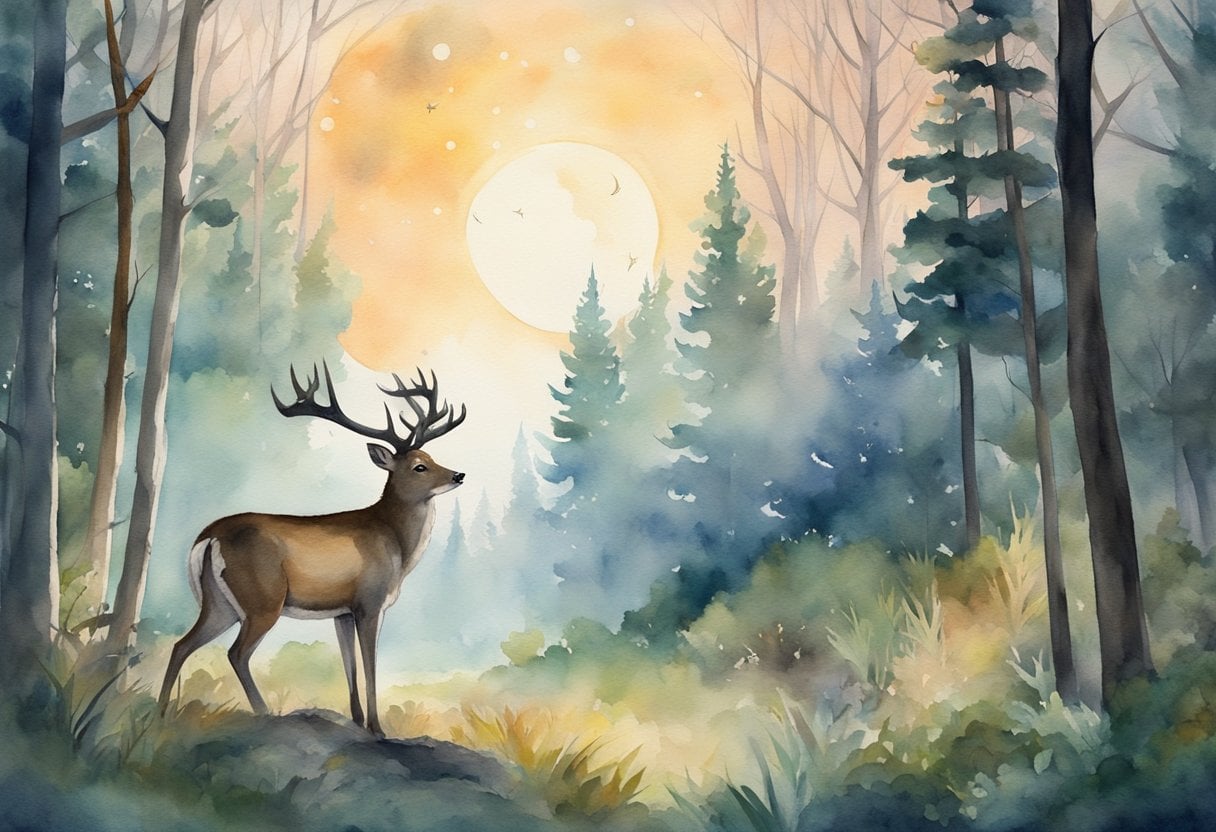
The Sanctuary of Diana at Aricia, near Lake Nemi, was where her presence was most profound. Here, in a grove thick with age-old trees, stood the Temple of Diana Nemorensis, Diana of the Wood. This spot was more than just a temple; it was a complex center of worship integral to Roman religion. “Diana’s Mirror,” the name given to Lake Nemi, reflected the sacredness of this site. The cult also held spaces on the Aventine in Rome, reinforcing her importance across the region.
Priests and Festivals
At this sanctuary, a unique priesthood upheld the traditions. The high priest, known as the Rex Nemorensis, was always someone who had proven his strength by besting the former priest in combat. This role tied back to the earthy and wild nature of Diana’s worship. Notably, the festival of Nemoralia, held in August, was a time when Diana’s followers would process to her sacred spaces with torches and garlands, casting their wishes into the sacred waters.
Rituals and Beliefs
Worshipers participated in various rites, often tying their practice to the cycles of nature and the phases of the moon, which Diana governed. One key belief was that Diana protected women and animals, particularly during childbirth, which saw her intimately linked to the divine spirit Egeria. Maidens and mothers would come to her groves, seeking blessings and protection. Acts of worship included offering sacrifices and prayers to communicate with the goddess, a testament to her standing in the pagan world, which persisted over the centuries.
Symbols and Representation

Iconography in Art and Literature
Art and literature have long celebrated Diana, decking her in symbols that showcase her divine duties. In statues and paintings, she’s often depicted with a bow and quiver, poised as the master huntress. These tools not only show her prowess but also her role in protecting the purity of forests and wildlife.
The moon, accompanying her in many visuals, signifies her connection to the celestial sphere and her title as the Goddess of the Moon. Whether it’s a crescent cradling her head in sculptures or full moon illuminating her path in stories, the moon is her silent, glowing companion.
The Moon and its Phases
Diana’s bond with the moon is inseparable, and it’s more than just a symbol—it’s part of her identity. She rules over its phases, from the new moon’s hidden whispers to the full moon’s bright revelations. Each stage reflects her various aspects, such as new beginnings, fertility, and the cycle of life and death.
In rituals and worship, the different phases are honored, with torches sometimes used to represent moonlight’s ethereal glow. They emphasize her dual role in guiding through the darkness and symbolize illumination in both literal and metaphorical senses.
Sacred Animals
The animals that roam the forests are sacred to Diana. The deer, with its graceful features, stands as a symbol of her gentleness and respect for life. It epitomizes the serene side of nature, under her protection.
Likewise, the hound is her fierce and loyal companion, a fearless guardian that personifies her link with hunting and the untamed lands. Narratives and artworks often showcase Diana with a hound at her side or a deer in the background, serving as silent attestations to her dominion over the forest and its inhabitants.
Cultural Impact and Legacy
Influence on Later Traditions
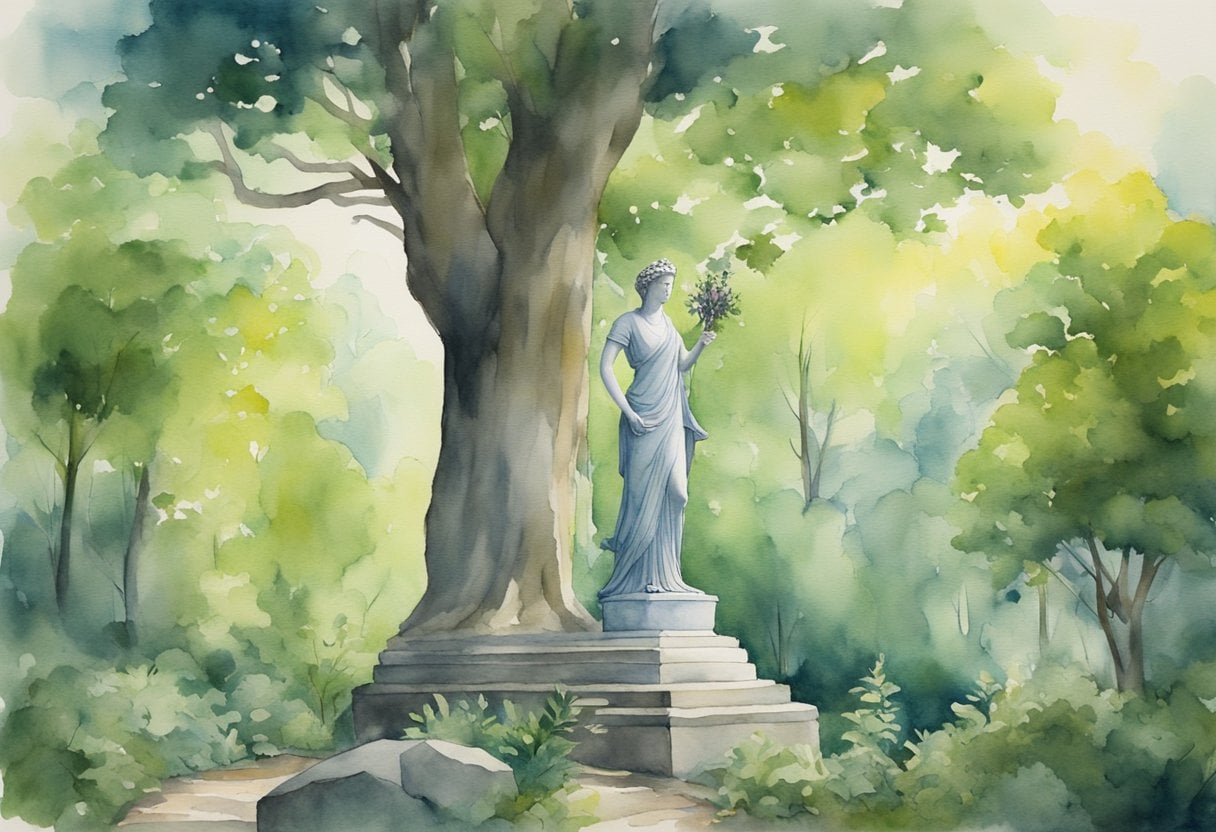
In her many faces, Diana roams crossroads and forests, blurring the lines between civilizations. The power she wields as a guardian of nature and protector of the wild echoes through time. She’s found a place in modern Wicca and neopagan traditions, often celebrated as a symbol of independence and female empowerment. Her tales carry whispers of ancient Underworld connections and her role in the Roman Pantheon, influencing present-day rituals and spiritual paths where reverence for natural cycles remains strong.
Depictions in Modern Culture
She’s not just a figure of the past—the arts vividly remember her. Diana appears recognizable yet shrouded in mystery across multiple mediums, from renaissance paintings featuring her prowess with the bow to contemporary films that tap into her mythos. Her essence, associated with power and duality as both a hunter and a protector, inspires characters who mirror her attributes of strength and wild autonomy. From literature to popular media, Diana’s legacy continues to thrive, intertwining with tales of courage and the eternal dance of tradition and mythology.
[su_button url=”https://amzn.to/4iB8iJY” background=”#a62def” color=”#ffffff” size=”10″ icon=”icon: magic”]Shop Witchy Supplies[/su_button]
