
As the leaves start to turn and the air gets crisper, you may feel a pull to reflect and give thanks for the abundance around you. Mabon, also known as the Autumn Equinox, marks a time of balance—day and night stand equal, and we lean into the enchantment of the coming darker months. It’s a perfect occasion to set up an altar that embraces this shift and the themes of gratitude and harmony that come with it.
Creating an altar for Mabon isn’t just about decoration; it’s about crafting a sacred space that resonates with the energies of the season. Think warm, vibrant colors that mirror the fall foliage, symbols of harvest representing abundance, and items that reflect personal reflection and balance. Whether you’re new to this or you’ve been celebrating the equinox for years, your altar is a personal canvas for your spiritual practice.
Your Mabon altar can be a focal point for rituals or quiet contemplation. It might include candles to light the dwindling daylight, crystals to ground your intentions, or seasonal fruits to honor the second harvest. No matter how you choose to arrange it, let your altar be a place where you can pause, breathe in the magic of autumn, and cultivate a sense of gratitude for the bounty that surrounds you.
Key Takeaways
- Mabon represents a period of balance and giving thanks.
- Altars for Mabon reflect the shift towards autumn and encourage reflection.
- Personalizing your space can enhance your connection to the season’s energy.
[su_button url=”https://amzn.to/3YfCaUX” background=”#a62def” color=”#ffffff” size=”10″ icon=”icon: magic”]Shop Witchy Supplies[/su_button]
Understanding Mabon and Its Significance
The History and Mythology of Mabon
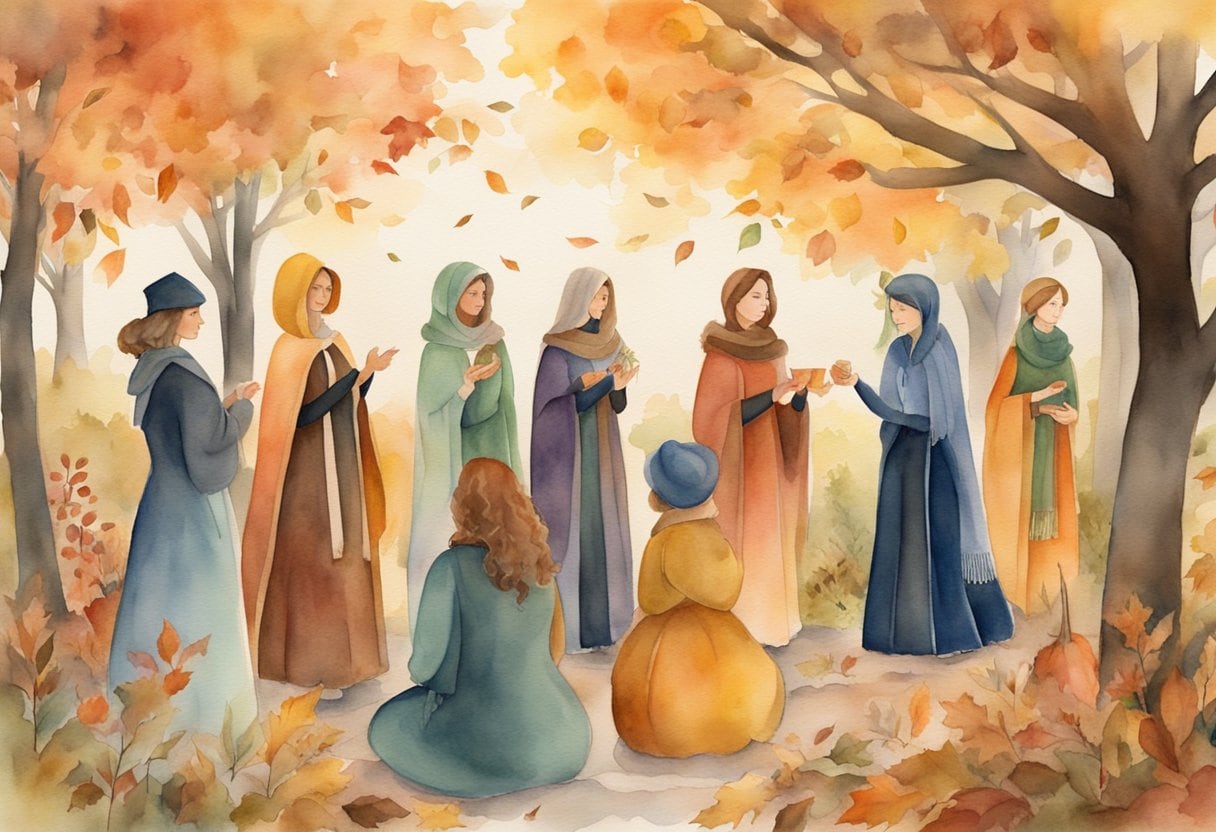
So here’s the scoop on Mabon: it’s a modern Pagan festival through and through. Named after a Welsh god who was snagged away from his mother when he was three nights old, it’s kinda like a spiritual “throwback Thursday” that gives a nod to ancient harvest festivals. Now, it doesn’t go way back to the times when folks would sit around and swap stories by firelight – it’s actually a newer addition to the Pagan calendar.
But don’t let that make you think it’s any less magical. Mabon time is all about being thankful for the bounty, like the crops and fruits that have been gathered. Peeking into mythology, Persephone is another figure close to the heart of this season. She’s the gal who dips out to the underworld, and her leaving cues the colder months (time to break out the sweaters!).
Mabon Within the Wheel of the Year
Imagine the Wheel of the Year is an actual wheel on a bicycle that’s cruising through the seasons. Mabon would be that scenic overlook you hit around late September, the one that makes you stop and go, “Wow, would ya look at that view?”
It’s the second of three harvest festivals and gets the fancy title of the Autumn Equinox. That’s when everyone’s out gathering the last of the crops and getting all kinds of cozy. Think of it as nature’s intermission before the final act – the calm and cooling before winter’s curtain call. Mabon is a Sabbat, or a high holy day if you will, where you can just breathe in that crisp autumn air and appreciate the hard work you’ve done. You might not be out there with a scythe and a haystack, but hey, any kind of achievement is worth patting yourself on the back for!
Elements and Symbols of Mabon

Colors and Decorations of the Season
Rich and warm hues dominate Mabon’s palette, reflecting the changing leaves and sunset of the year. Reds, yellows, oranges, and browns bring the essence of autumn into your space. Think about adding:
- Candles: Red to represent the setting sun, yellow for the remaining sunlight, and orange for the turning leaves.
- Altar cloths or decorations: Deep browns and golds to honor the harvested fields and gathered crops.
Decorations are also an ode to the plentiful harvest:
- Cornucopias brimming with bounty
- Wheat sheaves standing tall
- Gourds and pumpkins nestling together
These symbols not only beautify your altar but serve as a visual hymn to the earth’s generosity.
Natural Elements and Symbolism
Surrounding yourself with nature’s offerings at Mabon is like a whisper from the earth, reminding you of the cycle of growth and rest. Consider these elements when adding natural touches:
- Apples: A symbol of knowledge and gratitude
- Acorns and Oaks: Representing strength and wisdom
- Leaves and Pine Cones: Emblems of the season’s change
- Mushrooms: Spiriting the essence of the earthy forest floor
- Stag and Owl: The noble stag is a guardian of the forest, while the owl’s hoot unravels the mysteries of the night
Layer your altar with these items to create a mosaic that mirrors the richness and complexity of nature itself.
Deities and Spiritual Guides
In the woven tapestry of Mabon, various deities and spiritual entities take their revered place:
- Demeter: Your celebration might honor her, the goddess who blesses the harvest and nourishes the land.
- Other Harvest Deities: Any gods or goddesses connected with abundance are fitting to acknowledge now.
- Animal Guides: Featuring a symbolic owl may guide your intuition or a majestic stag to represent sovereignty and protection.
Connecting with these spiritual aspects, you embrace the mystical momentum of the season and the divine cycle of life and rebirth.
Creating Your Mabon Altar

Selection and Placement of Altar Items
Your Mabon altar should be a deeply personal space, reflective of nature’s splendor during the fall. Consider the items that embody the spirit of the season—apples for nourishment and wisdom, pinecones for growth and preservation, and autumn leaves as a reminder of the cycle of life and death. Acorns symbolize potential and strength, perfect for a time of reflection and balance. Arrange these elements intuitively on your altar, allowing your inner guide to direct the placement.
Incorporating Mabon Colors and Textures
Altar Cloths: Start with a warm-hued altar cloth—think rich oranges, deep reds, or golden yellows. Textures like burlap can add a rustic touch, while silk or velvet can bring a sense of softness and luxury.
Candles: Let’s talk candle magic. Candles are more than just light; they’re a key part of the ritual. Gold or burgundy candles can summon the essence of the harvest. Light them to symbolize the warmth of the sun during this cooler season.
Nature’s Decor: Scatter pumpkin seeds or grains to honor the harvest, or drape strings of amber beads, representing preserved sunlight.
Utilizing Crystals and Candles
Crystals: Decorating with crystals like Tiger’s Eye, Carnelian, Quartz, and Copper can amplify your altar’s energy. Tiger’s Eye brings harmony and balance, while Carnelian sparks creativity. Clear Quartz channels positivity, and Copper connects with the earth’s energy, bringing positive vibrations to your sacred space.
Candle Magic: Charge your candles with intentions. As you light each one, focus your thoughts on gratitude and balance. Let them burn steadily, their flames holding your wishes and releasing them to the universe.
Mabon Rituals & Celebration Ideas

Nature Walks and Community Gatherings
Nature is putting on its final show of color – it’s the perfect time for a walk. Gather a group of friends or like-minded folks and head out into the woods. As you stroll under the Harvest Moon, you’ll feel the crunch of leaves beneath your feet, echoing the Earth’s readiness for the changing season. You might spot acorns or thistle, prime for your Mabon altar, while the cool air reminds you to reflect on the year’s bounty.
Collect fallen leaves in shades of amber and crimson, and let the crisp Autumn air fill your lungs. Encourage each other to share thoughts on the past year and intentions for the coming months. Remember, community isn’t just about large numbers; even a couple of friends can add to the reflective atmosphere of your spiritual journey.
Arts, Crafts, and Decorations
Time for some Mabon arts and crafts! Let’s create a Fall wreath together. You can twist together vines and branches, adorn them with mums, add a touch of myrrh for its mystical aroma, and a few sprigs of thistle to bring protection and strength to your space.
On your altar, scatter colors of autumn like gold, deep reds, and warm oranges. Position a cauldron at the center; this symbolizes the Water element and holds whatever intentions you’re brewing for the next cycle of Earth’s bounty. Place a spell candle beside it—Fire’s flickering energy will charge your intentions. A wand carved from a branch found on your nature walk can serve as the conduit for Air, directing your will into the universe. And don’t forget a dash of incense – frankincense would be perfect – to complete the sensory experience. These decorations and tools will not only beautify your sacred space but also help focus your thoughts on all that you’re grateful for and all that’s yet to come.
Culinary Delights and Feasting
The bounty of Mabon isn’t just about what you can hold in your hands; it’s about the delicious abundance on your plate as well. Whip up a feast with seasonal foods like squash, apples, and root vegetables. Infuse your meals with cider or wine as a nod to the fermenting process, symbolizing transformation. Sharing this feast with loved ones not only satiates your hunger but also warms your soul with communal joy and thanksgiving.
Divination and Communication with Ancestors
Mabon is a mysterious threshold, ideal for divination and connecting with ancestors. Picture yourself gazing into a steaming cauldron or scrying into a reflective bowl of water. Use your intuition to seek guidance for the coming winter months. This practice is a potent way to link with ancestors and heed their whispers, carrying your spiritual practice deeper into the shadows of the year.
[su_button url=”https://amzn.to/3YfCaUX” background=”#a62def” color=”#ffffff” size=”10″ icon=”icon: magic”]Shop Witchy Supplies[/su_button]
