

When you hear words like ‘pagan’ and ‘heathen,’ they might conjure mystical imagery of ancient rituals and forgotten deities. These are two terms often used interchangeably to describe non-Abrahamic, polytheistic religions or people outside of Christianity, especially those that predated it. ‘Pagan’ serves as a broad term originally used by Christians to label followers of non-monotheistic religions, particularly those with a connection to nature. Meanwhile, ‘heathen’ is a word that once zeroed in on the Germanic and Nordic pagans before it widened its net.
Digging a little deeper, you’ll find more than just semantics to these words. Paganism is like an umbrella, sheltering an array of faiths from all over the old world, many of which celebrate the earth and its cycles. Heathenry, though, it’s a bit more niche, and yeah, it has made quite the comeback. It’s based on reconstructing and honoring the specific old-timey religions of Northern Europe’s Germanic folks. So, with a bit of know-how, you’re better equipped to understand these paths and where they veer off from one another as you explore the mystical landscape of ancient belief systems.
Key Takeaways
- Each term relates to non-Christian religions, with ‘pagan’ being more broad and ‘heathen’ specific to old Germanic and Norse practices.
- These words have evolved from their historical Christian use to identify all non-Christians to terms signaling specific religious identities or communities.
- Understanding the actual beliefs, practices, and cultural context of paganism and heathenry offers a richer view beyond simple labels.
[su_button url=”https://amzn.to/4iB8iJY” background=”#a62def” color=”#ffffff” size=”10″ icon=”icon: magic”]Shop Witchy Supplies[/su_button]
Origins and Historical Context

Pre-Christian Traditions
Ancient Europe was a melting pot of beliefs before Christian crosses became a common sight. Heathenry specifically draws from a Germanic smorgasbord of customs, right where Old Norse languages echoed through Northern Europe. Think of robust Norse gods, mighty symbols carved in runestones, and a keen respect for ancestors that wove the social fabric of communities. Now, “heathen” back in Old English days meant “of the heath,” referring to someone from the wild, untamed lands.
- Germanic Paganism: Ancient customs across Germany and Scandinavia.
- Gods: Thunderous Thor and wise Odin were big deals.
- Nature: Forests, mountains, and seas weren’t just pretty; they were sacred.
- Runes: Not just alphabet soup, these symbols packed a mystical punch.
Rise of Christianity
As Latin-speaking Romans chucked their javelins around Europe, so too spread the Christian faith, which had a thing or two to say about the old ways. Paganism, from the Latin word paganus, originally pointed at country folk but quickly became the catch-all term to describe any religion outside of Christianity. It was during this spiritual upheaval that both terms, pagans and heathens, started being used to refer to folks hanging onto pre-Christian beliefs.
- Transformation of Europe: Christianity spreads its wings, North to South.
- Conversion: Kings and commoners, the Christian wave didn’t pick favorites.
- Resistance: Not everyone flipped the switch; many clung to their old gods.
So, you’ve got a peek at the origins. Ancient threads of Norse and Germanic lore, challenged by the powerhouse that was Roman Christianity. Remarkable, isn’t it, how these labels have stood the test of time?
Beliefs and Practices

Pagan Rituals and Deities
Pagans often celebrate a nature-based spirituality that embraces a diversity of traditions and practices. Your connection to the earth and its cycles is at the heart of Pagan worship, which includes observing seasonal festivals like the solstices and practicing various forms of magic. Deities from multiple polytheistic pantheons are revered, such as the Greek, Egyptian, and Celtic gods and goddesses, creating a spiritual environment that is as diverse as the practitioners themselves.
Norse Heathenry Beliefs
When you step into the world of Norse Heathenry, you’re treading on ground that honors the ancient Germanic spirituality. You’ll discover rituals that strengthen your connection with gods like Odin and Thor. Believers in Heathenry often form close-knit communities called ‘kindreds’, and they may engage in practices such as blót and sumbel, where offerings and toasts are made to honor the gods, the ancestors, and the spirits of the land.
Wicca and Modern Paganism
Wicca is a prominent path in modern Paganism that integrates magic, witchcraft, and reverence for the Goddess and often her consort, the Horned God. As a Wiccan, your practice might incorporate rituals such as casting circles, celebrating esbats and sabbats, and employing various forms of divination. Wicca, along with other Neo-Pagan paths, often emphasizes personal experience of the divine and the importance of living in harmony with nature.
Cultural and Community Aspects

Polytheistic Revival
You’re witnessing a vibrant revival of polytheistic religions around the globe. Heathenry, also known as Asatru or Germanic Neopaganism, is one robust strain of this revival. It’s a modern take on ancient Germanic practices. In Heathen communities, you’ll find Kindreds, which are tight-knit groups that come together to venerate the gods, ancestors, and the spirits of the land. While Germanic pagan reconstructionism aims to bring back the old ways, Asatru specifically focuses on reviving these Norse traditions within your communities.
Celebrations and Holidays
Heathenry isn’t just about the gods; it’s also about celebrating life with a calendar full of holidays. You’ll get together for blóts and sumbels, which are ceremonies and feasts where you honor the deities, the ancestors, and the turning of the seasons. For example, there’s Yule, the midwinter fest that brings warmth and joy during the darkest days. And let’s not leave out Neopaganism at large; it embraces a wide variety of paths like Druidism and Wicca, each with their own special days. Think of the Wheel of the Year with festivals like Samhain and Beltane — moments when you connect with the cycle of nature and community.
Comparative Religion

Heathenry vs. Abrahamic Religions
Heathenry:
- Polytheistic: Belief in multiple deities, often tied to nature and ancient European cultures.
- Reverence for ancestors and the past.
Abrahamic Religions (Christianity, Judaism, Islam):
- Monotheistic: Belief in one, all-powerful God.
- Generally have organized structures and texts guiding belief and practice.
Key Differences:
- Deity Structure: You’ll see Heathens embrace a pantheon of gods and goddesses, which sets them apart from the single deity worship in Abrahamic faiths.
- Afterlife: Views of the afterlife vary with each, from the ancestral focus in Heathenry to clear paradigms of heaven, hell, or spiritual rebirth in Abrahamic faiths.
- Texts and Beliefs: Whereas the Abrahamic religions have central, canonical texts, Heathenry is more decentralized, often drawing from historical and archaeological sources for spiritual guidance.
Syncretism and Differences
The term “syncretism” refers to the blending of beliefs and practices from different religions into something uniquely personal to you. You can find bits of this in the way some folks practice their spirituality today, mixing a bit of this and a dash of that.
Religious Syncretism:
- Some modern Pagans or Heathens might incorporate elements from Abrahamic faiths.
- This can range from ethical overlaps to borrowing ritual elements or holidays.
Why It Matters:
- Individuality: Your spiritual journey is just that—yours. Syncretism reflects the personal nature of belief and practice, especially as you navigate traditions that span from ancient times to the present.
- Cultural Exchange: These exchanges highlight a history of interaction between different religious groups, which can be fascinating and deeply meaningful.
So, as you wander through your own spiritual forest, remember that the paths of Heathenry and Abrahamic religions often blend and branch in unexpected ways. Your journey through comparative religion is as much about finding contrasts as it is about uncovering those hidden spots where different traditions mysteriously meet. Keep an open mind—you may be surprised where you end up.
Terminology and Misconceptions
Modern Usage of ‘Pagan’ and ‘Heathen’
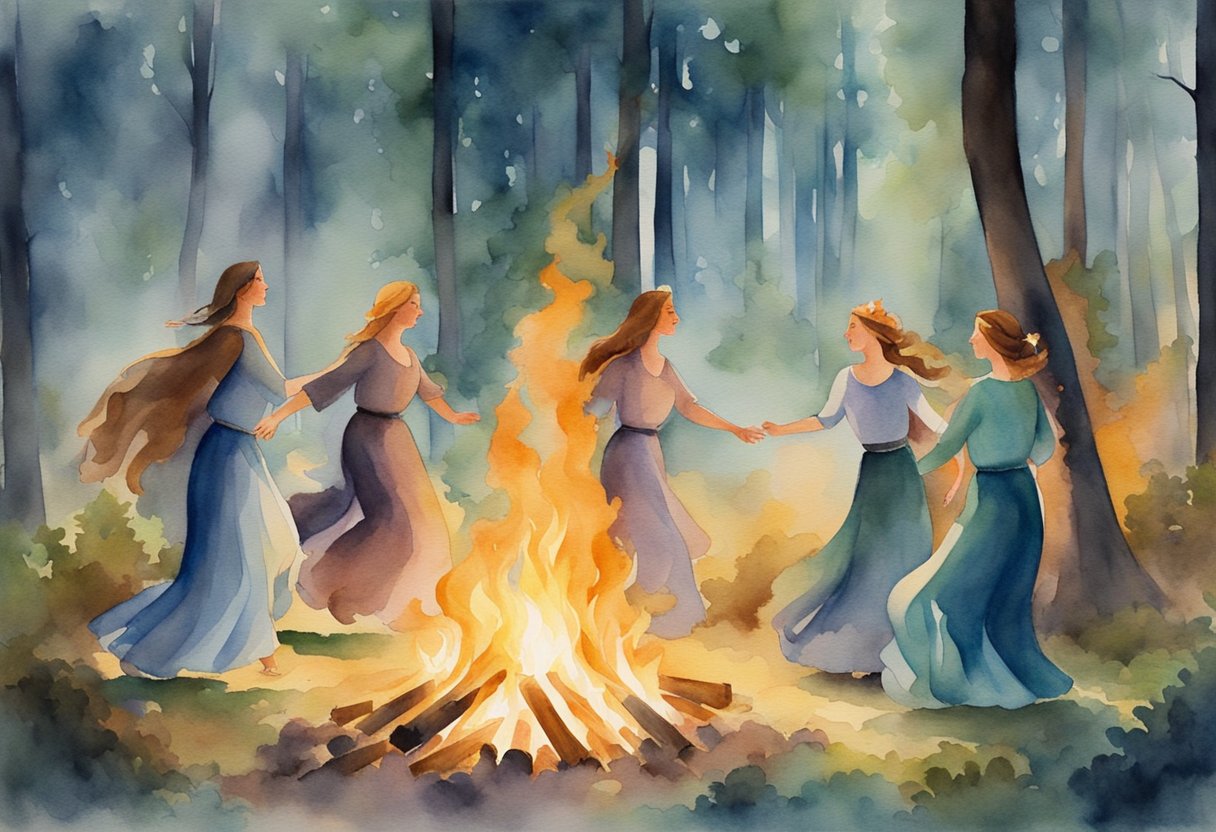
‘Pagan’ has transformed over time. Initially a derogatory term used by early Christians to refer to those who practiced polytheistic religions, it’s now a badge of honor worn by many who align themselves with various pre-Christian or nature-based belief systems. You might hear ‘pagan’ used to describe followers of Wicca, Druidism, or just about any indigenous tradition under the sun.
- Pagan: Term used to describe a follower of various polytheistic religions, often encompassing a reverence for nature.
- Examples: Wicca, Reconstructionist Polytheism, Shamanism
Conversely, ‘Heathen’ is particularly cozy with Germanic or Norse traditions. Think of it like Paganism’s more specific cousin. While it once shared the derogatory zest of ‘pagan,’ these days ‘heathen’ is a tag claimed by those who celebrate the ancient ways of Northern Europe, a path known as Heathenry.
- Heathen: A term originally used to describe those outside of Christianity, Judaism, and Islam, now often specifically associated with Germanic or Norse Paganism.
- Examples: Asatru, Norse Paganism, Anglo-Saxon Paganism
Reconstructing Ancient Beliefs
Now, about getting your hands dirty with past religions. You’re basically a detective piecing together ancient beliefs—no small feat. Paganism and Heathenry are about more than just rocking a Thor’s hammer pendant; it’s about rekindling old ways, keeping the gods’ stories alive, and potentially a lot of digging through historical records.
- Pagan Reconstructionism: An approach where you’re essentially piecing together historical data to revive ancient faiths.
- Heathen Reconstructionism: Focuses on the lived practices of Germanic peoples—say, celebrating Yule or swearing an oath on a ring.
In both paths, you’re not just reading a dusty tome and going with it. Instead, you’re blending scholarship with spirit, making sure those old ways speak to modern hearts. It’s kind of like bridging the gap between past and present—making sure the reverence for old deities remains as strong as ever.
[su_button url=”https://amzn.to/4iB8iJY” background=”#a62def” color=”#ffffff” size=”10″ icon=”icon: magic”]Shop Witchy Supplies[/su_button]
