
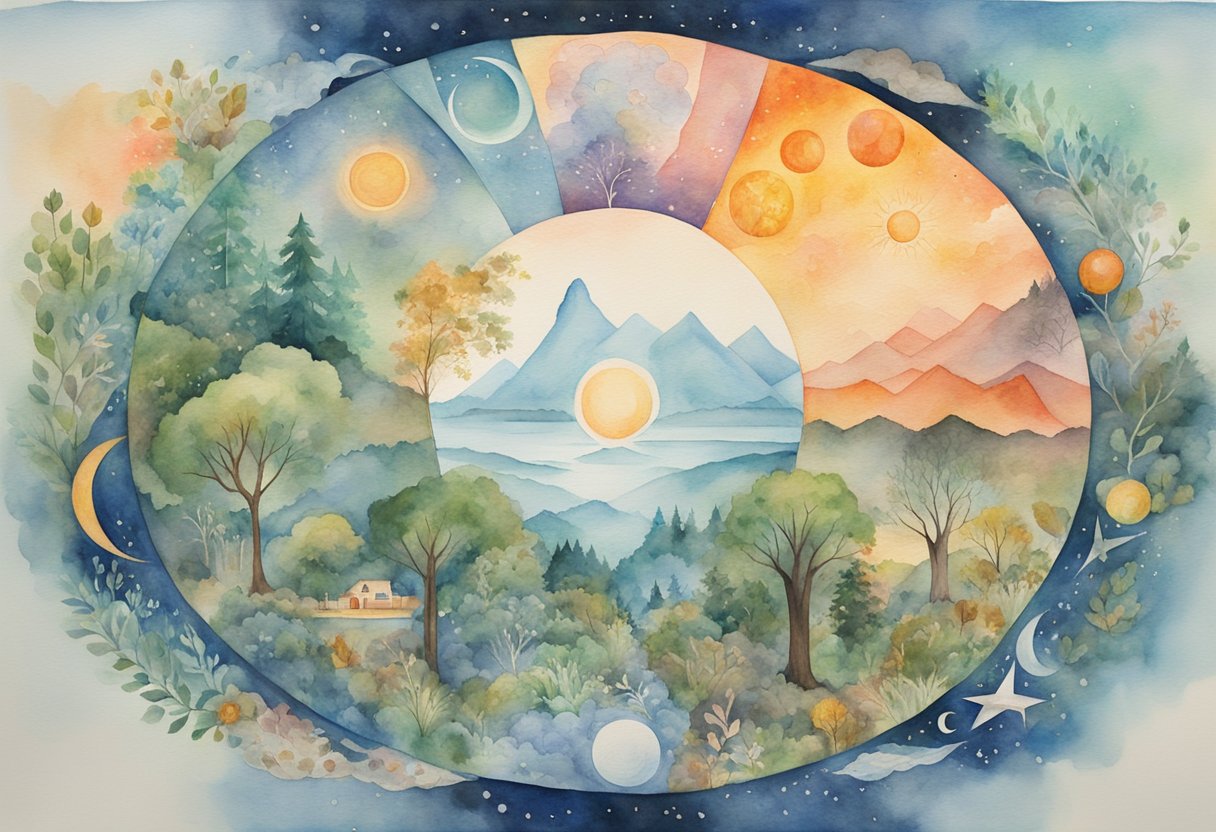
Paganism, rich in traditions and beliefs, often encounters misconceptions and simplified characterizations in mainstream discourse. This ancient path, far from being a relic of history, is a living, breathing spiritual practice for many around the world. To the uninitiated, paganism may seem like an arcane word associated with times long passed, but it is, in essence, a highly diverse and evolving spiritual journey deeply intertwined with nature and the heritage of countless cultures. At its heart, paganism embraces the sanctity of the natural world, finding divinity within its cycles and elements.
The roots of paganism stretch back to pre-Christian times, sprouting from the fertile ground of human spirituality in numerous parts of the world. It is not a singular belief system, but rather an umbrella term that includes a variety of spiritual paths, each enriched by their own pantheons, myths, and rituals. The spiritual landscape of paganism is dotted with gods and goddesses, spirits of place, and ancestral veneration – their worship a testament to the enduring human desire to understand our place within the cosmos. Pagan practices and rituals often mirror the rhythms of the Earth, celebrating the change of seasons and the life forces that permeate the natural world.
Key Takeaways
- Paganism is a diverse and dynamic spiritual path deeply connected with nature and ancient cultures.
- Practices within paganism celebrate natural cycles and embrace a variety of gods, goddesses, and spiritual entities.
- Modern paganism is a resurgence of ancient traditions, manifesting in various branches that reflect its multifaceted nature.
The Roots of Paganism

Historical Overview
In the annals of history, Paganism denotes a broad array of spiritual practices predating the Abrahamic religions. Ancient cultures are the bedrock of Paganism, with many practices originating in Indo-European societies. These religions often shared a worship of elemental forces and a pantheon of deities reflective of the natural world. The term “pagan” itself later emerged as a label used by early Christians to describe non-Christian and non-Jewish peoples, those outside the fold of monotheistic belief.
Key Traditions and Cultures Influencing Paganism
- Norse Mythology: Scandinavian roots offer a rich vein of Pagan practice, featuring deities like Odin and Thor.
- Ancient Egypt: The Egyptians’ connection to their gods was enshrined in every aspect of their society, with a deity for nearly every phenomenon and place.
- The Celts: Spread across Europe, Celtic traditions are a complex interweaving of folklore, seasonal cycles, and gods connected to the earth and nature.
- Roman Empire: As a mosaic of religious beliefs, the Roman polytheistic system absorbed deities and practices from the many cultures within its expanse, emphasizing ceremonial traditions.
Paganism vs. Monotheistic Religions
Scholars often contrast the polytheistic structures of Paganism with the monotheism found within Judaism, Christianity, and Islam. These Abrahamic faiths center around the worship of a single, omnipotent God, a stark contrast to the Pagan celebration of a diversity of deities and spirits. Jews, Christians, and Muslims often characterized Paganism as antithetical to their belief in one true God, leading to centuries of misunderstanding and conflict.
Understanding Pagan Beliefs

Polytheism and the Divine
Pagans often embrace a polytheistic view, celebrating a pantheon of deities. These gods and goddesses manifest diverse aspects of life and the universe, each embodying unique characteristics and roles. Rather than a single omnipotent being, Pagan traditions may honor a wide spectrum of divinity, from the forge master who sparks inspiration to the gentle eddies of wisdom found in streams personified as deities.
- Deities: Varied and numerous
- Examples: Thor, Brigid, Isis, and Anubis
- Traits: Reflective of human experience and natural phenomena
- Worship: Individualized rites and communal ceremonies
Nature and the Natural World
The breath of the earth speaks volumes in Pagan spirituality, where the natural world is not just a setting, but a participant in the sacred dance of life. Here, nature is revered as the embodiment of the divine; a living, pulsating entity that bears the wisdom of the ancients and the secrets of the divine. Pagans often hold rituals in natural settings to celebrate seasonal cycles and foster a harmonious relationship with the environment.
- Reverence: Seasonal cycles and environmental harmony
- Rituals: Often performed in natural settings
- Nature-based: Integral to practice and belief
Animism and Ancestral Spirits
In the whispering winds and the stoic mountains, there exists a consciousness that Pagans acknowledge and honor. Animism is the belief that all things—be they stones, rivers, or trees—possess a spiritual essence. This reverence extends to ancestral spirits, guiding influences that remain connected to the living. Through rituals and respect, one may commune with these spirits, seeking guidance and maintaining a bond that transcends the physical realm.
- Animism: Spirit in all objects
- Natural objects: Rocks, plants, animals
- Ancestral Spirits: Venerated and communed with
- Practices: Offerings, storytelling, and honoring traditions
Pagan Practices and Rituals
Celebrating the Seasons
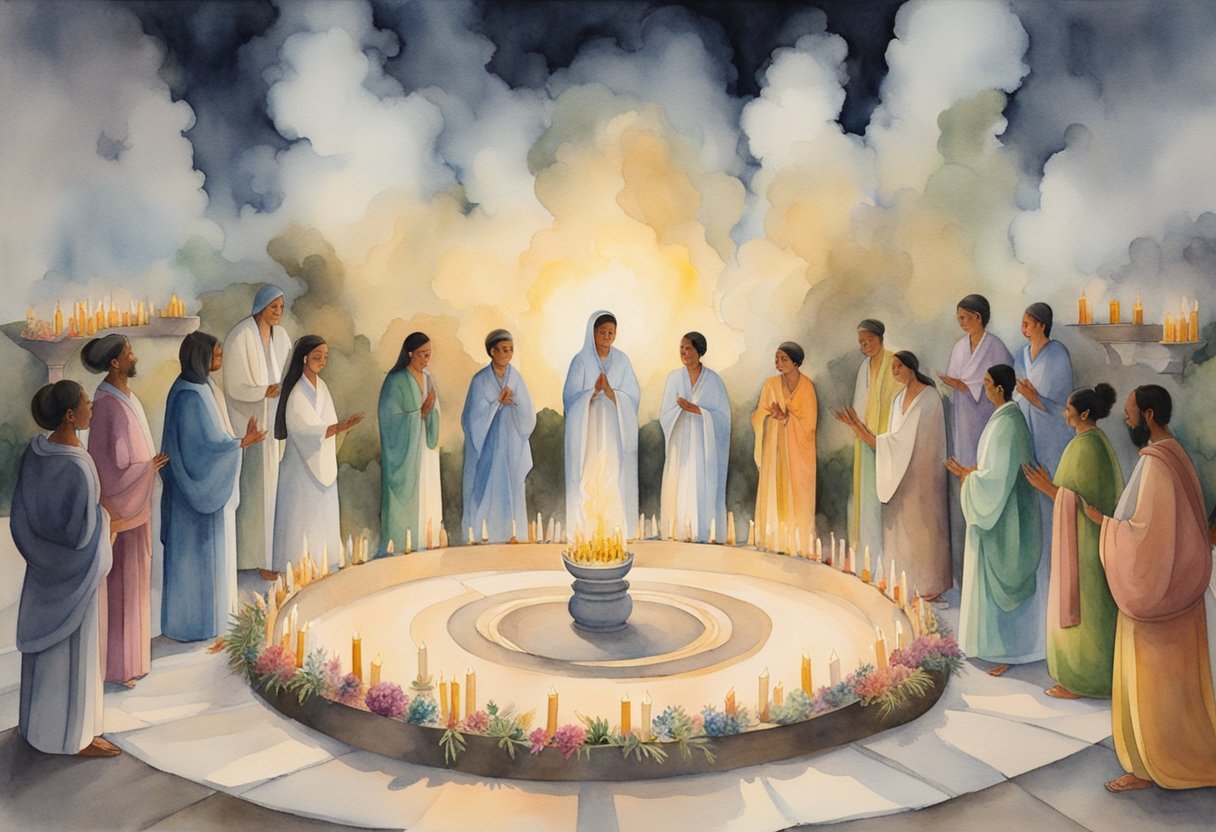
Pagans hold the Earth in great reverence and are intricately attuned to the cyclical nature of the seasons. Celebrations known as Sabbats mark the transitions and midpoints of the solar year. These include Imbolc, which heralds the beginning of spring and is oftentimes observed with candles and seeds symbolizing the returning light and life. Other seasonal festivities range from the summer solstice’s vibrant abundance to the introspective whispers of fall, where pagans may gather to express gratitude and honor the harvest.
Rites of Passage
Life’s milestones are sacred moments to the pagan community and are honored through various rites of passage. These rituals can include Wiccanings, which are blessings for newborns, handfastings that spiritually bind partners in a form of marriage, and crossroad ceremonies to celebrate the transition into adulthood. Each rite of passage is a profound observance, rich with symbolic gestures and ceremonial acts that reflect the individual’s path and place within the web of life.
Magic and Witchcraft
The practice of magic is a cornerstone of many pagan pathways, particularly in traditions like Wicca and forms of witchcraft. Practitioners often engage in spellwork to manifest intentions, weave protective barriers, or foster healing. The kitchen witch epitomizes the art of infusing everyday actions with magical intent, where cooking becomes a delicious concoction of spellcraft. These rituals are not done whimsically but with deep respect and understanding of the natural laws and the energies being woven.
Modern Paganism and Its Branches
Common Pagan Paths Today
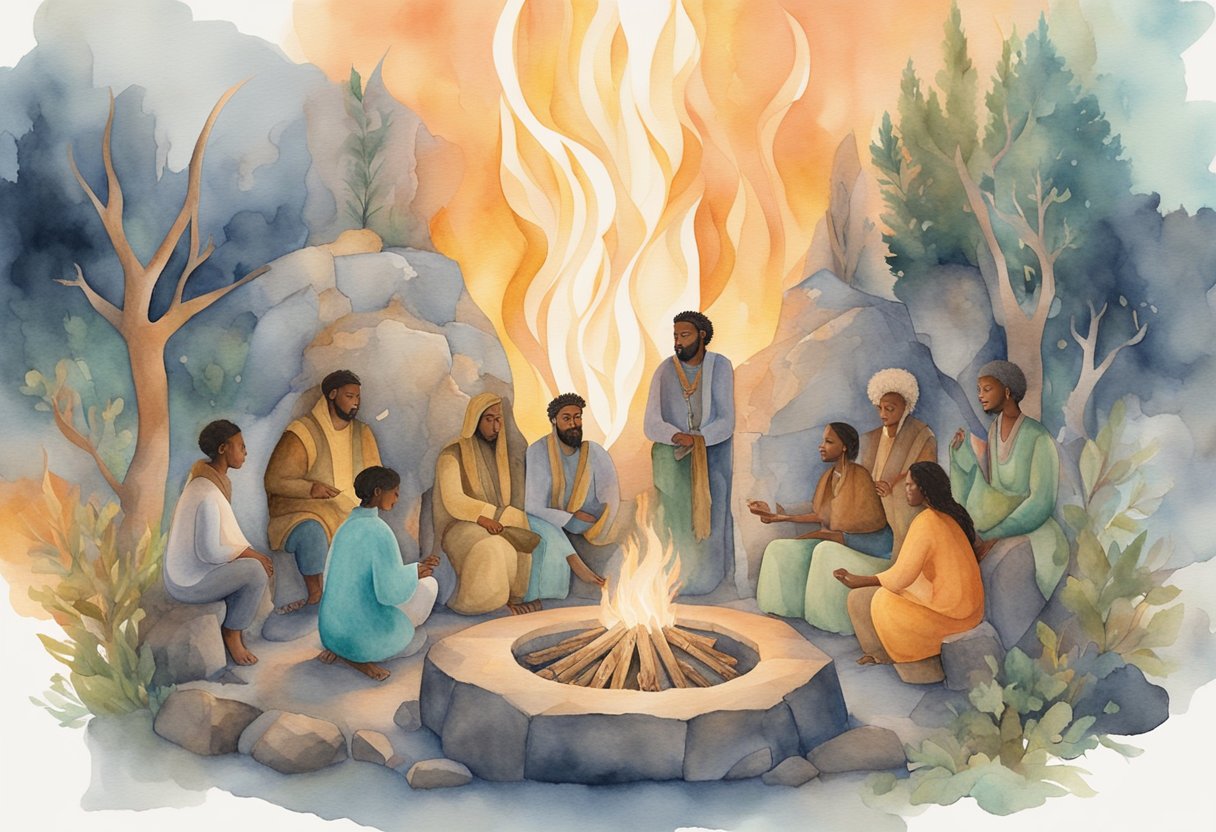
Neo-Paganism represents an umbrella term that gathers under its wide canopy a variety of traditions, which are often polytheistic or pantheistic with a focus on nature-based spirituality. Among these, Wicca emerges prominently, with its roots in ceremonial magic and folk ritual of early 20th-century England. Wiccans typically embrace the worship of a Goddess and a God, celebrate seasonal festivals known as Sabbats, and often practice ritual magic.
In the currents of this ever-flowing river, one also finds Druidry, a path drawing inspiration from the nature veneration and lore of ancient Celtic priests. Modern Druids engage in practices to honor the Earth and connect with the cycles of nature. Along a similar stream, Heathenry or Heathenism flourishes. Heathens reconstruct and revive the pre-Christian beliefs of the Germanic peoples, honoring deities such as Odin and Thor and celebrating rites that align with ancient festivals.
Reconstructionists stand in another grove of the Pagan forest, choosing a scholarly path to recreate historical religions. They work diligently, piecing together the rituals and beliefs of ancient civilizations like the Greeks, Egyptians, and Slavs, aiming for authenticity and historical accuracy in their practices.
Influence of Feminism and Environmentalism
The brush of feminism paints bold strokes across the canvas of modern Paganism, highlighting the divine feminine and promoting gender equality within the spiritual context. Women have found empowerment within these practices, as many Pagan traditions, particularly Wicca, emphasize the Goddess alongside or even above the God, offering a counterbalance to the male-dominated narratives of many mainstream religions.
Likewise, a deep-rooted reverence for Mother Earth is a common soil in which Pagan spirituality flourishes. The tendrils of environmentalism are entwined with Pagan practices, reinforcing the sanctity of the natural world and the necessity for its conservation. Pagans often engage in ecological activism, viewing the Earth as a living entity to be respected and protected. This respect for nature is a salient feature that often translates into lifestyles and rituals that harmonize with the environmental ethos.
As branches of a robust tree, these traditions provide shelter and connection for individuals seeking a spiritual path that reveres the past, celebrates the present, and sows seeds for a harmonious future with the natural world.
Paganism in Society
Public Perception and Misconceptions
Society often views Paganism through a lens clouded with myths and inaccuracies. Pagan practices, erroneously equated to devil worship or dark magic, actually embody a spectrum of spiritual paths, each with its own ethos and traditions. Non-Christians and even some Christians may carry preconceived notions that stem from historical conflicts between Christianity and various Pagan traditions. In reality, Paganism encompasses a variety of nature-based beliefs, some of which predate Christianity. Molly Remer, a modern Pagan scholar, emphasizes the need to dispel these misunderstandings, suggesting that informing the public is key to bridging the gap between reality and fiction.
Paganism and Interfaith Dialogue
Interfaith dialogue serves as a bridge that connects isolated islands of belief. The UU Church, with its open and accepting principles, frequently engages in conversations that include Pagan voices, fostering a growing understanding between religious practices. For Paganism to be interwoven into the fabric of communal spirituality, entities like Cherry Hill Seminary, which offers Pagan Studies, play a pivotal role in educating both Pagans and non-Pagans to appreciate the depth and breadth of Pagan traditions within the context of a multicultural society.
Legal Recognition and Rights
In terms of legal standing, the United States has made strides in recognizing the rights of Pagans. Religions, like threads, can be strong or delicate, but all should be given equal weight under the law. Paganism’s increasing presence in societal structures is evidenced by formal recognition and the protection of Pagan religious practices. The affirmation of Pagan spiritual practices ensures that the followers can celebrate their traditions without fear of discrimination, embodying the nation’s commitment to religious liberty. The enactment of laws that guard these rights marks a significant milestone in the journey of Pagans in society.
Personal Experiences in Paganism
Finding One’s Path
Seekers often begin their spiritual foray with a heart full of questions, leading them through myriad doorways of Pagan traditions. It is in these first tentative steps that individuals may discover a resonance with natural cycles, revere various deities, or find comfort in the wisdom of Cherry Hill Seminary’s courses. These moments of awakening serve as profound affirmations of one’s chosen path.
Community and Solitary Practice
As saplings grow both in groves and in solitude, Pagans, too, enrich their practice by either cultivating shared rituals or by embracing the quiet introspection of solo worship. The essence of community offers guidance and fellowship, whereas the path of the solitary practitioner often leads to self-reliance. Both approaches, however, strive to build a personal gnosis that’s as solid as an oak’s deep roots.
Personal Gnosis and Ethics
Individuals navigate their spiritual course by the stars of personal gnosis while tethering their practice with the cords of ethics. These revelations manifest through dreams, meditation, or life events, allowing Pagans to sculpt their own beliefs. The ethics that guide their practice, though as diverse as the leaves in a forest, share a common respect for life’s sacred dance.
Paganism and Global Traditions
Comparisons with Non-Western Practices
In the realm of spiritual traditions, Hinduism and Shinto may at first seem worlds apart from Paganism, but closer inspection reveals a shared reverence for nature’s divinity. Hinduism, with its deep roots in Indian culture, blooms with a pantheon similar to the polytheistic tendencies found in many Pagan practices.
- Shinto, Japan’s indigenous spirituality, echoes this respect for natural elements and ancestral spirits, akin to the rituals celebrated by Celtic and Germanic cultures. Moreover, Native American practices with their veneration of Earth, its creatures, and their fellow humans, mirror the core tenets of Pagan belief systems, emphasizing the sacred connection between all living things.
Adaptation and Syncretism
Paganism’s fluid nature allows for adaptation and syncretism, where spiritual currents from various cultures interweave seamlessly. Celtic Reconstructionist Pagans strive to revive the ancient practices of the Celtic people, grounding them in scholarly research and historical accuracy.
- Voodoo, often misrepresented and misunderstood, shares a multitude of Paganism’s characteristics, such as the emphasis on community and the spiritual agency of nature.
- Within the New Age movement, elements like crystal healing and astrology from diverse origins enrich and diversify contemporary Pagan practices.
- The Roman Empire once witnessed the blending of deities from the conquered lands with their own, a historical form of syncretism that parallels modern Pagans’ integration of different myths and rituals from Germanic cultures and beyond into their own spiritual mosaic.
Cultural Expression and Paganism
Art, Music, and Literature
Paganism infuses creativity, as seen in the stirring visuals, sounds, and narratives that permeate Alexandrian and Gardnerian Wicca. Artists within these traditions draw inspiration from the natural world and the mythology of classical times, such as that of the Roman Empire. Associated art often portrays deities, natural elements, and sacred symbols, forming an aesthetic that’s not only beautiful but also teeming with spiritual significance.
They create music that carries the essence of their spiritual practice, sometimes incorporating traditional instruments, chanting, and rhythms that reinforce their connection to the Earth. Literature within these paths ranges from poetic spells and rituals to reflective works that dive deep into the philosophies and teachings of the Craft.
Festivals and Community Events
Pagans gather throughout the year to celebrate festivals that mark the changes of the seasons and commemorate mythological events. Take the Recon spectrum of Paganism, which aims to reconstruct historical religious practices. Their festivals often contain elements authentic to the cultures they’re reviving, supporting a communal link to the past.
Community events serve as a hub where Pagans of various paths, including both Alexandrian and Gardnerian Wicca, can unite to honor shared values. These events are essential in fostering a sense of kinship among practitioners, as well as providing opportunities for the public to learn about Pagan practices in an inviting environment. Whether it’s a gathering in a local community center or a larger festival in the heart of nature, these occasions are charged with joy, reverence, and an enduring sense of belonging.
Tools and Symbols in Pagan Practice
Use of Crystals and Herbs
Crystals serve as the earth’s whispers, echoing ancient wisdom through their crystalline structures. Their usage spans various rites, where they are often selected for their specific energies. For example, amethyst is commonly used for spiritual protection and enhancing intuition, while rose quartz promotes love and healing.
Herbs equally hold a sacred space in Pagan rituals. With scents that transport one to venerable forests and fields, herbs like sage and lavender are used for purification and calming the spirit. The use of these animistic elements bridges the material and spiritual worlds, inviting a balance of energies during ceremonial practices.
Understanding Ritual Tools
Among the array of ritual tools in Pagan practice, the following are significant:
- Athame (Ritual Knife): A symbolic blade, often used to direct energy rather than for physical cutting.
- Wand: An embodiment of the practitioner’s will, wands are used to channel energy and intent.
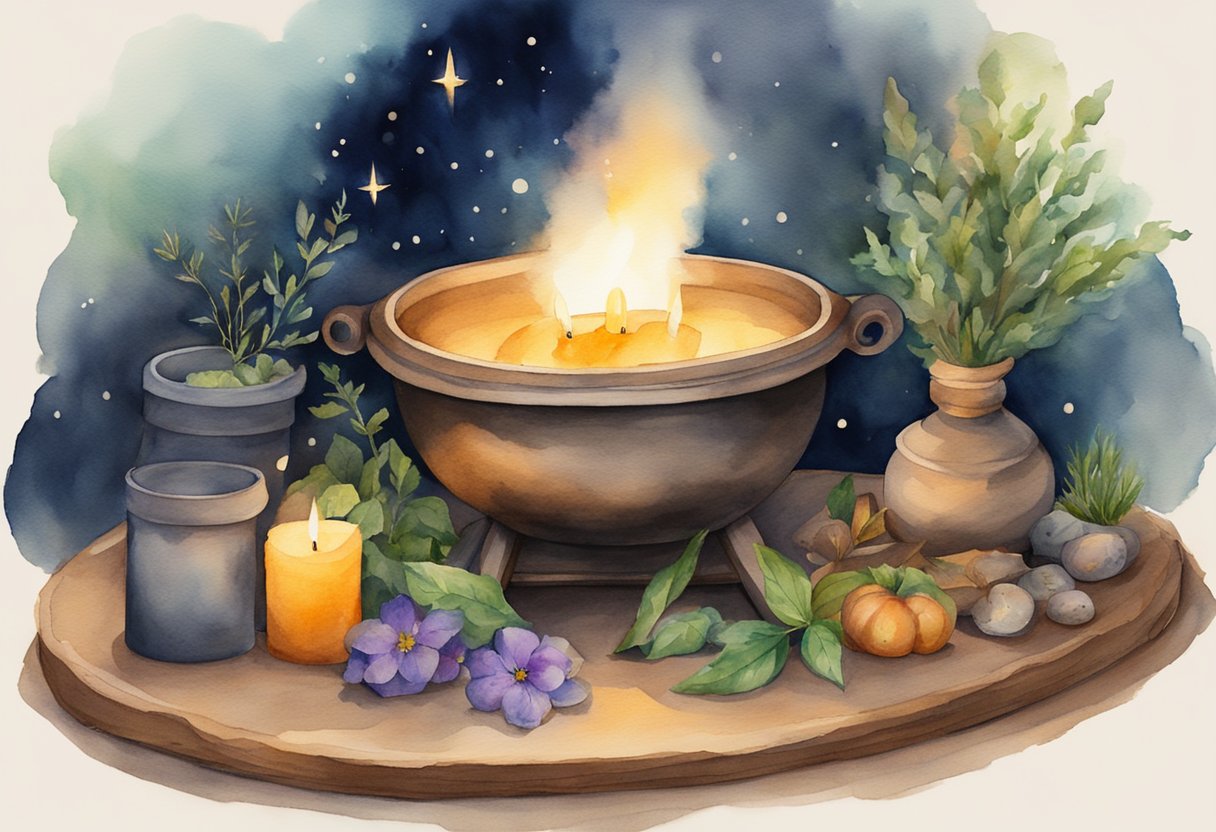
- Cauldron: A vessel symbolizing the womb of the Great Mother, often used for scrying or brewing magical concoctions.
- Pentacle: A protective and grounding symbol, the pentacle represents the five elements—earth, air, fire, water, and spirit.
These instruments are not merely physical objects; they are the keys that unlock the door to the deeper mysteries. Through their use, Pagans forge a link with nature’s rhythms, embodying the dance of the cosmos within their sacred spaces.
