

Embarking on the path of witchcraft is a journey uniquely personal and profoundly transformative. As beginner witches weave their way through the intricacies of the craft, it’s not uncommon to encounter a series of learning curves. Crafting spells, harnessing intentions, and understanding the rich traditions of witchcraft can be as enchanting as it is challenging. Often, new practitioners find themselves stumbling over common pitfalls, which, while entirely natural, can impede progress and lead to feelings of frustration or discouragement.
Witchcraft is an ancient practice rooted in the natural world and the subtle energies that permeate it. For those starting out, eager to connect with these forces, patience and perseverance are valuable allies. It is essential for neophytes to move beyond the allure of powerful spells and enchanting rituals to grasp the foundational principles that underlie effective magical practice. A key aspect of the journey involves cultivating a relationship with the self and the environment, fostering a deep respect for the ethical dimensions that guide responsible witchcraft.
Key Takeaways
- New witches often navigate common challenges as they learn.
- Understanding core principles is vital for effective magical practice.
- Engaging with the community enriches a beginner’s journey in witchcraft.
Understanding Witchcraft Traditions

Appreciating the Roots of the Craft
Witchcraft, in its myriad forms, is deeply rooted in history, extending its branches through hundreds, if not thousands of years. The tradition of witchcraft is not a singular, monolithic practice but a quilt of methodologies, each with its distinct heritage. One must recognize that the roots of the Craft dip into the soils of various cultures and epochs, weaving a storied past where each tradition thrived in its unique milieu. For instance, Wicca is a more contemporary witchcraft tradition that Gerald Gardner popularized in the mid-20th century. It underscores the duotheistic worship of a Goddess and a God, adherence to the Wiccan Rede, and the celebration of solar and lunar cycles known as Sabbats and Esbats.
Diverse Practices Across Cultures
They shall find an astonishing diversity in the practices of witchcraft across cultures, reflecting localized customs and the adaptation of the Craft to fit the spiritual and material needs of its practitioners. From the shamanic traditions of indigenous societies to the ceremonial magick of the Hermetic Order of the Golden Dawn, each practice encapsulates a segment of the vast spectrum of the Craft. Take, for example, African traditional religions, which often blend ancestor worship with the manipulation of natural energies, compared to Nordic traditions that honor deities such as Odin and Freya and esteem the runes for divination and spellwork. Within Wiccan circles, there is also plurality, with some practitioners following structured, initiatory paths like Gardnerian or Alexandrian Wicca, while others adopt a more solitary and eclectic approach to their practice.
Setting Intentions and Goals

The Power of Intent
Intent forms the spiritual heart of witchcraft, where one’s will intersects with the fabric of reality. It is not merely about wishing; it involves a focused state of mind. Through meditation, a practitioner can hone intent by quieting the mind and nurturing a singular focus. Visualization strengthens this process, as the witch imagines the goal with richness and detail, giving it form within their conscious thought. Solidifying intent ensures that energy flows where attention goes.
The Importance of Clear Goals
Clear goals are the compass by which a witch navigates their magical practice. They bracket the infinite possibilities into a path that one can walk with conviction. Goals should be explicit, as ambiguous aims can lead to diluted results. Writing down these goals can solidify their presence in the physical world, creating a tangible reminder of one’s spiritual aspirations. It is the clarity and precision of these goals that allow for a targeted and effective magical working.
Selecting and Using Magical Tools

Choosing Your Tools with Purpose
When beginners embark on their mystical path, they often believe that accumulating a vast array of tools is necessary. However, the wise witch understands that the power lies in the quality and significance of each item.
- Intention: Every tool chosen should have a clear purpose in mind. For instance, candle colors are selected based on the spell’s intent; a red candle for passion, a blue one for healing.
- Personal Connection: The tools ought to feel like an extension of one’s being. A wand or athame must resonate and feel like a natural extension of one’s own power.
- Quality over Quantity: A few highly resonant and energetically aligned tools are far more powerful than a trove of items that hold no personal significance.
Respecting the Energy of Tools
Once chosen, respecting and understanding the latent energy within each tool is vital for a potent practice. Tools are not mere objects; they carry with them the essence of the natural world and the energies of their maker and user.
- Cleansing Rituals: Before usage in any ritual, it is important to cleanse tools to remove any previous energies. This can be done through smoke cleansing, burying in salt or earth, or using moonlight.
- Consistent Practice: A practitioner must regularly engage with their tools, imbuing them with their own energies and creating a profound energetic bond.
- Storage and Care: Properly storing and caring for tools enhances their energy. They should have a designated, respectful space and be handled with intention.
Through these subsections, the novice witch can foster a deep and powerful connection with their magical tools, enhancing their craft with purposeful selections and conscientious, respectful tool use.
Research and Knowledge Acquisition

Investing Time in Learning
The path of witchcraft is rich and diverse, demanding one’s dedication and time to procure a deep understanding. Beginners must acknowledge that learning is a continuous process, not an overnight journey. They should carve out regular time slots for study and practice, integrating their newfound skills into daily life.
- Schedule Daily or Weekly Study Sessions: Mark the calendar for consistent times to immerse oneself in the craft.
- Practical Application: Alongside theoretical study, they should apply their knowledge to simple spells or rituals, enhancing the learning experience.
Finding Reliable Resources
With the plethora of information available, distinguishing between fact and fiction is critical. Beginners often look to the internet, where resources are abundant but can be misleading. It’s vital to utilize reliable resources, including texts from seasoned experts and validated online portals.
- Check Authors’ Credentials: Look for works written by respected individuals in the field.
- Use Reputable Websites and Forums: Engage with online communities that uphold a standard of integrity and scholarship.
Through careful research and vetting of resources, beginners can build a trusted collection of materials that will support their journey into the mystical world of witchcraft.
Spell Casting Techniques

Understanding Spell Components
Spell components are the individual elements that compose a spell, each holding specific energies that shape the spell’s outcome. Candles, for instance, are used widely due to their ability to concentrate and emit energy. When they engage in candle spells, witches must choose colors corresponding to their intent—red for love, green for prosperity, and white for purification. They must also understand that the consecration of these tools is as important as the spell itself.
The Sequence and Timing of Spells
The order in which a spell’s components are arranged and activated can greatly influence its effectiveness. It’s imperative for witches to cast spells in a sequence that naturally builds up energy towards their goal. Initiating a spell typically begins with casting a circle, a fundamental step that serves to protect the practitioner and create a sacred space. Equally important is the timing of a spell—aligning with specific lunar phases, for example, can amplify a spell’s power, with the waxing moon favoring growth and the waning moon aiding in release.
Ethical Considerations in Witchcraft

Avoiding Harm and Manipulation
Practitioners are advised to conscientiously avoid causing harm through their magical workings. It is deemed essential to conduct spells and rituals, being ever-mindful of the consequences they might have on others and the world at large. Harm can manifest in numerous ways; therefore, a vigilant approach towards maintaining ethical balance is imperative. Defensive practices are encouraged, provided they aim to protect without causing undue harm.
- Do: Utilize spells for self-protection and the improvement of personal circumstances.
- Do Not: Cast spells intended to harm or curse others, as this disrupts the ethical balance.
Respecting Free Will
A potent aspect of witchcraft ethics revolves around the respect for individual free will. Spells that manipulate or control the actions or emotions of another person are deeply frowned upon. Respecting others’ autonomy is a foundational tenet of ethical spellcasting, reflecting the community-focused values that many witches espouse.
- Do: Craft enchantments that empower oneself or foster positive energies.
- Do Not: Create bindings or love spells directed at specific individuals, as this invades their free will.
By adhering to these ethical guidelines, witches honor the interconnectedness of all beings and act as stewards of magical practice.
Common Mistakes and Misconceptions

Expecting Instant Results
Many newcomers believe that spells and rituals will yield immediate effects. Unfortunately, this isn’t the case. Witchcraft requires patience and understanding that the universe works in its own time. One common mistake is to cast a spell and anticipate instant results, akin to flipping a light switch. Magic is a process, often a subtle and gradual one, not a rush order to the cosmos.
Overlooking the Need for Grounding
They often overlook the fundamental practice of grounding, which is the process of connecting oneself to the earth’s energy. Grounding provides a stable foundation for magical work, ensuring that one remains balanced and centered. Without this connection, practitioners may find themselves experiencing heightened emotions or a sense of being unmoored spiritually.
Ignoring the Significance of Symbolism
Symbolism is the soul of witchcraft, acting as the language through which intentions are expressed and energies are manifested. Newcomers sometimes dismiss the importance of symbols within their practice, not fully grasping how integral they are to creating effective magic. Whether it’s the elements, colors, or ritual tools, each symbol has a uniquely powerful resonance that should be both understood and respected.
Connecting with the Witch Community
Finding Mentors and Peers
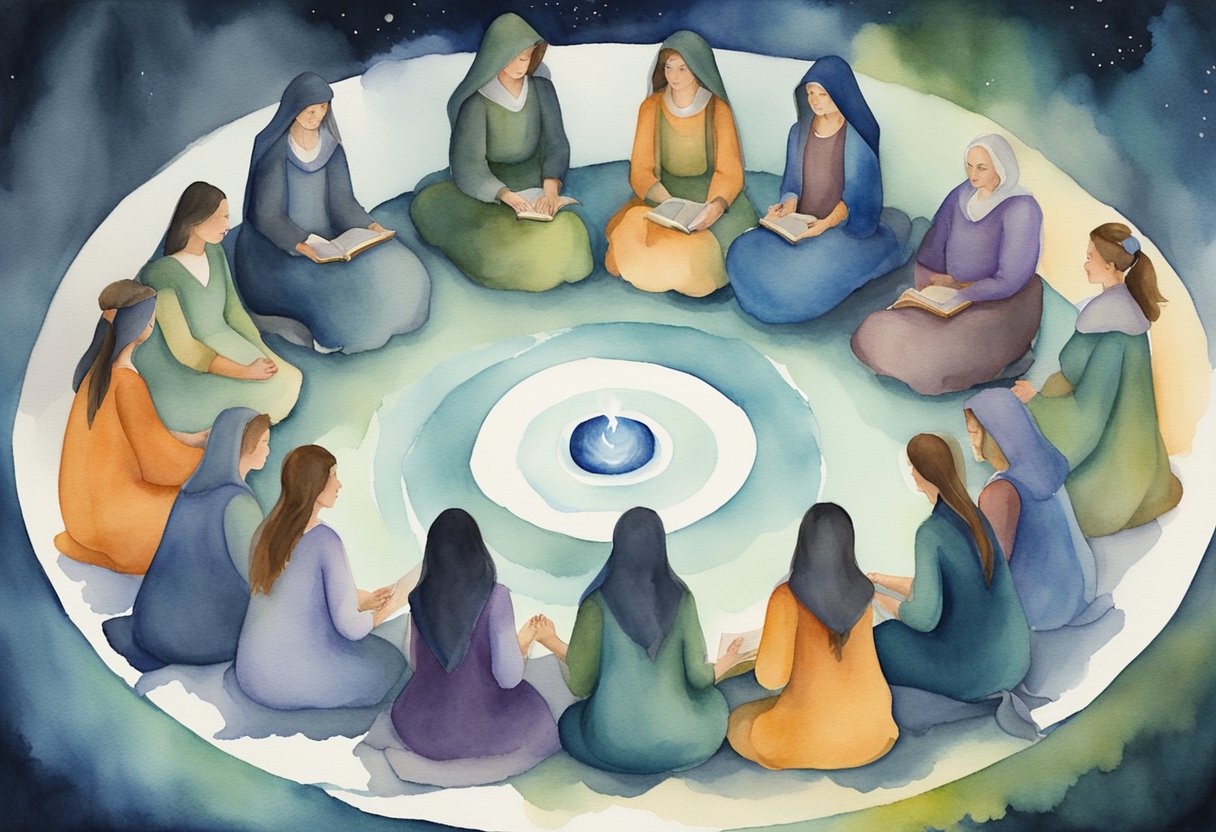
In their journey, a beginner witch should prioritize finding mentors and peers. The community includes many subgroups, encompassing various types of witches, ensuring that there’s a niche for everyone regardless of their unique interests or specialties. They can start by attending local meet-ups or joining online forums where they can get started by asking questions and learning about local traditions and practices.
A mentor can be invaluable for a beginner witch seeking guidance. Experienced witches often provide insights that no book can offer and can help budding practitioners avoid common pitfalls. They should approach potential mentors with respect and humility, understanding that the teaching process takes time and energy.
Learning from Experienced Witches
Engagement with experienced witches can be transformative. These individuals bring a wealth of knowledge and often share their successes and struggles openly, providing practical advice. For a beginner witch, observing ceremonies and rites, listening to stories, and seeing spells in action can bolster their confidence and deepen their understanding of the craft.
When the beginner witch encounters obstacles, they should remember that these are natural and even experienced witches continue to learn throughout their lives. It’s in the communal exchange of wisdom and experiences where they’ll find the support necessary to thrive within the magical community. Community participation not only accelerates their learning curve but can also be a source of empowerment as they develop their practice.

ABSOLUTELY LOOOOVED THIS ARTICLE!!! THANK YOU!💕
Really interesting and informative post, with much food for thought.