
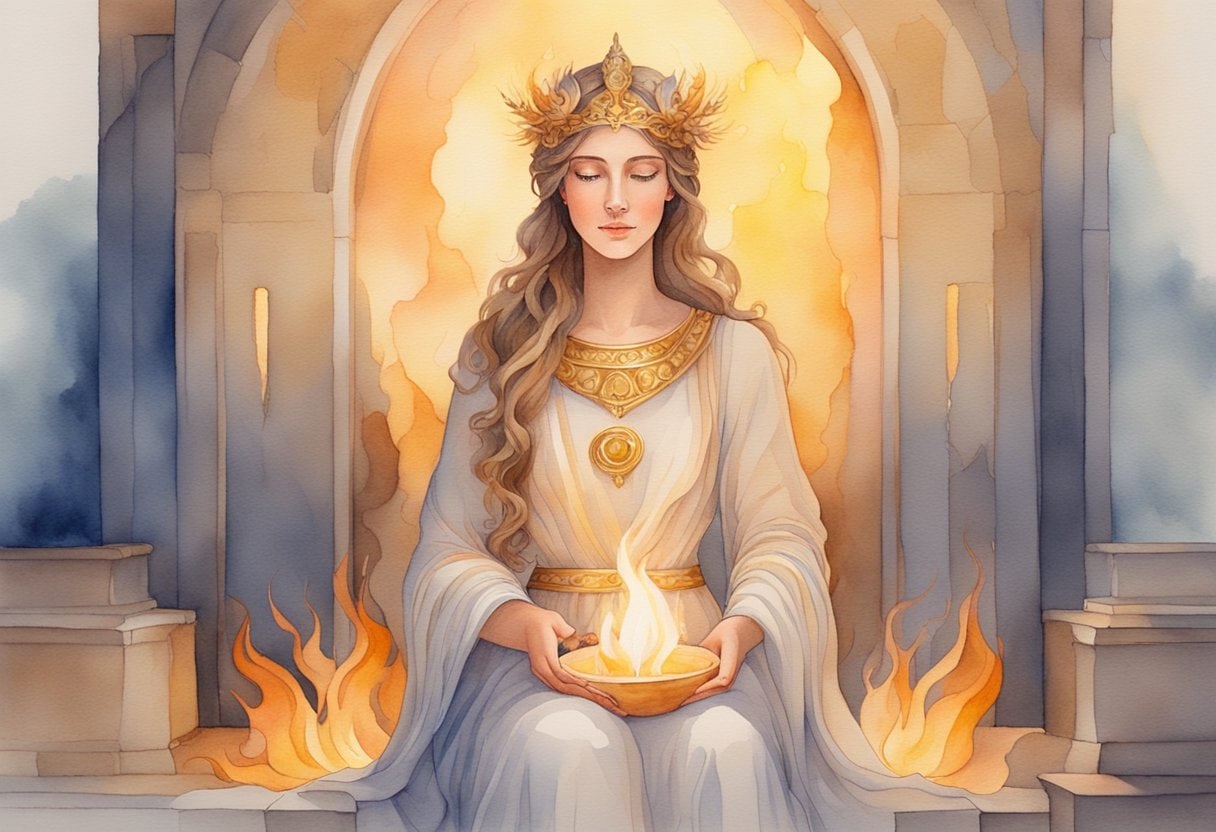
Imagine stepping back into ancient Rome, where you’d find the heart of every home flickering with the sacred flame of Vesta. She isn’t your average goddess with tales of conquest or romance, but rather, she’s the guardian of the hearth, the symbol of home and family. Vesta’s divine duty was to keep the fire burning, not just any fire, but one that represented stability, unity, and the Roman way of life.
You’d also hear whispers of Vesta’s priestesses, the Vestal Virgins, who were the embodiment of commitment and purity. With vows of chastity, they tended to the eternal flame, ensuring that Vesta’s presence was never extinguished. If you ever attended her festivals or observed her rituals, you’d get a real sense of just how much Vesta meant to the Romans. She was more than a goddess; she was the glue that held the Roman household together.
Key Takeaways
- Vesta is the Roman goddess who personifies the hearth and epitomizes family and domestic life.
- The Vestal Virgins played a critical role in maintaining the sanctity of Vesta’s eternal flame and her associated virtues.
- The cult of Vesta influenced Roman society, emphasizing the significance of the hearth in both religious and social contexts.
[su_button url=”https://amzn.to/3YfCaUX” background=”#a62def” color=”#ffffff” size=”10″ icon=”icon: magic”]Shop Witchy Supplies[/su_button]
Vesta: Eternal Flame and Virgin Goddess

The Hearth of Rome and Family Protector
The flame within your home isn’t just for warmth or cooking—it’s a symbol of unity and protection, much like how Vesta was revered in ancient Rome. This goddess wasn’t just about keeping a physical fire alive; she was the embodiment of the hearth and home. Romans believed her presence and protection extended to every family, making her an integral part of their domestic lives. The eternal flame in the Temple of Vesta in the Roman Forum was more than just fire; it was the heart of Rome, mirroring the sacred fire burning in each home.
Vesta and Her Vestal Virgins
Now, imagine a group of women entrusted with a task so vital, that their purity and commitment to a vow of chastity were non-negotiable—to be a Vestal Virgin meant to be chosen as one of Vesta’s own. These priestesses, selected between the ages of seven to ten, were committed to guarding the eternal flame with unwavering dedication. The consequences of breaking this vow were severe, seen as a betrayal to Vesta and the safety of Rome itself. These Vestal Virgins were not just keepers of the flame; they were seen as the embodiment of Rome’s eternal nature.
Ceremonies and Worship: Vestalia and Beyond
You’d find that Romans marked their calendars for Vestalia, the festival in honor of Vesta. Occurring in June, this was when the inner sanctum of Vesta’s temple was opened for women to offer their gifts to the goddess, ensuring her favor and continued vigilance over their hearth and home. Worship of Vesta extended beyond this festival, with her influence present in daily life, as every meal prepared at the hearth was a reminder of the goddess and her ever-present protection. The sacred fire and the rituals surrounding it were a constant thread woven into the fabric of Roman domestic spirituality.
Rituals and Symbols of Devotion
Symbolic Representations of Vesta
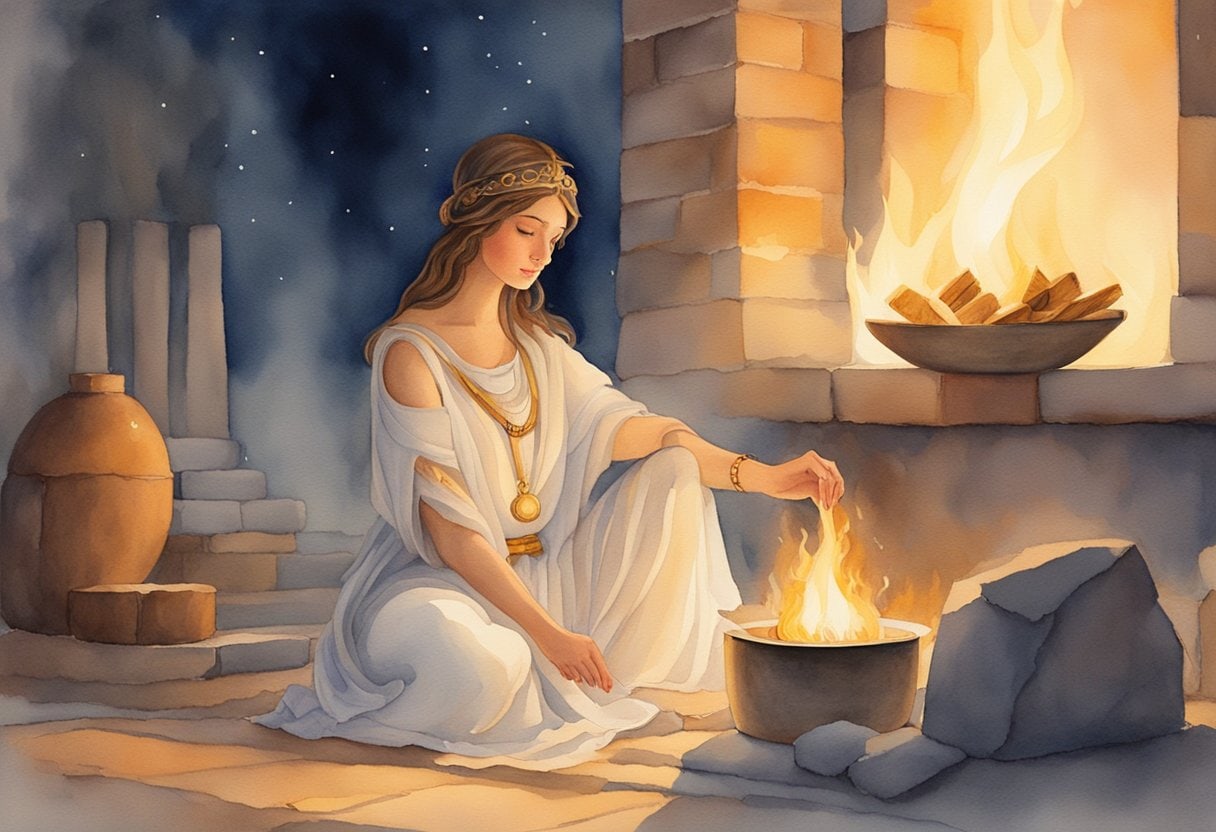
Vesta’s divinity was often captured through various symbols that resonated deeply with Roman society. The sacred fire, constantly burning at her hearth, was the most iconic representation of her presence. You would recognize the gravity of this fire, for it was not merely a symbol of warmth and sustenance but also a beacon of spiritual significance.
At the heart of these symbols stood the Vestal Virgins — priestesses dedicated to Vesta’s service. Their commitment to chastity was intertwined with the belief that their purity maintained the sanctity of the fire they tended. Violation of their vows came with severe consequences, a stark reminder of the gravity of their role.
Temples and Altars: Spaces of Divine Presence
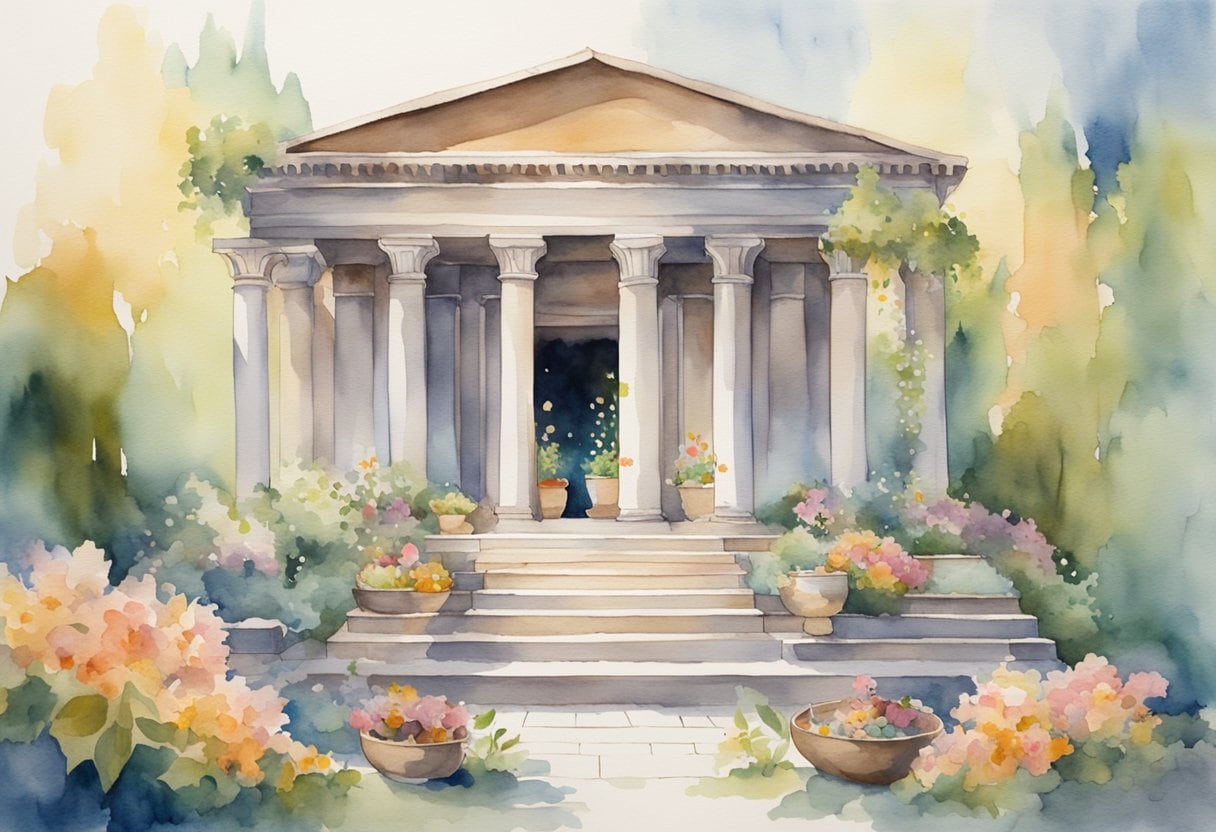
Imagine stepping into the Temple of Vesta, a sacred space resonating with divine energy. The temple, often round to mimic the shape of a hearth, housed the eternal flame. This wasn’t just any old building; it was a place where the boundaries between the mortal and the divine felt blurrier.
On altars within this hallowed space, Romans performed rituals and made sacrifices to honor Vesta. A tradition was to offer simple foodstuffs — bread, wine, perhaps some meat. The act of burning these offerings cemented one’s connection to the goddess, symbolizing sustenance given directly to the deity that protected the heart of Roman homes.
Mythological Origins and Divine Relations

Vesta’s Place Among the Roman Deities
Vesta, your hearth goddess, isn’t just another character in Roman mythology; she’s pure legacy. Daughter of Saturn and Ops, her roots mesh with time itself. She’s siblings with heavy hitters like Jupiter, king of gods; Neptune with his watery domain; and Pluto, who calls the underworld his pad. Then, there’s Juno, who’s all about marriages, and Ceres, mothering agriculture. These Olympians? Yeah, they’re her family.
Dig this: Vesta’s role ain’t about power plays or battles. It’s all about keeping the peace at home, making her the go-to for Roman families wanting a bit of divine backup to keep their home fires burning and their bonds tight. You know, she’s the deity that makes the concept of ‘home sweet home’ ring with an otherworldly buzz.
Cross-pantheon Ties: Hestia and Vesta
Now, let’s bridge the gap between Rome and Greece. Cue Hestia, Vesta’s Greek equivalent—another homebody goddess who digs the hearth. These two, they’ve got some mad sync. Hestia, like Vesta, didn’t mess with the usual godly escapades. No throwdowns or love triangles for her. She was all about the hearth in Greek digs, a sacred flame keeper.
Here’s a fun fact for you: Hestia took a vow of chastity, and so did Vesta. The Romans were super serious about this, dedicating virgins, called Vestal Virgins, to keep Vesta’s flame going, non-stop. Think of them as the high priestesses of cozy vibes, making sure the fire—and the blessings—kept on flowing. So, when you talk Vesta, you’re touching on the warm and fuzzy feelings of home, echoed back from her Greek sis, Hestia.
Influence and Legacy of Vesta’s Cult
Impact on Roman Society and Daily Life
Vesta, you see, was more than just a deity to the Romans; she was the embodiment of the hearth, home, and family life. Her eternal flame in the Forum not only represented the stability of Rome but was also a symbol of unity and peace for the entire community. Servius Tullius, the legendary sixth king of Rome, attributed such importance to her that he integrated the worship of Vesta into state practices. This allowed the cult’s influence to extend beyond the spiritual and into the political realm, cementing its role as a unifying force in society.
The Vestal Virgins, handpicked priestesses serving Vesta, were the guardians of her sacred flame and held in high esteem for their role in maintaining the city’s domestic tranquility and spiritual welfare. Their duties went beyond the religious; they performed rites that were believed to protect the city and its people. If you lived in ancient Rome, your family’s well-being and the city’s fortunes rested in part on their ability to keep that fire alive.
Vesta’s Enduring Presence through Time
Now wander through time to when Emperor Theodosius made Christianity the state religion in 380 AD. You might think that this would spell the end for Vesta and her cult. Yet, the ideals of unity, the sanctity of the hearth, and familial stability continued to resonate, even as paganism waned. The last of the ancient fires may have been extinguished, but Vesta’s influence didn’t just vanish into thin air.
Strangely enough, you can still spot her legacy in modern times if you know where to look. Her symbol, the eternal flame, became a pervasive icon, one that you might recognize in memorials and monuments that strive to uphold the memory of shared ideals and communal harmony. It’s not just about ancient gods or forgotten rituals; it’s about the ideals of peace and unity that continue to shape your notions of community and home.
[su_button url=”https://amzn.to/3YfCaUX” background=”#a62def” color=”#ffffff” size=”10″ icon=”icon: magic”]Shop Witchy Supplies[/su_button]
