

The Christmas tree you might be decking out right now has quite the backstory, a rich narrative woven through time and tradition. Way back before it became a staple of holiday cheer, this evergreen symbol found its roots—it’s hard to believe—in ancient pagan customs. Celebrations of the winter solstice, which occurs in late December, involved bringing greenery into homes as a sign of life persevering through the winter’s chill.
As you string lights and hang ornaments, consider that this tree was once a controversial emblem. Christian leaders weren’t too keen on incorporating something with such earthy origins into their sacred observances. Over time, though, the green boughs that warded off witches and despair mingled with Christian traditions, transforming into a centerpiece of the Christmas holiday. More than just a bearer of gifts, the Christmas tree morphed into a symbol that bridged beliefs and welcomed a message of renewal and hope into homes worldwide.
Key Takeaways
- The Christmas tree originated from pagan winter solstice traditions.
- Early Christian leaders were initially resistant to adopting the Christmas tree.
- Over time, the tree became an integral part of Christmas celebrations, blending traditions.
[su_button url=”https://amzn.to/4iB8iJY” background=”#a62def” color=”#ffffff” size=”10″ icon=”icon: magic”]Shop Witchy Supplies[/su_button]
Historical Roots of the Christmas Tree

Evergreen Symbolism in Pagan Cultures
In various pagan cultures, the evergreen was more than just a plant; it was a powerful symbol. Ancient folks celebrated the winter solstice by bringing these plants into their homes. The greenery symbolized everlasting life and the promise of the sun’s return. This was a common thread across Europe, where the darkest days of winter needed a glimmer of hope.
Saturnalia: Rome’s Influence on Christmas Traditions
Now, let’s talk about the Romans. They had this wild festival called Saturnalia, celebrating Saturn, the god of agriculture. It kicked off in the week leading up to the winter solstice and was all about merriment. Homes were decked out with boughs of evergreen plants. These customs sort of paved the way for some Christmas traditions you’re familiar with today.
Yule and the Northern European Connection
Heading up north to Europe, Yule was the pagan tradition on everyone’s lips. Around the same time as Saturnalia, they’d get a Yule tree, decorate it, and light it up. This likely influenced how you see Christmas trees now, all lit and cozy. It wasn’t just about the lights, though—Yule was about rebirth and the return of the sun, a sentiment shared by Christmas itself.
Christian Adoption and Transformation

From Pagan to Christian: Reinterpreting the Evergreen
You might be surprised to know that the evergreen tree, which brightens up homes every December, wasn’t always a Christian symbol. Long ago, people loved to deck their halls with these green beauties during bleak winters, well before they became part of Christmas traditions. When Christianity spread through Europe, instead of axing the beloved custom, the church gave it a makeover.
Evergreens transformed into a symbol of everlasting life with Christ. Picture this: it’s the same tree, but now it’s got a whole new meaning. It stands in living rooms gleaming with ornaments and tells a tale of faith and eternity. This whole switching gears from pagan to Christian wasn’t about erasing the past; it was about repainting it with a fresh layer of religious significance.
Saint Boniface and the Christmas Tree Legend
Now, let’s chat about Saint Boniface. You’ll fancy this story if you’re into myths with a dash of divine intervention. Legend whispers of a time Saint Boniface stumbled upon some folks prepping for a pagan ritual. They were about to sacrifice a young lad under the mighty oak tree—big no-no for Boniface.
According to the tale, Boniface wasn’t having any of that. He chopped down the oak, and what do you know, a fir tree sprouted from its roots. Talk about a miracle, right? Boniface is like, “Check this out, this triangle-shaped tree is just like the Holy Trinity.” That’s your Father, Son, and Holy Spirit, in case you were wondering. And boom, you’ve got
Evolution of the Christmas Tree Tradition

The Germanic Roots of the Christmas Tree
Long before it dazzled living rooms, the Christmas tree sprang from Germanic soil. You’ve probably heard tales of evergreens used in solstice festivities, but did you know the first decorated indoor trees surfaced in Germany during the 16th century? Yep, German Christians brought decked out trees into their homes, and some even built Christmas pyramids of wood adorned with evergreens and candles if trees were scarce.
From Royal Courts to Common Homes
Fast forward to the 1800s; Queen Victoria and Prince Albert, her German consort, get into the game and wow did they make a splash. An illustration of their family in the Illustrated London News, standing around a Christmas tree at Windsor Castle, made a massive impression. Suddenly, everyone in Britain wanted in on this festive action.
Spreading Through America: A Symbol of Holiday Spirit
Meanwhile, across the pond, the seeds planted by German settlers grew into a full-blown American tradition. It started off small with the first recorded display of a Christmas tree by German immigrants in Pennsylvania. But before you knew it, the Christmas tree became an all-American symbol. It’s all thanks to those German immigrants who kept their yuletide customs close, even as they made the States their new home.
Keep in mind, next time you’re untangling a mess of Christmas lights, you’re taking part in a tradition that’s crisscrossed oceans and leaped across borders. Quite the mystical journey, isn’t it?
Decorations and Symbolism
Ornaments and Their Significance
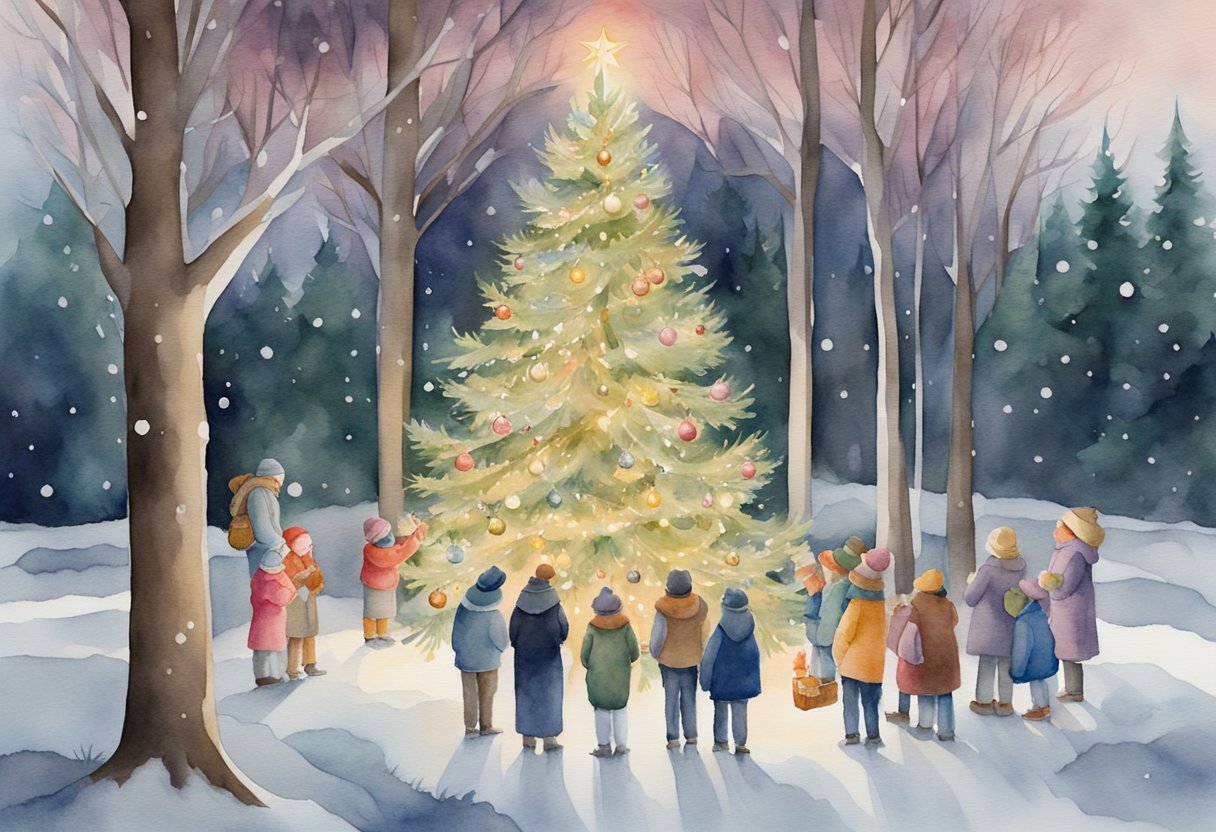
Ornaments on a Christmas tree do more than just sparkle; they carry symbols of the season’s joy and the warmth of family traditions. Ornamental apples, for instance, can be traced back to the Paradise Tree—a representation of Eden—hinting at the Christian narrative within previous pagan customs. Meanwhile, ornamental stars sitting atop the tree represent the Star of Bethlehem, guiding wise men to the birthplace of Jesus. Beyond these connections, ornaments often serve as keepsakes, representing milestones and memories, from baby’s first Christmas to commemorating loved ones.
Candles and Lights: Illuminating the Darkness
Lights intertwined within the branches of your Christmas tree are not just there to look pretty—they’re a wink to the past, symbolizing the piercing of darkness with hope and warmth during the winter solstice celebrations. Historically, candles were affixed to tree limbs to mimic the stark and stunning sparkle of stars piercing the wintry night’s sky. Now, strands of electric lights continue that tradition, filling our homes with a comforting and warm glow, reassuring us during the long, dark nights that brighter days will come.
Christmas Carols and Mistletoe: Layers of Tradition
Underneath the ornament-laden boughs, the magic of Christmas unfolds as you belt out carols, tunes that have been passed down and transformed through generations. Each carol you sing is a thread in the festive fabric, stretching back to winter solstice celebrations and the joyous noise meant to celebrate life in the deepest of winter. And let’s not forget about mistletoe. This sprig of greenery, dangling in archways with a tradition of bestowing kisses on those beneath, carries with it a whisper of its Druid origins, celebrating life and fertility. Just don’t let your aunt catch you underneath it, or you might be due for an awkward smooch!
In this festive season, every glittering ornament, each shimmering light, and even the carols that fill the air, are part of a grander narrative. Yours is a story intertwined with legends and histories as old as time, all decked out in shiny tinsel and twinkling lights.
Modern Practices and Variations
Artificial Trees and the Changing Aesthetic
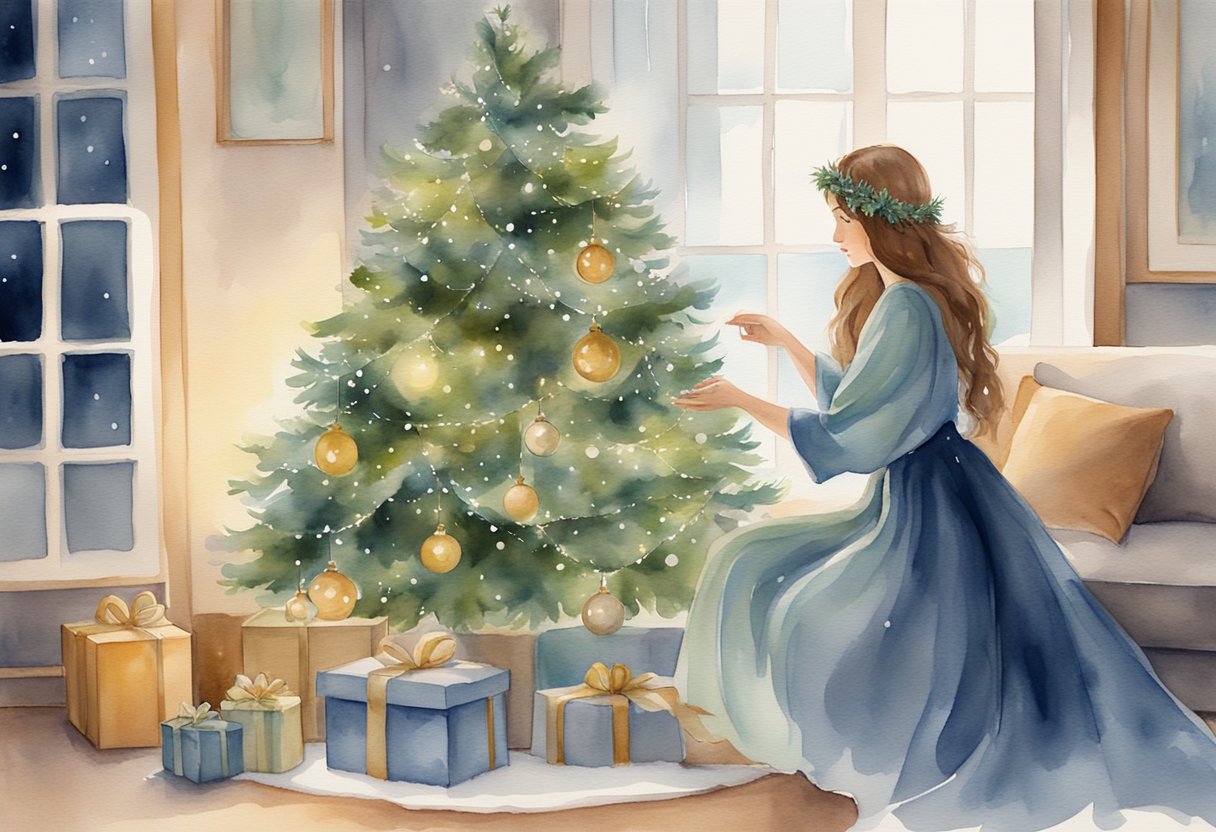
You might have noticed how artificial trees have become super popular lately. Artificial trees offer an easy-peasy way to get your festive fix without the mess of pine needles or the yearly tree hunt. They come in various styles, some even pre-lit, giving you extra time for gift-wrapping and sipping hot cocoa. Offering a more consistent look and often more fire-resistant than their natural counterparts, these trees fit right into your busy modern life while still keeping the spirit of Yggdrasil, the ancient Norse tree, alive in your living room.
Global Variations of the Christmas Tree
Now, let’s take a little trip around the world. In many places, the Christmas tree has adopted unique local flavors. For example, in Australia, don’t be surprised to find a Christmas bush, adorned with colorful flowers. Up North in Canada, you’ll stumble upon mistletoe plants hanging as a beacon of holiday romance. Across different cultures, the Christmas tree symbolizes unity and the warmth of family gatherings, with customs like leaving shoes under the tree in Hungary for Father Christmas to fill with goodies.
You see, wherever you are, the tradition of the tree adapts and grows. It’s all about keeping the spirit of togetherness and celebration alive, whether you’re unwrapping presents under a meticulously crafted artificial fir or marveling at a tree that captures the essence of your local festive narrative.
[su_button url=”https://amzn.to/4iB8iJY” background=”#a62def” color=”#ffffff” size=”10″ icon=”icon: magic”]Shop Witchy Supplies[/su_button]
