The chill in the air and the crunch of fallen leaves underfoot signal that time of the year when Halloween casts its spell on us all. If you’ve ever wondered about the origins of carving pumpkins and donning costumes, you’re not alone. Long before Halloween became a night of candy and costumes, it had ancient, pagan roots. It all started with an ancient Celtic festival in Ireland known as Samhain (pronounced ‘sow-in’). This festival marked the end of the harvest season and the beginning of winter, a time that was associated with death because the Celts believed that on the night of October 31st, the worlds of the living and the dead overlapped.
Over time, the traditions of Samhain underwent a series of transformations under the influence of Christianity, evolving into what we recognize today as Halloween. It’s pretty wild to think how these ancient customs morphed into the practices we see now, isn’t it? You’ve got the trick-or-treating, the costume-wearing, and the pumpkin-carving – all these fun activities have echoes that take us back to Celtic festivals and folklore. It was in America that Halloween really found its stride, incorporating elements from various cultures and molding it into a community-focused holiday filled with fun and fright.
Key Takeaways
- Halloween finds its roots in the ancient Celtic festival of Samhain.
- Its traditions evolved with Christian influences and folk superstitions.
- The holiday was reshaped further by American cultural practices.
[su_button url=”https://amzn.to/4iB8iJY” background=”#a62def” color=”#ffffff” size=”10″ icon=”icon: magic”]Shop Witchy Supplies[/su_button]
Ancient Celtic Roots

Samhain and the End of Harvest
You can think of Samhain (pronounced “sow-win”) as the ancient Celtic version of New Year’s Eve. It marked the end of the harvest season and the beginning of winter, or the “darker half” of the year. This was a significant turning point for the Celts, as it symbolized the line between the ending of the old year and the start of a new one. During Samhain, it was believed that the veil between the living world and the otherworld was at its thinnest, allowing spirits to pass through.
- Date: Celebrated from October 31 to November 1
- Key Beliefs: Transition between the end of the harvest and the onset of winter was spiritually potent
- Traditions: Lighting huge bonfires, wearing costumes to ward off or confuse spirits
Celtic Rituals and Deities
The Druids, the high-ranking professional class in Celtic culture, played a major role in the rites and rituals of Samhain. They believed that this was a time when the deities were more accessible, so it was the ideal moment to commune with them through various ceremonies and offerings. Sacrifices were quite common, usually involving crops and animals, as thanksgiving or appeasement to Celtic gods to ensure the tribe’s survival through the winter.
- Druids’ Role: Conducted rituals and led the community
- Deities: Celebrated and honored, including Cailleach – the deity ruling over the dark half of the year
- Symbols of Samhain: Cauldrons, representational of transformation and rebirth; turnips, used to craft the first ‘jack-o-lanterns’ to ward off evil spirits
You see, Samhain was much more than just an ancient festival; it was a cornerstone of Celtic belief about life, death, and transition, setting the stage for all the Halloween traditions you enjoy today.
Transformations Under Christianity

From Pagan to All Saints’ Day
All Saints’ Day, originally celebrated on May 13, was moved to November 1st by Pope Gregory III and later endorsed by Pope Gregory IV for the entire Church. This shift was strategic – it was like a rebranding that would overshadow the pagan celebration of Samhain with a Christian feast. It’s not about spooks anymore; you’re looking at a day meant to honor all the saints and martyrs, the hallow in Halloween.
All Souls’ Day and Christian Observance
By the 10th century, the church introduced All Souls’ Day on November 2nd. This is the time when you’re meant to remember the faithfully departed and pray for their souls. It’s part of what’s known as the Hallowtide, the triduum of All Hallows’ Eve, All Saints’ Day, and All Souls’ Day. Pope Boniface IV originally introduced the idea of celebrating the saints collectively, and All Saints’ Day was also referred to as All-hallowmas, linking it to the night before, known as All-Hallows Eve – which, yep, you guessed it, became Halloween.
During these days, the religious focus is on the spiritual bond between those in heaven (the Church triumphant), the souls in purgatory being purified (the Church suffering), and the faithful living (the Church militant). This concept really underscores how Christianity aimed to envelop the earlier customs in a fresh, sacred narrative.
Folk Traditions and Superstitions

Evolving Practices in the British Isles
Back in the day, when autumn’s chill was in full swing across the British Isles, your ancestors weren’t just carving pumpkins—they were warding off restless spirits. The tradition of making jack-o’-lanterns began with an Irish myth about a character named “Stingy Jack.” The Irish carved spooky faces into turnips, not pumpkins, to keep Jack’s wandering soul away. As the Irish and Scottish immigrated to America, they found pumpkins in abundance and the modern jack-o’-lantern was born.
The old ways also included “guising” in Scotland, where you’d dress up in disguises and perform a trick – maybe a dance or a song – in exchange for a treat. This is where trick-or-treating got its start. But let’s not forget bobbing for apples, descended from Roman traditions, that became a common game played during Samhain, embodying a cheeky way to predict the future in love and marriage.
Jack-o’-Lanterns and Costumes
Now, for those jack-o’-lanterns – it’s not just a way to show off your artistic chops. Carving these lanterns has its roots in those old superstitions about warding off evil. Light a candle inside, and you’ve got yourself a beacon to frighten away any pesky spirits lurking in the shadows of Halloween night.
Speaking of spooks, donning masks and costumes was your way of blending in with supernatural beings or appeasing them. From witches to demons, the fanciful disguise meant you could roam freely without attracting unwanted attention from the otherworldly crowd. Mumming, part of this very ritual, involved going door-to-door in costume, often reciting verses or songs in exchange for food—a practice that likely evolved into what you now see as kids (and, admit it, adults too) trotting down the street in search of candy.
Halloween in America

Immigrants and the Melting Pot
When immigrants reached the shores of America, they weren’t just carrying luggage. They brought their own customs and practices, merging them with others to create something unique. From the Irish and Scottish immigrants, you got the seeds of Halloween in the mix. They brought tales of Samhain with them, intertwining with other European ethnic groups’ autumn festivals.
- Irish: Introduced something closer to modern-day trick-or-treating
- Scottish: Carried forward the practice of carving turnips, eventually becoming your jack-o’-lanterns!
As more communities blended, the tradition of disguising oneself in masks and costumes took off, helping to shape Halloween into a social event filled with mystery and play.
The Rise of Secular Celebrations
Fast forward a bit, and Halloween parties for both children and adults became the rage. Instead of solely focusing on harvest or religious overtones, your Halloween turned secular, capitalizing on community and good fun.
- Kids: Trick-or-treating became the thrill of the night, with costumes ranging from the spooky to the fantastical.
- Adults: Costume parties turned into a must-go social event, often packed with intricate masks and the chance to let loose.
These celebrations spotlighted the blend of old world traditions with a modern, American twist, bringing communities together to enjoy a night cloaked in mystery, where anything felt possible.
Symbols and Modern Traditions

Halloween Aesthetics and Imagery
Pumpkins and Jack-o’-lanterns: It all started with the ancient practice of carving turnips, but today, pumpkins reign supreme. They’re gutted, carved with ghoulish faces, and lit from within to ward off any mischievous spirits.
Witches and Black Cats: Often depicted with broomsticks and pointed hats, witches symbolize the connection to magic and the supernatural. Black cats, their eerie companions, were once believed to be witches’ familiars, serving as a spooky staple in decorations.
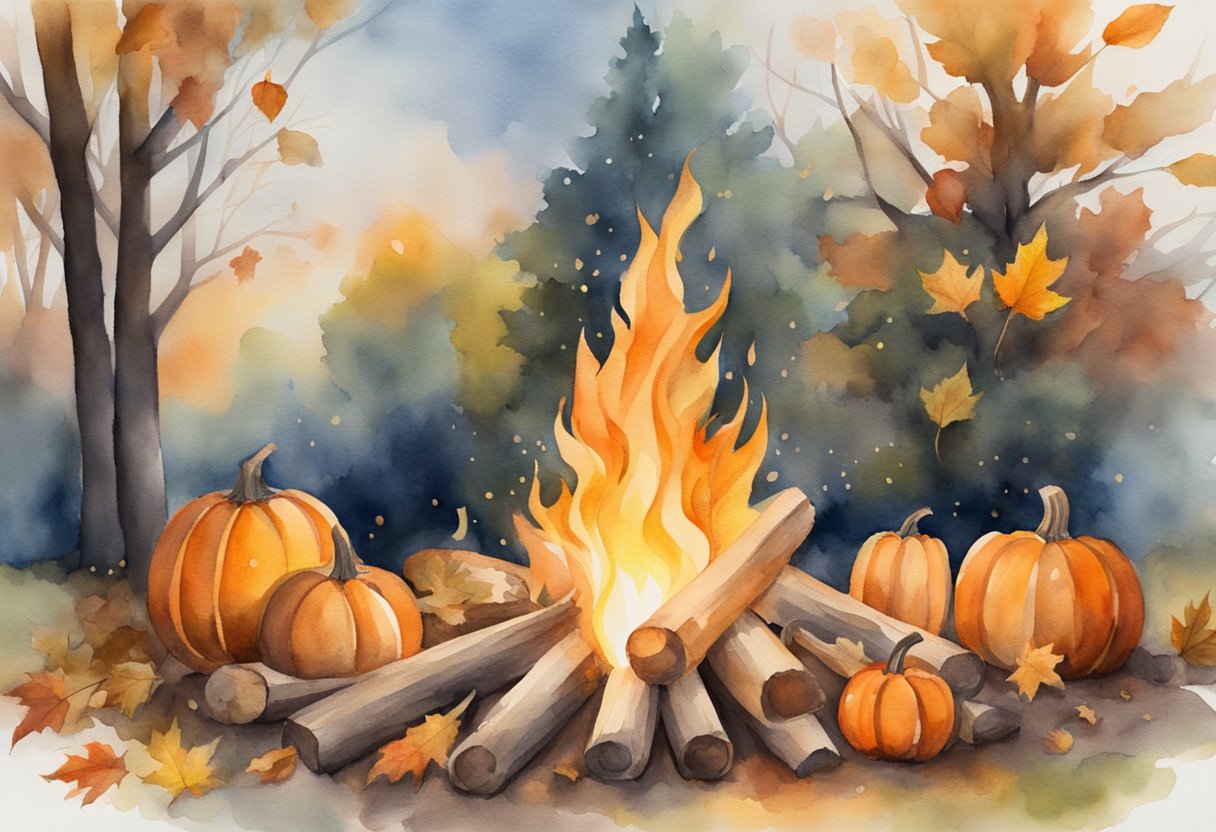
Bonfires: These crackling beacons hearken back to Celtic times, but today serve as cozy gathering spots for storytelling and marshmallow roasting.
Contemporary Festivities and Activities
Trick-or-Treating and Candy: Knocking on doors for candy? It’s evolved from soul cakes—treats that the poor would receive for praying for souls. Now, it’s a sugar rush of bite-sized chocolates and gummies for folks in costumes ranging from adorable to horrifying.
Parties and Pranks: Halloween night is your invitation to boisterous parties—think tunes, tasteful decor, and bobbing for apples. And hey, watch out for pranks—they’re a nod to the playful spirits that were said to be afoot.
Guising and Tricks: Way before you’d holler “trick or treat,” there was guising—dressing up and performing antics or recitals. Today’s tricks? Harmless gags, unless you forget to hand over those treats!
[su_button url=”https://amzn.to/4iB8iJY” background=”#a62def” color=”#ffffff” size=”10″ icon=”icon: magic”]Shop Witchy Supplies[/su_button]
