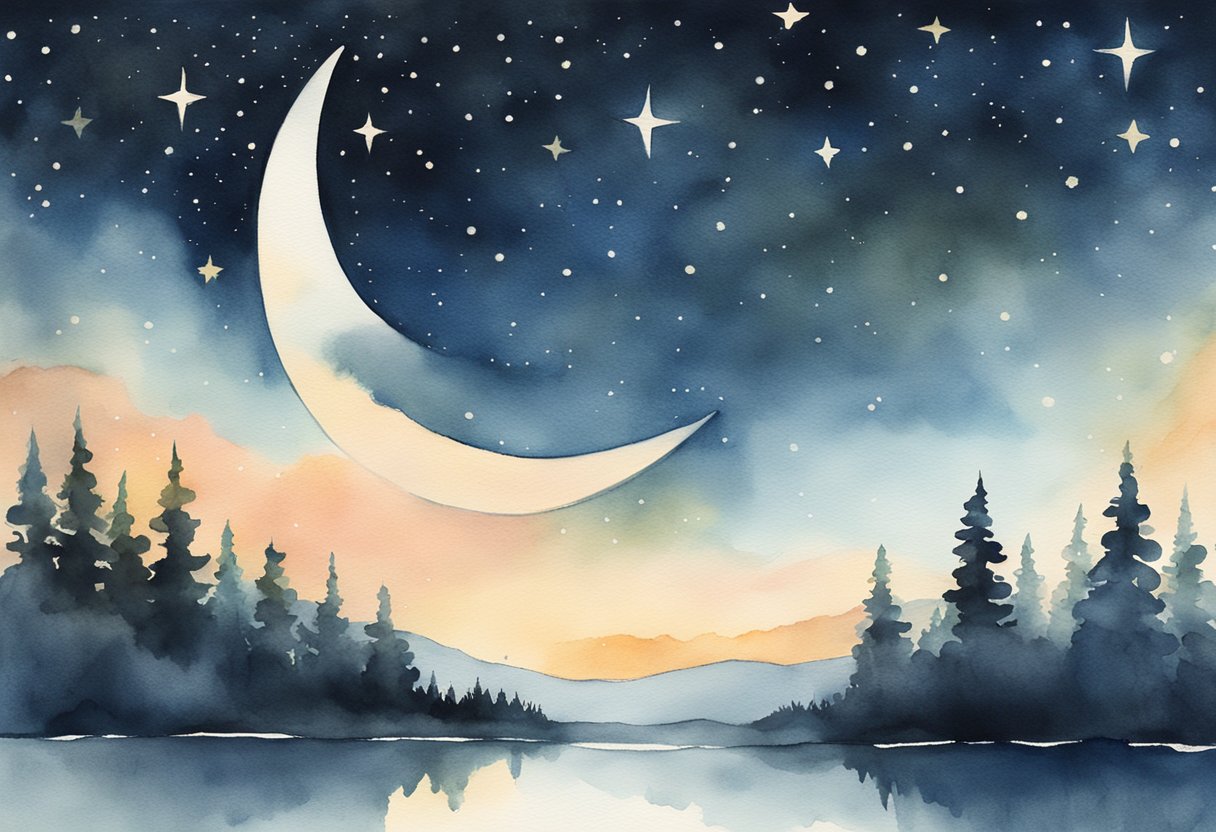
Imagine looking up at the night sky and being captivated by the slender arc of the crescent moon. What you’re seeing is a celestial body that’s fascinated humans for millennia, cloaked in a shroud of mystery and rich with symbolism. The crescent moon typically marks the beginning and end of a lunar cycle, its appearance a whisper of transition, a time of potential and a sign of things shifting both in the heavens and on earth.
The significance of the crescent moon stretches beyond its astronomical role as a phase of the moon. In the realms of mythology and spirituality, the crescent has signified various aspects of life, belief, and the divine. Across cultures, it’s been linked to deities, representing the feminine principle, serving as a potent symbol for goddesses linked to the moon. Its dual form, waxing and waning, symbolizes the cyclic nature of life, embodying birth, growth, decline, and rebirth.
Key Takeaways
- The crescent moon is a phase that marks the beginning and end of the lunar cycle, embodying transition and potential.
- Throughout history, the crescent moon has held profound mythological and spiritual significance, often linked to the divine feminine.
- Its representation in cultures and beliefs signifies the cycles of nature and life, from birth and growth to decline and renewal.
[su_button url=”https://amzn.to/4iB8iJY” background=”#a62def” color=”#ffffff” size=”10″ icon=”icon: magic”]Shop Witchy Supplies[/su_button]
Astronomical Perspective of the Crescent Moon
Phases of the Moon
The Moon’s journey around Earth creates a mesmerizing pattern: its phases. These phases are snapshots of the Moon’s position relative to Earth and the Sun. Picture new moon, a phase where the Moon is cozied up so close to the Sun that none of it shines down to us. It is the start of the lunar cycle.
Following the new moon, the waxing crescent phase emerges as the Moon’s crescent begins to grow, or wax. This is when your sky gets graced with that enchanting sliver, signaling the start of something fresh.
Transitioning from waxing crescent, the Moon becomes half visible, known as the first quarter. It’s not stopping there, though. The Moon fills out into the breathtaking full moon, where the whole disk is illuminated, gleaming full and round.
But what rises must also fall; hence, the Moon begins to wane. The waning crescent occurs as our lunar friend diminishes to another slim smile, wrapping up its cycle before disappearing into the new moon once more.
The Lunar Cycle
Your Moon’s cycle is about 29.5 days of transformation from dark to light and back again. This cycle has enchanted humans through ages, rhythmically influencing tides and cultural folklore.
During the portion of the cycle where it grows brighter, known as the waxing phase, the Moon goes from a thin crescent to a full disk. Each night, you’ll see a little more of that luminous shape in the sky. The waxing crescent, the first glimpse of the Moon after the new moon, is often seen in the early evening.
Following the full moon, the waning phase sneaks in as the Moon’s illumination diminishes. The waning crescent is the final visible slice before the new moon, best seen in the early morning.
Here’s a quick glimpse of how you see the Moon change:
- New Moon: The Moon is between Earth and the Sun, not visible from Earth.
- Waxing Crescent: A sliver on the right side of the Moon is visible, growing each night.
- Full Moon: The entire face of the Moon basks in sunlight, fully visible to Earth.
- Waning Crescent: A diminishing sliver on the left side of the Moon, winding down its show.
Remember, next time you gaze up at the night’s sky, you’re witnessing a cosmic ballet choreographed by the forces of gravity; a progression so consistent yet so enchanting that it has held humanity’s intrigue through all our time beneath the stars.
Crescent Moon in Mythology

Greek and Roman Depictions
In the tales spun by the Greeks, Artemis reigns as the goddess of the hunt and the moon. Imagine her donning a crown shaped like the crescent moon, her stature symbolizing the purity of the lunar cycle and her guardianship over women. The Romans borrowed this imagery for Diana, Artemis’ counterpart in Roman mythology. You’ll find her influence in the way the crescent moon represents both the huntress’s protective nature and her connection to the moon’s enigmatic cycle.
Sumerian and Mesopotamian Origins
Dive into Mesopotamian lore, and you’ll meet Nanna, a deity linked with the crescent moon’s horns. Nanna—also known as Sin—was worshipped by the Sumerians as a bringer of fertility. He’s often depicted as a bull, symbolizing strength and potency. The crescent moon’s symbolism here is twofold: a representation of male virility and an unending cycle of life and rebirth, with Utu, the sun god, and Io, integral to this celestial interplay.
Eastern Interpretations
As you turn to Eastern interpretations, the crescent moon illuminates different aspects of the divine. Here, it’s not just a celestial body but also a reflection of cyclical time and spiritual growth. To many, this lunar phase is an invitation to introspection, a chance to set intentions or connect with your inner world. In these cultures, the crescent moon serves as a beacon for feminine energy and intuition, guiding you through the cycle from darkness to light, always signifying transformation and renewal.
Universal Symbolism in Cultures
As you explore the crescent moon’s role in ancient Egypt, you’ll bump into the deity Isis, who was often depicted with this potent symbol, emphasizing themes of magic and fertility. Fast forward to modern spirituality, such as Wicca or Celtic traditions, the crescent moon maintains its magic but also symbolizes the waxing and waning nature of life, aligning with ideas of death, rebirth, and the cycles of existence.
Your curiosity might lead you to cultures across the globe where the crescent moon continues to work its magic. For instance, in Hinduism, you’d observe it on the head of Shiva, symbolizing the cycle of time and the universe’s rhythm. Delve into various beliefs, and you’ll see it emerge as a beacon of good luck, an emblem of the divine feminine, and even as a mirror to nature’s inexorable cycles.
So whether you’re reflecting on the spiritual meanings attributed by ancient cultures or considering the crescent moon as a token of good luck in your daily life, its enchantment is undeniable. With each sighting of that slender curve in the sky, you’re witnessing a legacy of symbolism that’s as timeless as the stars themselves.
Spiritual Aspects of the Crescent Moon
Feminine Energy and the Divine
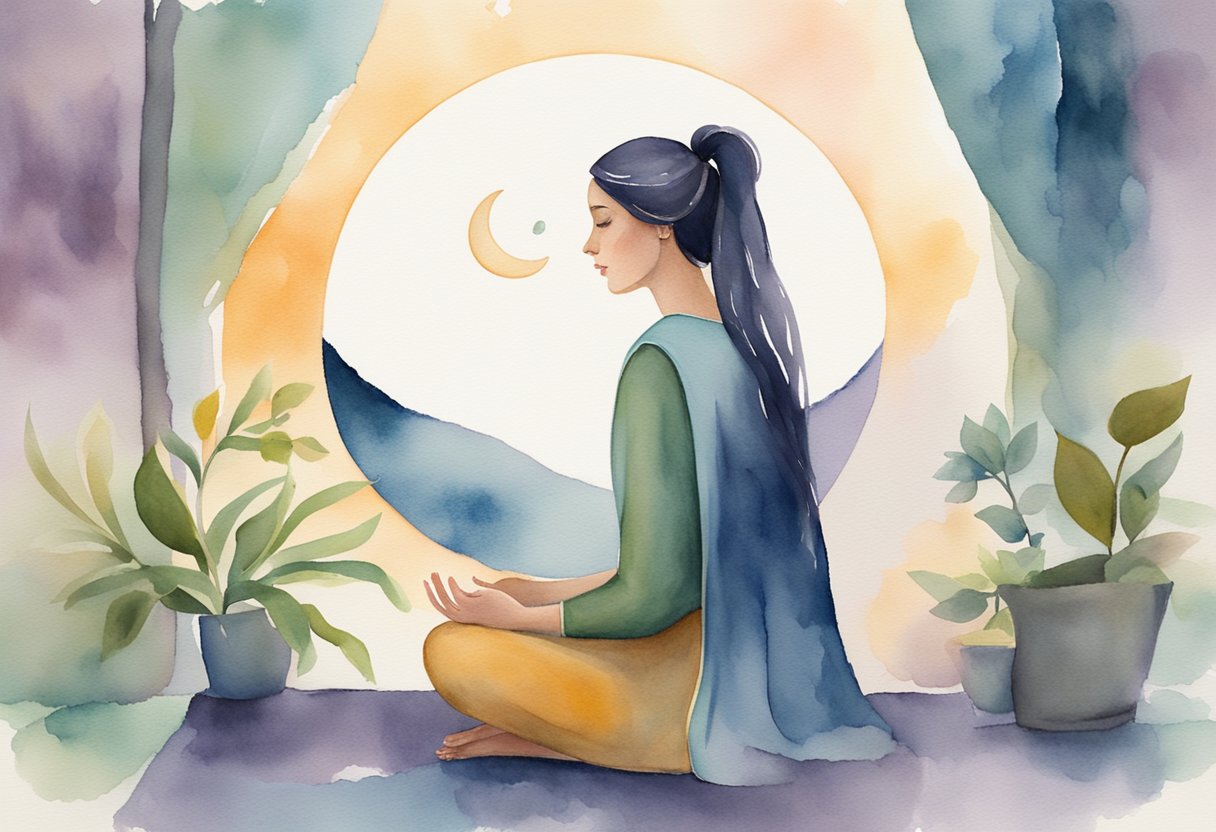
The crescent moon is deeply connected to divine feminine energy, often seen as a nurturing force. This celestial body has long been associated with goddesses across various cultures, embodying motherhood, intuition, and birth. In this light, the crescent moon can be a powerful symbol for you to channel your inner goddess, embracing the balance and potency of feminine energy.
- Intuition: Trust your gut feeling and inner wisdom.
- New Beginnings: Embrace the chance for a fresh start.
- Renewal: Reflect on the cycle of life and your role in it.
Transformation and Personal Growth
Under the crescent moon’s watchful gaze, you might feel the ebb and flow of life more profoundly. This lunar phase symbolizes not just spiritual but personal transformation and growth. It hints at the impermanent nature of everything around us and within us and serves as a reminder to set intentions for who you want to become.
- Personal Growth: Take strides toward becoming your best self.
- Spiritual Growth: Deepen your connection with the spiritual realm.
- Transformation: Allow the transformation to take place, shedding the old to make way for the new.
The crescent moon’s appearance is a cue for you to pause and think about where you’re headed—spiritually and personally. It’s time for making those quiet decisions that steer your journey towards growth and self-discovery. Remember, you have the power to harness the moon’s mystical energy, finding ease and flow in your path to renewal.
Crescent in Art and Jewelry
Imagine wearing the mystery of the night sky. Jewelry featuring crescent motifs is wildly popular, serving as a reminder of unity and the cycle of renewal that touches your life. Artists throughout time have captured the crescent in vast arrays of art, letting the symbol inspire dreams and manifestation. It could be a necklace resting over your heart or a painting that whispers tales of Artemis, the Greek goddess of the moon, urging you to chase your wildest goals.
Rituals and Practices
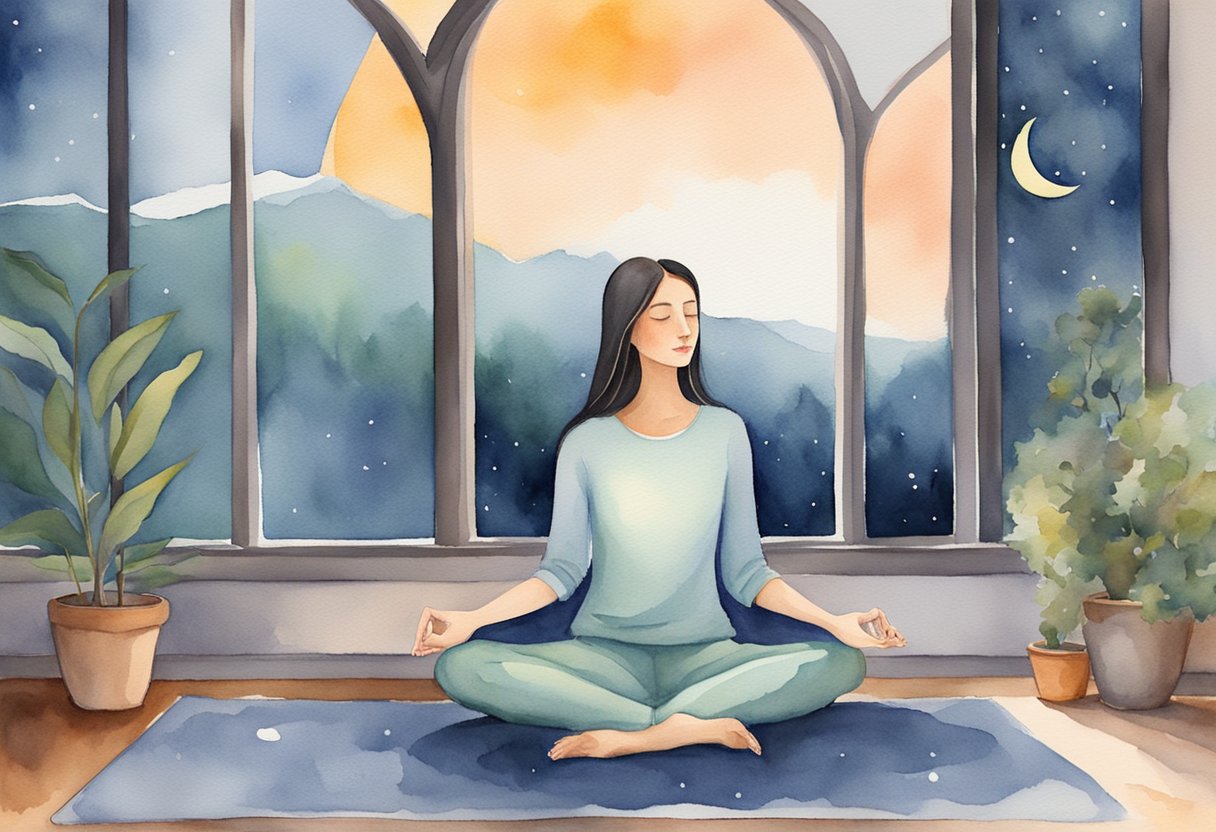
When you engage in rituals under a crescent moon, you’re tapping into an ancient well of mystical energy. Consider meditation during the waxing crescent moon to set powerful intentions for what you wish to bring into your life. Conversely, the waning crescent might become your time of release and letting go. You’re part of the cosmic dance, experiencing the ebb and flow that comes with personal renewal and manifestation.
[su_button url=”https://amzn.to/4iB8iJY” background=”#a62def” color=”#ffffff” size=”10″ icon=”icon: magic”]Shop Witchy Supplies[/su_button]
