As autumn wanes and you feel the crispness of the air deepen, this is the time of year when the boundary between worlds is said to thin. Samhain marks this special point on the wheel of the year, occurring at the end of October into the beginning of November. In Celtic tradition, it’s not only a time to honor the dead but also a celebration of the end of the harvest season. Flowers play a focal role in your observance of Samhain; marigolds and chrysanthemums, for instance, aren’t just beautiful autumnal blooms, they’re also steeped in protective qualities, which are believed to be amplified during this season.
You might find yourself drawn to the mysteriously intertwined energies of life, death, and renewal during Samhain. It’s a period steeped in ancient folklore and modern paganism, bringing together communities that continue to celebrate these age-old traditions. The mystical appeal of these celebrations can be felt through the diverse ways in which you can incorporate natural elements like flowers into rituals. They serve as connections to the spirit world, aids in divination practices, or simply as offerings to signify respect and remembrance.
Key Takeaways
- Samhain embraces the ephemeral connection between the living and the spirit world.
- Flowers serve as powerful symbols and tools within Samhain rituals and practices.
- Modern celebrations of Samhain preserve the communal spirit and the theme of life’s cyclical nature.
[su_button url=”https://amzn.to/4iB8iJY” background=”#a62def” color=”#ffffff” size=”10″ icon=”icon: magic”]Shop Witchy Supplies[/su_button]
Significance of Samhain
Samhain in Celtic Tradition
You’re stepping back into a time where the Celts marked the end of the harvest season and the beginning of winter with Samhain. It’s around October 31 to November 1, a period seen as when the veil between worlds thinned, allowing for a closer connection with the ancestors and spirits of the Otherworld. As a pivotal part of the Celtic festival, you’d see communities gathering, lighting massive bonfires, and engaging in various rituals to honor the dead and ensure protection from spirits.
Samhain altars would be a common sight, replete with symbols of the harvest and homage to those who passed. Think of it as a time when the past, present, and potential futures blended in a mystical celebration, steeped in respect for the cycles of life, death, and rebirth.
The Evolution of Halloween
Now, glide through history to how Samhain morphed into what you celebrate today as Halloween. As Christianity spread, early November became home to All Saints’ Day and All Souls’ Day – also known as the Day of the Dead in some cultures. These days melded with the traditions of Samhain, evolving into a time for honoring the deceased with a more familiar mix of reverence and merriment.
Performances evolved from ancient divination practices and costumes symbolized a protection against ghosts. Even Jack-o’-lanterns have a whisper of Samhain about them; originally carved turnips in Celtic lore to ward off evil spirits. So, when you next dress up or go trick-or-treating, remember: you’re partaking in a centuries-old legacy that connects you to autumn’s most enchanting festival.
Floral Symbolism and Usage
Samhain Altar Flowers
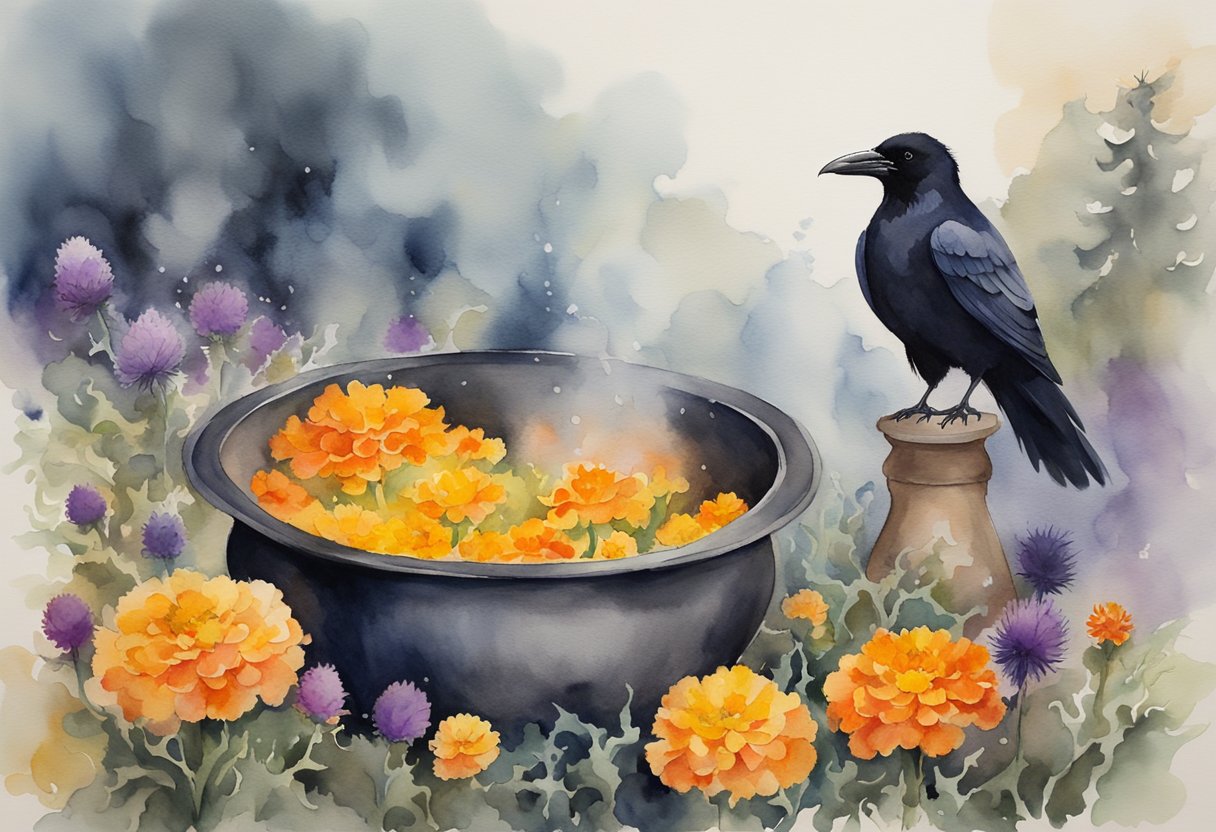
When adorning your altar for Samhain, consider using roses and marigolds. Roses, with their lush petals and rich scent, signify the profound connection to the spiritual realm. Marigolds, on the other hand, are often associated with the sun. They’re believed to guide and protect spirits as they visit our world during this sacred time.
- Rosemary is another plant you might see on a Samhain altar. It’s tied to remembrance, perfect for honoring those who’ve passed.
- Mugwort, a favorite amongst witches, is used to invite prophetic dreams and enhance psychic abilities.
Flowers Representing Life and Death
The cycle of life and death is a key theme of Samhain. As such, certain plants hold deep significance.
- Chrysanthemums embody this dual notion beautifully. Bright and vibrant, they remind us of life’s vigor yet are traditionally used in funerary arrangements, echoing themes of mortality.
- The straw flower, with its capacity to retain its shape and color when dried, symbolizes the eternal spirit, and continuity beyond physical existence.
Protective and Healing Blossoms
During Samhain, protection and healing are especially sought after. Here’s a snapshot of flowers famed for their protective qualities:
- Sage is a powerhouse of purification, well-loved for its ability to cleanse spaces of negative energy.
- Mugwort does double duty here as well, offering guardianship, especially in dreams.
For healing, turn to nature’s apothecary:
- Rose extract can soothe emotional turmoil, easing the heart’s aches.
- Rosemary, aside from its commemorative properties, supports mental clarity and renewal, nurturing both mind and body.
Rituals and Practices
Divination and Communication
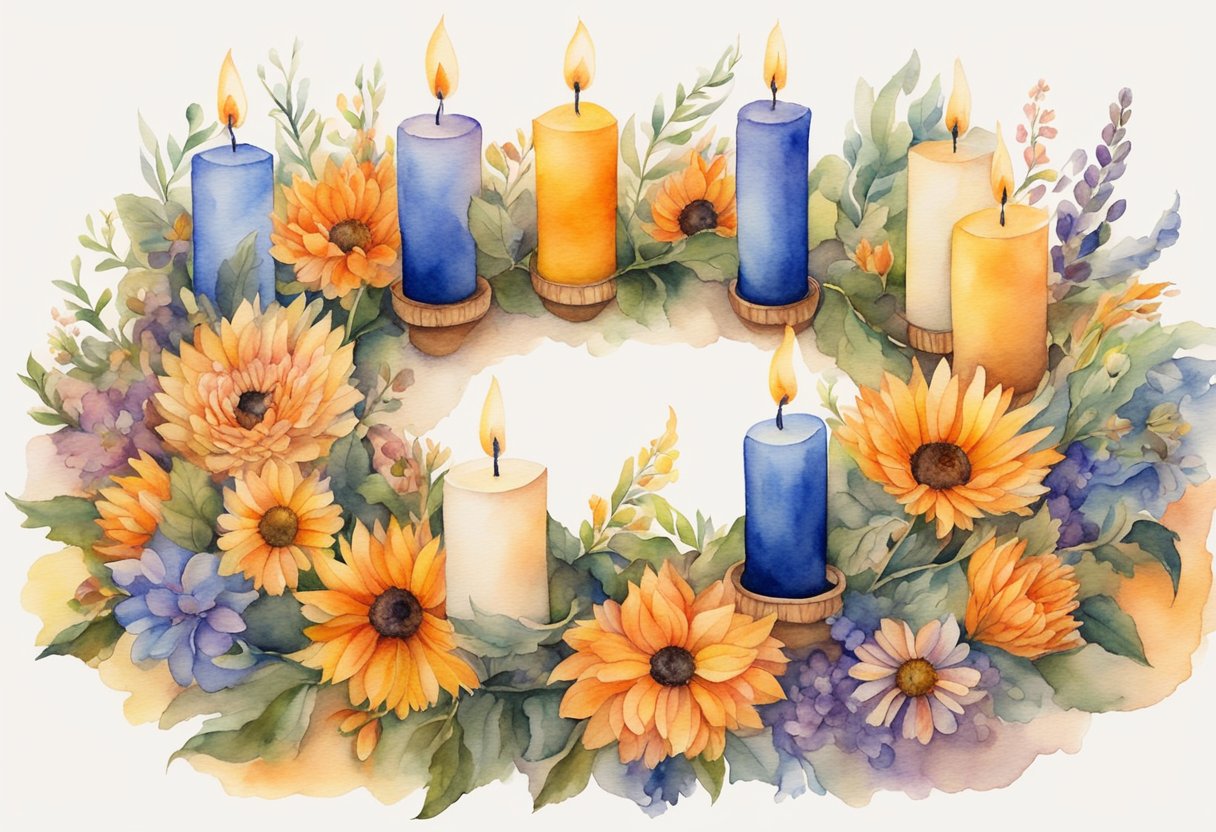
During Samhain, the veil between our world and the spirit world is at its thinnest, making it an ideal time for divination and communicating with the beyond. You might use marigolds or mugwort, often in the form of incense, to help open up your psychic abilities and encourage prophetic dreaming. Light a few candles and meditate with these flowers or herbs to enhance your connection to the unseen.
- Mugwort: Burn as incense to boost psychic prowess.
- Marigolds: Place around candles or burn to connect with ancestors.
Protection and Warding Rituals
Now, let’s talk protection since it’s always smart to play it safe when you’re dabbling in the supernatural. For warding off evil and banishing negative vibes, chrysanthemums are your go-to bloom. Incorporate them into spells or place them on your altar to create a barrier. Sage, right up there with ‘mums, is perfect for purification rituals—burn it to cleanse your space and set the stage for a safe, sacred practice.
- Chrysanthemums: Use in offerings or decoration for metaphysical safeguarding.
- Sage: Burn to purify, protect, and prep your space before diving into deeper rituals.
Samhain and Natural Elements
Harvest Roots and Herbs
At Samhain, your connection with the earth through its roots and herbs is profoundly mystical. Pumpkins often steal the show, symbolizing the heart of the harvest season. They’re not just for carving; pumpkins hold space on altars, serving as reminders of the sustenance provided by the earth.
Now, consider the healing touch of herbs during this time. Sage and bay leaves are powerful protectors – burn them to purify your space and invoke wisdom. Looking for something to strengthen your inner sight? Wormwood might be your go-to herb. It’s known to assist in opening one’s psychic abilities, especially during Samhain when the veil is thin. Lavender also plays a role in calming energies and promoting peaceful interactions with spirits.
Trees and their Mystical Significance
Your appreciation for trees might deepen when you understand their place in Samhain rituals. The oak tree, majestic and strong, is particularly honored for its stability and connections to strength and wisdom. Keep an eye out for fallen acorns; they’re tokens of potential and growth, making them apt symbols for this time of change.
Don’t forget the delightful apple, a fruit steeped in Samhain tradition. Slicing one horizontally reveals a pentagram, a sacred symbol in many spiritual paths. Apples are woven into divination practices and shared in feasts, capturing both the essence of the harvest and the otherworldly aspects of the season.
Lastly, rowan trees may not be the most common, but they’re indeed full of significant Samhain vibes. It’s said that wearing a piece of rowan or adding its berries to your altar can defend against enchantments and unwelcome spirits. The tree’s links to protection and inspiration could prove invaluable on this sacred night.
Interconnectedness of Life, Death, and Renewal
Understanding the Cycle of Life
In Samhain celebrations, you’ll notice marigolds often make an appearance. They bloom heartily, yet their beauty is fleeting, wilting away as winter encroaches. This isn’t just a floral fact—it’s a mirror for the cycle of life. Death, to Samhain observers, isn’t the end. It paves the way to rebirth and renewal, much like how November’s bare branches anticipate springtime’s green. Wreaths and bouquets grace altars, each flower a reminder of ancestors who’ve cycled through life and death before you, offering guidance along your path.
Embracing Transformation and Release
Now, onto transformation—it’s a hefty part of Samhain’s ethos. Imagine the veil between worlds at its thinnest, allowing whispers from the underworld to guide you. It’s a time to shed negatives, to release what no longer serves you. It’s cool how a flower that’ll eventually return to the earth symbolizes such a profound truth. Day of the Dead events also vibe with this notion, celebrating ancestral spirits rather than fearing the end. When you embrace this season of change, you’re in tune with nature’s deepest lessons about immortality—that life’s dance with death is really an endless tango.
[su_button url=”https://amzn.to/4iB8iJY” background=”#a62def” color=”#ffffff” size=”10″ icon=”icon: magic”]Shop Witchy Supplies[/su_button]
