

Persephone’s tale is as enchanting as it is timeless, capturing the imagination with the story of a goddess who literally brings life to death. When you delve into Greek mythology, you’ll often come across her name tied to the changing of seasons, a narrative that paints the picture of nature’s cyclical dance. As the daughter of Demeter and Zeus, Persephone holds a divine lineage that places her among the Olympians, yet her story bridges the upper world with the shadowy realm below.
Imagine strolling through a meadow, much like Persephone did, before she became the Queen of the Underworld. Her journey from an innocent maiden to the poised and powerful spouse of Hades makes for a tale that’s been told and retold through the ages. It’s a story that not only explains why the leaves fall each autumn but also touches on themes like rebirth and the balance between light and darkness. Not just a part of a myth, Persephone’s presence and absence had deep implications for ancient worshippers, who formed cults to honor her and seek her blessings for fertility and the afterlife.
Key Takeaways
- Persephone’s story explains the seasonal cycle and highlights themes of transformation and balance.
- Her worship influenced ancient religious practices, emphasizing her role in fertility and the afterlife.
- Persephone’s influence extends beyond ancient times, inspiring contemporary perspectives on myth and divinity.
[su_button url=”https://amzn.to/3YfCaUX” background=”#a62def” color=”#ffffff” size=”10″ icon=”icon: magic”]Shop Witchy Supplies[/su_button]
The Divine Lineage of Persephone

Birth and Parentage
Persephone’s story starts with her mother, Demeter, the goddess of the harvest and agriculture, whose nurturing qualities shaped the natural world. Your own life, tied to nature’s cycles, echoes the work of Demeter. Zeus, the king of the gods and the lightning wielder, is her father. This combination of powerful deities provided Persephone with an intriguing mix of dominion over life and sovereignty.
- Demeter: Goddess of the Harvest
- Zeus: King of the Gods
Their union underscores your understanding of seasonal changes and agricultural cycles.
Siblings and Divine Relations
Now, dive into Persephone’s extended divine family. Hera, Zeus’s wife and queen of the gods, wasn’t Persephone’s mother, but certainly played a part in the family dynamics. As for Persephone’s siblings, they reflect Zeus’s far-reaching connections. Across the endless skies and into the depths of the seas, these gods and goddesses influence every corner of the world you roam in.
- Hera: Zeus’s Wife and Persephone’s Step-mother
- Hades: Persephone’s Husband and Ruler of the Underworld
It might surprise you to hear that Persephone’s story is much more than her chilling adventure into the underworld with Hades. Her family tree boasts characters that shape the very fabric of myth and symbolize the diverse powers shaping the world. So, as you walk through the meadows or feel the earth beneath your feet, remember the divine drama that fashions these experiences.
Tale of the Eternal Spring
The Abduction by Hades
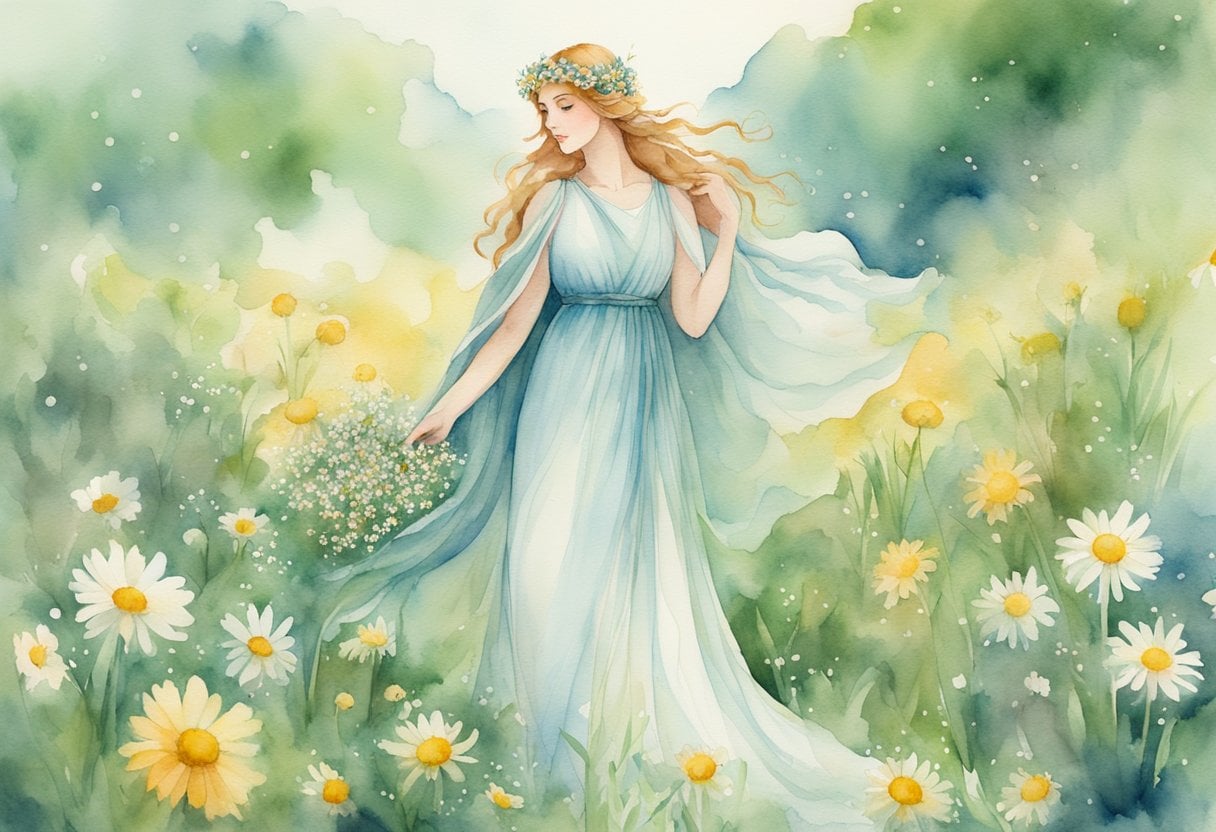
Imagine a scene of idyllic beauty, where Persephone is gathering flowers, and suddenly, the ground beneath her quakes. Hades, lord of the Underworld, appears and snatches her away. This isn’t just any kidnapping; it’s the kind of event that rattles Olympus and mortals alike. Your curiosity is piqued, isn’t it? It’s Hermes, the herald of the gods, who is then sent on a mission to bring Persephone back to her mother, Demeter.
As Queen of the Underworld
Once in the Underworld, Persephone quickly shifts from captive to queen. She’s not just by Hades’ side; she’s ruling with a mix of compassion and firmness that commands respect. You’ll find her sometimes depicted with a serene and even content look on her face, sitting on a throne, hinting at her acceptance and importance in the cycle of life and death.
Symbolism of Pomegranate Seeds
Pay attention now—those pomegranate seeds are more than just a snack. They are threads in the fabric of Persephone’s destiny. When she eats them, it seals her fate: to spend a portion of the year in the Underworld. Each seed represents her connection to Hades and the cycle of the seasons. You see, it’s these tiny seeds that are the key to why you’ll see her comeback every spring, bringing life and light with her.
The Repercussions of Persephone’s Absence
The Earth’s Barrenness
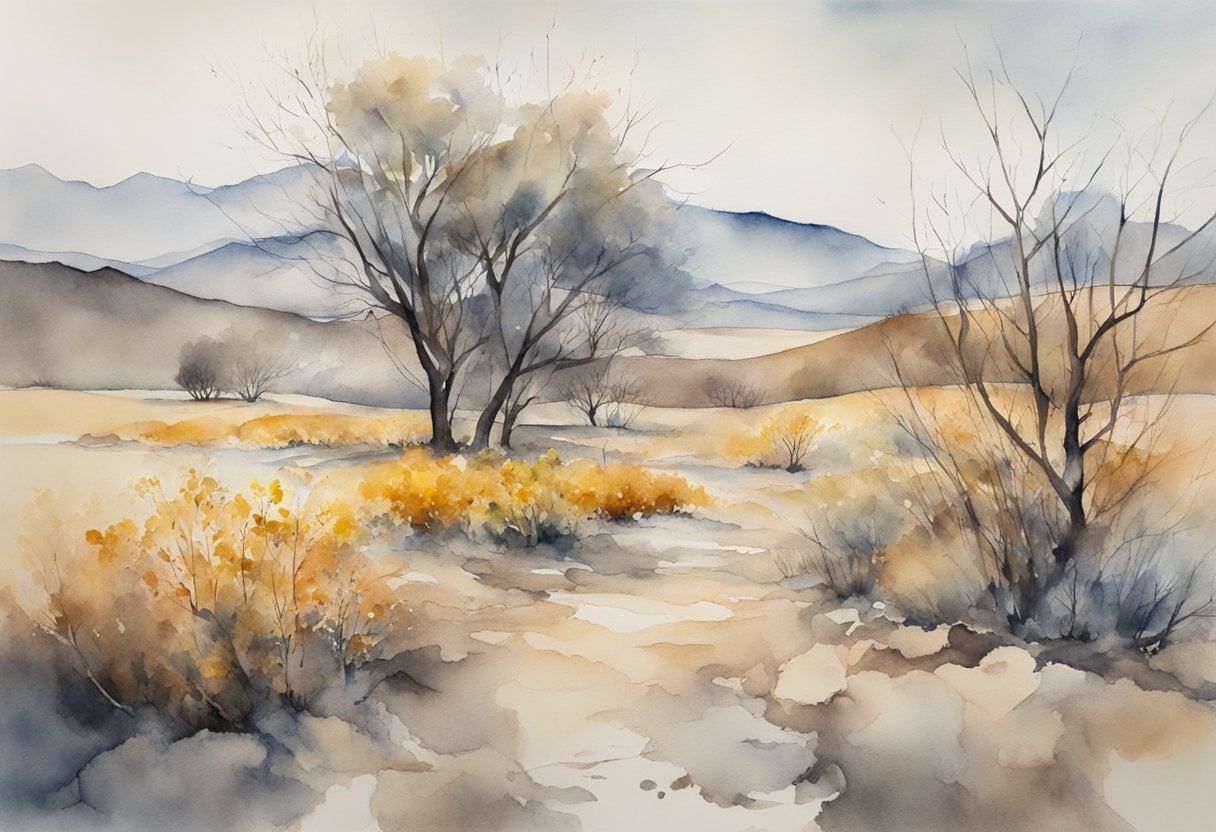
Imagine walking across fields that once thrived, now left to wither. When Persephone was taken from us, life on Earth hung in the balance. Her mother, Demeter, in her grief, refused to perform her duties. The land, once a canvas of fertility under her care, turned lifeless and bleak. Crops failed, trees stood bare, and a profound chill took hold as Demeter overlooked her role in nurturing the planet. This wasn’t just a cold spell—it was as if life itself had taken a hiatus.
The Cyclical Seasons
You could say Persephone’s kidnapping led to the creation of winter. Each year, when she descends to rule as the queen of the Underworld alongside Hades, her departure cues winter’s onset. You feel the biting cold, the bleak skies, and life seems to take a retreat. And then, just like clockwork, her return heralds the rebirth of spring. It’s a never-ending loop: her reunion with Demeter ignites a surge of joy and a revival of life across the Earth, as spring blossoms both in flora and in hearts. The warmth returns, and with it, new life springs forth as Persephone breathes vitality back into the world above.
The Sacred Worship and Cult of Persephone

Celestial Celebrations
As you explore the veneration of Persephone, you’ll find that the ancient Eleusinian Mysteries take center stage. Eleusis was the hub for these secretive celebrations, where initiates gathered with a sense of awe. An intriguing aspect was the ceremony’s close guarding, allowing details to be passed through whispers in time. Imagine a multi-day festival, one that marks the changing seasons and the descent and return of Persephone from the Underworld. During the festivities, participants would carry torches, symbolizing the search of Demeter for her daughter and perhaps your own quest for enlightenment.
To truly engage with Persephone’s worship, mimic the ancients: consider the planting of seeds and embrace the spirit of fertility that Persephone embodies. This act honors the goddess and aligns with the natural rhythms she governs.
Eternal Symbols and Representations
As you craft your altar or meditative space, include eternal symbols that resonate with Persephone. Pomegranates, the fruit she tasted in the Underworld, are powerful symbols of her time spent there and the cyclical nature of life. Representations of crops and harvest tie back to her mother, Demeter, and the nurturing aspects of the earth.
Incorporate symbols of Hecate, the goddess of magic and crossroads, who aided Demeter with her torches. The incorporation of these elements creates a sacred geometry, an arrangement that not only exudes reverence but also captures the mystical essence of the goddess they honor.
By intertwining these symbols and practices in your ongoing tribute, you curate a personal, living tapestry to the goddess. Your dedication nurtures a garden of spiritual connection, one that blossoms with the wisdom and beauty of Persephone’s enduring tale.
[su_button url=”https://amzn.to/3YfCaUX” background=”#a62def” color=”#ffffff” size=”10″ icon=”icon: magic”]Shop Witchy Supplies[/su_button]
