
If you’re captivated by the mystical world of ancient rituals and want to celebrate your love in a way that’s been cherished for centuries, then a pagan handfasting might just be the enchanting alternative you’re looking for. This ceremony binds you to your partner, quite literally, as your hands are tied together as a symbol of the union. It’s a tradition with deep roots, resurfacing today in many Wiccan and Pagan ceremonies as couples seek a personal touch in their nuptials.
Imagine standing with your beloved, surrounded by the natural world, and making a commitment as old as love itself. Handfasting ties together not just your palms but also your lives with a promise to face the future together. This tradition has seen a revival as modern couples choose to blend the historical significance of handfasting with their own unique vows. It’s a beautiful balance between ancient custom and personal expression, and yes, it’s as magical as it sounds.
Key Takeaways
- Handfasting is a meaningful and intimate way to symbolize the unification of a couple.
- Combining historical significance with personal belief, the ceremony can be customized.
- Symbolism plays a significant role in the handfasting ritual, from the tying of knots to the vows spoken.
[su_button url=”https://amzn.to/4iB8iJY” background=”#a62def” color=”#ffffff” size=”10″ icon=”icon: magic”]Shop Witchy Supplies[/su_button]
History and Significance of Handfasting
Origins in Celtic Tradition
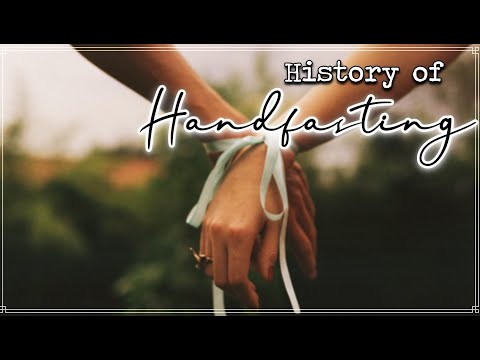
In the Celtic tradition, handfasting was more than a simple ritual; it was a profoundly spiritual symbol of unity. Before Christianity spread across Europe, folks in Celtic regions would engage in this binding ceremony. It was a type of pre-Christian marriage, signifying a commitment that could last a year and a day or a lifetime, depending on the couple’s choice. The physical act of tying the couple’s hands together symbolized their future intertwined, a visible manifestation of their vows.
Picture this: A pair standing together, their hands bound with a cord while they promise to walk side by side. The cords aren’t just any old string but often specially chosen materials, colors representing different aspects of life and attributes the couple should bring into their union. Colors could range from red for passion, green for growth, to white for peace.
Handfasting in Modern Paganism
Moving to today’s practices, handfasting has seen a resurgence among Pagan communities as a way to honor those age-old traditions with a modern twist. Within a Pagan handfasting ceremony, every element has its place, from the sacred circle drawn around the couple to every word spoken. Modern Pagans infuse their ceremonies with elements that embrace nature and spirituality, often calling upon the four elements and deity blessings.
Just like in ancient times, the binding of hands is the centerpiece of the ceremony, made unique to each couple with the choice of cord and personalized vows. From blessings to the exchange of rings, and the sharing of symbolic items like bread or wine, each Pagan handfasting is a fusion of history and personal spirituality. You’ll see today’s couples opting for handfasting as part of wedding ceremonies or stand-alone spiritual unions, each one a personal affirmation of love and commitment.
Preparation and Elements of the Ceremony

Choosing the Right Officiant
Your officiant is like the guide on your spiritual adventure – they should connect with your beliefs and understand the Pagan traditions you’re honoring. Look for someone who resonates with you, and can lead the ceremony with the mystical vibe you’re going for. They’ll handle the flow of the ceremony, so make sure they’re cool with the elements and the spiritual compass of the four directions that you’re bringing into your day.
Selecting Handfasting Cords
Handfasting cords are the star of the show – literally tying the knot! You might want cords that match your favorite colors or are infused with symbols that mean something special to you and your partner. You can DIY them, get them blessed, or have them hold small charms that symbolize your journey together. Cords often come braided with various materials, so pick something that feels right to weave your intentions into the ceremony.
Incorporating Four Directions and Elements
Invoking the four directions – East, South, West, and North – grounds your ceremony in nature’s balance and pulls you into the rhythm of the world around you. Each direction corresponds to an element: air, fire, water, and earth. You might want to represent these on your altar with feathers, a candle, a bowl of water, and crystals, respectively. It’s all about creating a space that’s alive with energy and connects every breath of your ceremony to these timeless forces.
Symbolism & Practice in Handfasting

The Knot as a Symbol of Eternity
The act of tying a knot represents an unbreakable bond. When you’re handfasted, the knot is a powerful symbol of your love wrapping around and intertwining with your partner’s—endless and strong. This symbol of eternity indicates that your spirits are united indefinitely, without a distinct beginning or end. The knot, tightened during the ceremony, holds the essence of your commitment and signifies the durability of your relationship, aiming to withstand the tests of time.
The Circle for Protection and Inclusion
In nature, circles are all over the place. They represent cycles, wholeness, and protection. In your handfasting ceremony, casting a circle creates a sacred space that keeps positive energy in and anything negative out. It’s like you’re in a bubble of love and peace, shielded from any harm. This circle isn’t just for protection—it’s a warm embrace, a sense of being wholly included in the universe’s cycle of growth and hope. When you stand in this circle, you’re at the center of your own world, ready to start this new chapter with every good vibe you can get.
The Process of Tying the Knot
You’re probably curious about how “tying the knot” actually works in a handfasting ceremony. Here’s the scoop: It’s the literal act of binding hands together, usually with a cord or ribbon. As you and your partner join hands, a friend or your officiant will wrap the cord around your wrists, creating an infinity symbol. This vibrant visual signifies your union and commitment to one another. Each loop of the cord can represent different promises you’re making to each other, weaving a strong bond between your lives.
Exchanging Vows and Rings
Next up, you’ll exchange vows. Whether you choose time-honored words or craft your own personal vows, this is where you put those deep, heartfelt promises into words. Remember, these vows are your pledge to support and stand by each other through thick and thin. After your vows, the ring exchange takes this commitment a step further. Slipping rings on each other’s fingers has been a symbol of love and fidelity for ages, and in the context of a handfasting ceremony, it just seals the magical deal.
Ceremony Script and Personal Touches
Finally, let’s chat about your handfasting ceremony script. You want this to feel like it’s truly yours, right? You can include readings, music, or blessings that reflect your beliefs and feelings. Maybe throw in a favorite love poem or quote. And get this, the script doesn’t have to be all formality and gravity. You’re celebrating love—so laughter and joy are more than welcome. Personal touches make your ceremony unforgettable, not just for you and your beloved, but for everyone who’s there on your big day.
Legal Aspects and Cultural Integration
Recognizing Handfasting as a Legal Marriage
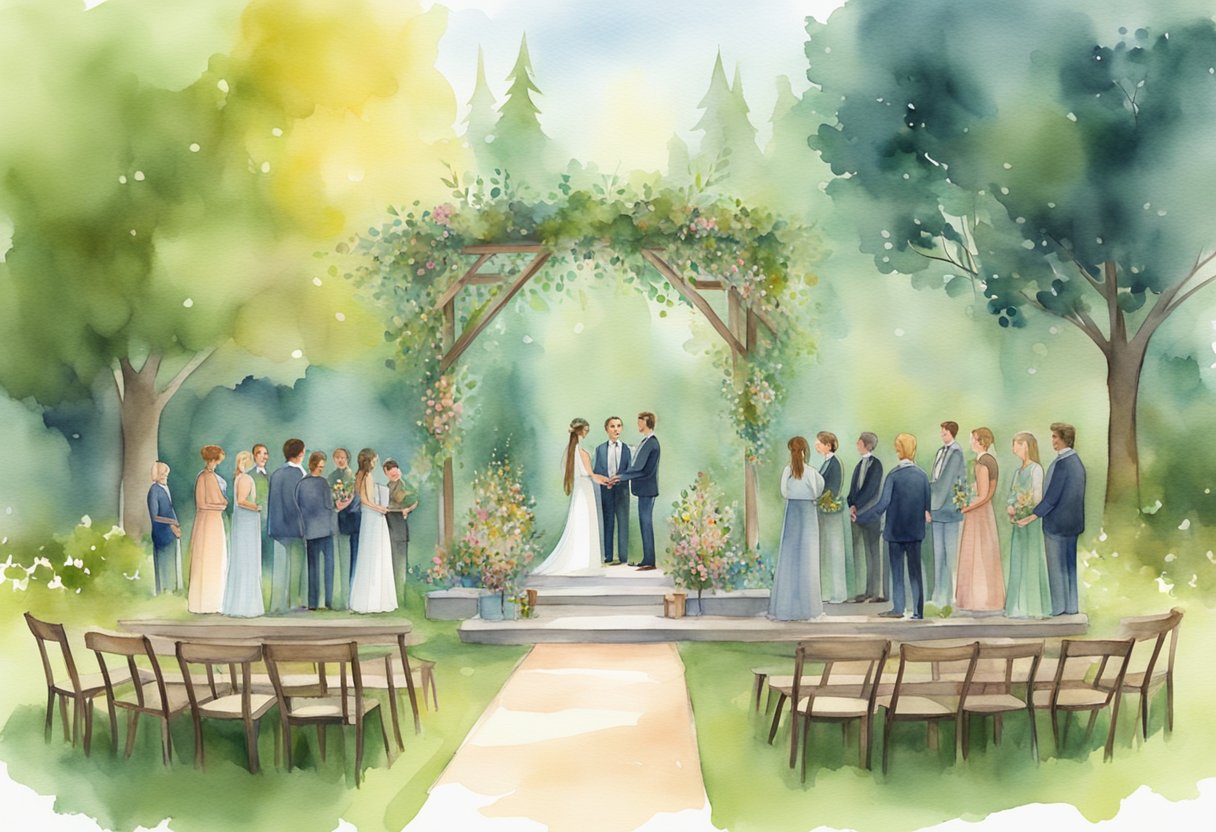
Handfasting: once a historical tradition, now it can be as legit as any typical wedding—with a few quirks. If you’re planning a pagan wedding and wondering if your handfasting ceremony can be considered legal, know that it’s definitely possible. Just like any other wedding, the key to its legality is fulfilling the requirements set by your local jurisdiction. This usually means that you, as a couple, need to obtain a marriage license and ensure that the person performing your handfasting ceremony is legally able to officiate marriages.
Double-check the rules—what’s needed where you live might vary. Some places are pretty chill and see handfasting the same way as any other wedding ceremony. Your “tying the knot” moment has to be more than symbolic; it has to hit all the checkboxes for a legally recognized marriage. You know, paperwork, witnesses, and the like.
Blending Traditions in a Modern Celebration
Let’s talk about making your special day resonate with the uniqueness of ancient traditions mixed into modern festivity. Pagan weddings have this amazing ability to personalize, integrating rituals and customs that mean the most to you. It’s about honoring your beliefs while also rocking a celebration that speaks to you on a personal level.
Start your own traditions—maybe blend handfasting with other elements from traditional wedding ceremonies. It’s a chance to create something that’s totally you. Whether you do it in a nature preserve with a high priestess or in your backyard with your best friend officiating, it’s all about what feels right. Throw in some personal vows, your favorite tunes, and even a broom to jump over at the end, and you’ve got yourself a celebration that’s as legal as it is mystical.
[su_button url=”https://amzn.to/4iB8iJY” background=”#a62def” color=”#ffffff” size=”10″ icon=”icon: magic”]Shop Witchy Supplies[/su_button]
