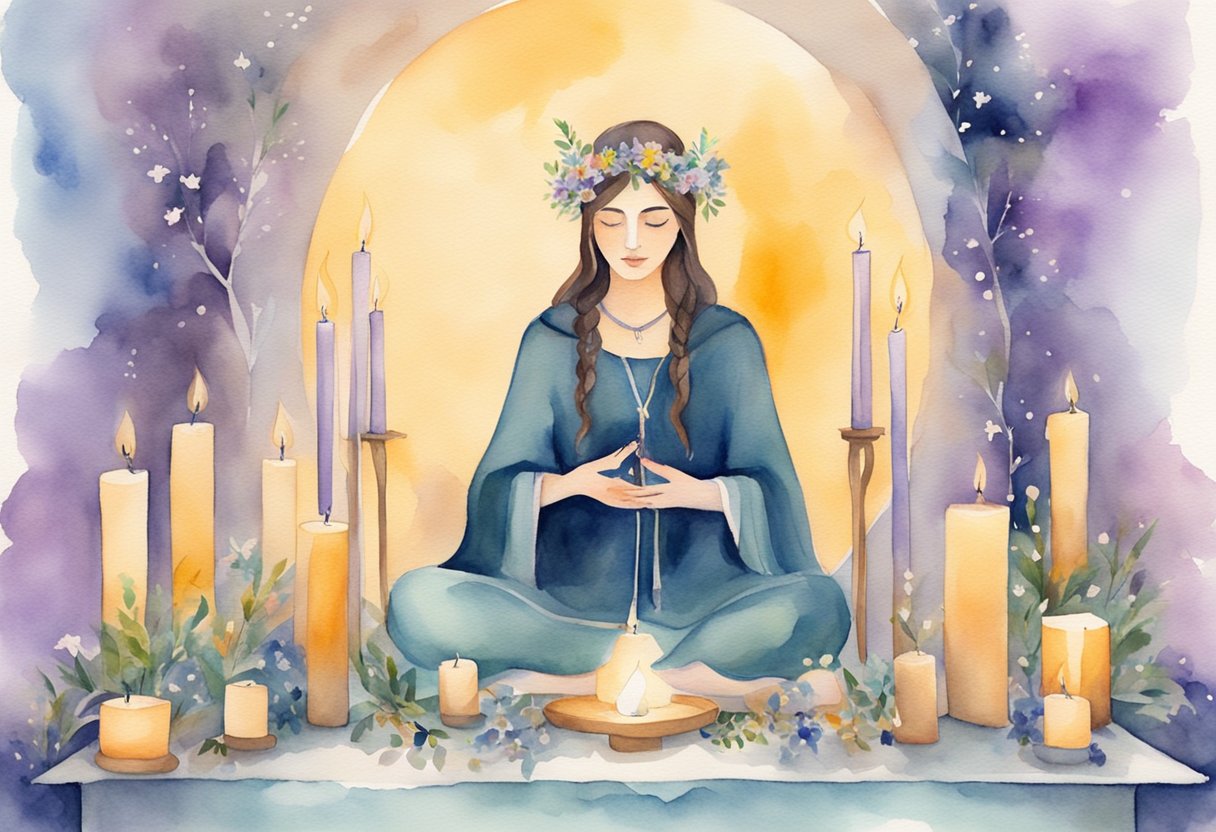
As the wheel of the year slowly turns, Imbolc whispers to you of renewal and rebirth. This celebration falls at the beginning of February, often seen as the first hint of spring, a time when the earth itself begins to stir from its wintry slumber. Imbolc, rooted in ancient Gaelic traditions, is a festival of light and purity, symbolizing the awakening of life with the lengthening of days.
Your home becomes a sanctuary for this seasonal awakening, offering an opportunity to reflect on fresh starts and personal growth. By lighting candles, you’re not just banishing the lingering shadows of winter, but also igniting the fires of creativity and inspiration within. It’s an intimate moment to commune with the natural cycle, feeling the subtle shift in the energies around you as the frozen world starts to thaw.
Key Takeaways
- Imbolc is a celebration of spring’s impending arrival, focusing on light and renewal.
- Personal rituals and home decorations enhance your connection to this transformational period.
- The festival is a time for inward reflection and embracing the gradual return of warmth and vitality.
[su_button url=”https://amzn.to/4iB8iJY” background=”#a62def” color=”#ffffff” size=”10″ icon=”icon: magic”]Shop Witchy Supplies[/su_button]
History and Significance
The Origins of Imbolc
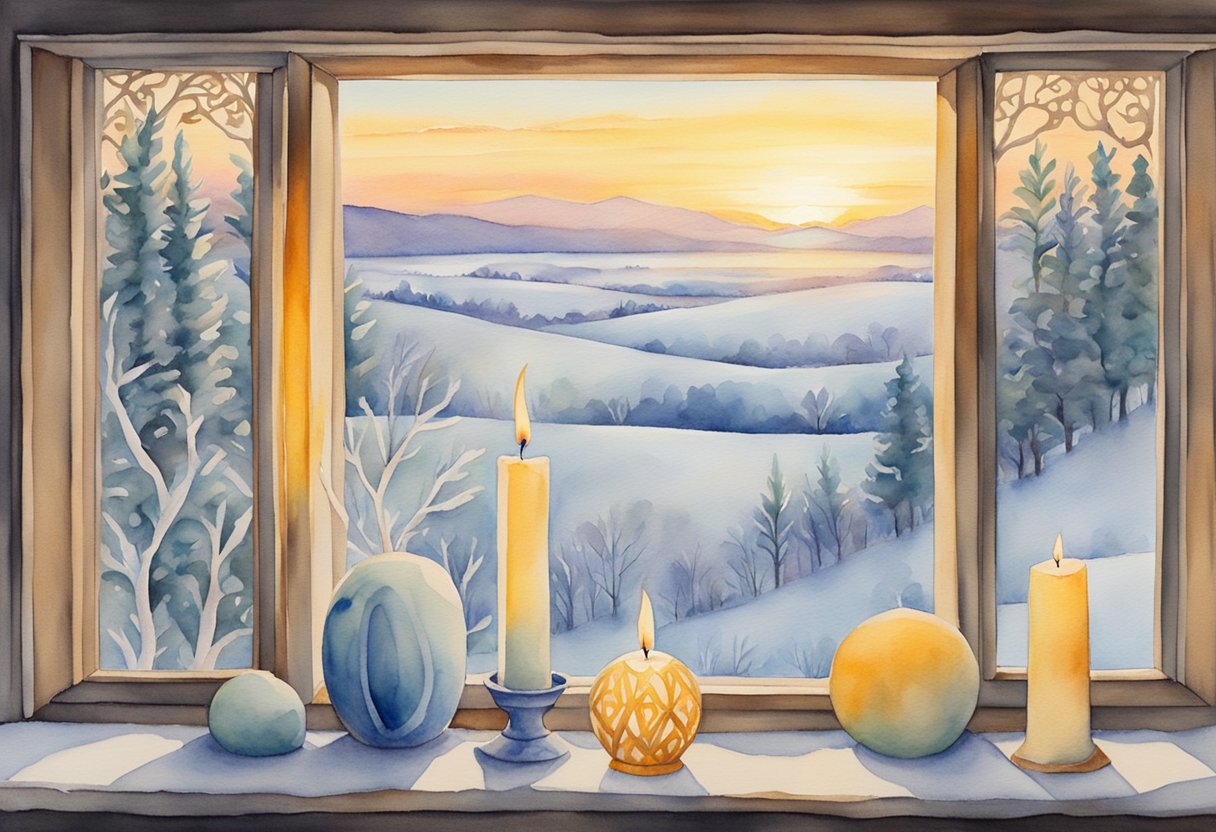
Initially, you’re looking at a Celtic tradition deeply rooted in the changing of seasons. Imbolc’s a holiday celebrated when winter starts turning the corner towards spring—think February 1st or 2nd. Your ancestors knew it as the midway point between the winter solstice and the spring equinox. It’s a time when the Earth slowly awakens from its frosty slumber, and this ancient sabbat pays homage to that shift. The term itself, “Imbolc” or in Old Irish, “i mbolg”, roughly means “in the belly,” hinting at the pregnant ewes of the time—a vital sign that new life’s on the horizon.
Brigid’s Influence
Your journey through Imbolc isn’t complete without honoring the goddess Brigid. Brigid’s Influence is a profound piece of this puzzle, as she’s the exalted figure of this sabbat. Known in the pantheon of Celtic deities as the goddess of hearth, healing, and poetry, your cultural ancestors would’ve invoked Brigid’s blessings for fertility and success with the coming of spring. Her attributes have woven their way through Imbolc celebrations, blending the sacred and the secular, as folks celebrated her with feasts and rituals.
Transformation into Candlemas
Imbolc didn’t stay purely pagan for long, as the early church had a hand in giving it a Catholic twist. What you now call Candlemas, observed on February 2nd, emerged as a Christian feast day from these pagan roots. It’s been blended with the honoring of the Presentation of Jesus at the Temple. Your ancient traditions have shown remarkable resilience, transforming yet holding onto their essence. Here, the use of candles during Candlemas services symbolizes Brigid’s flame and the returning light of spring—a nod to Pagan traditions encapsulating the returning sun.
Rituals and Practices
Traditional Imbolc Rituals
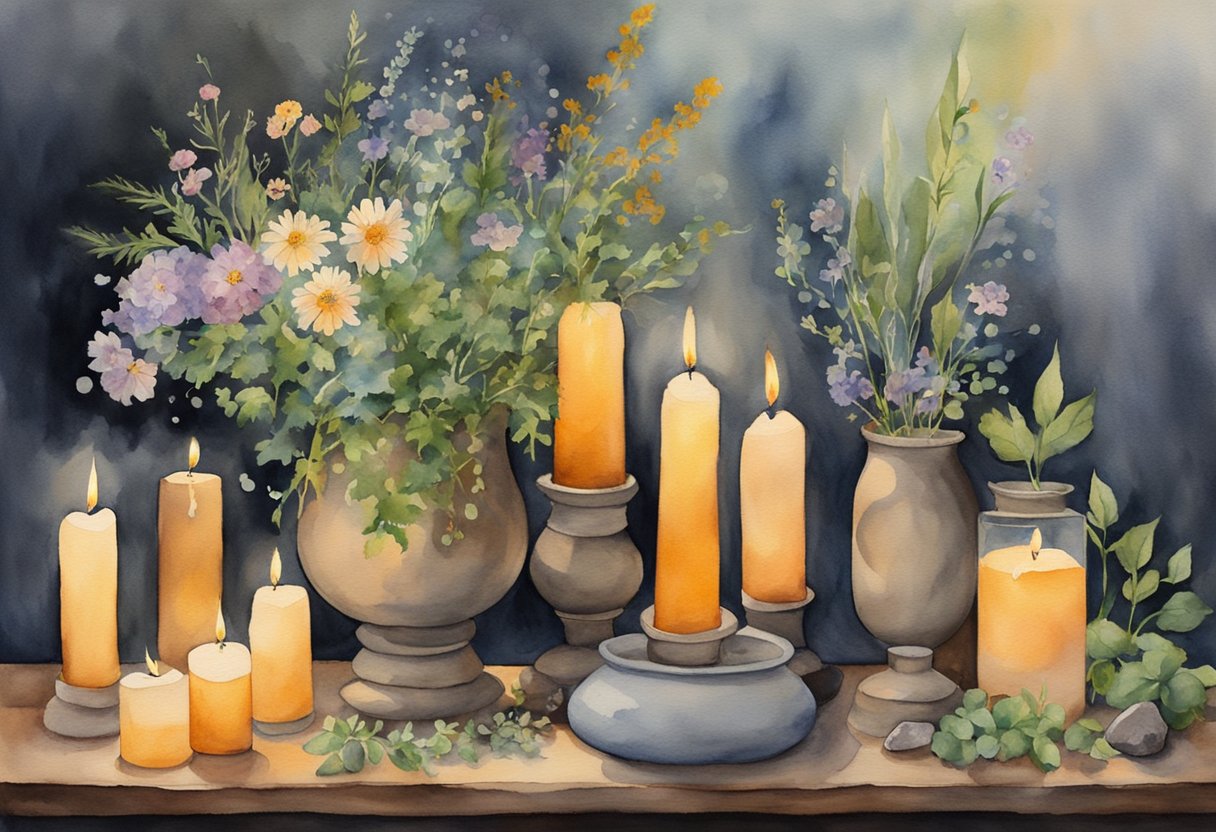
At Imbolc, you’re delving into a time-honored tradition that’s all about purifying your space and reigniting the fire within. You might want to start by crafting a Brigid’s Cross out of reeds or straw. This symbol serves as a talisman for protection throughout the year. Lighting a fire or candles is central to Imbolc rituals, symbolizing the return of light after winter’s darkness and reflecting the promise of renewed life.
Performing purification practices is key, with many choosing to clean their homes thoroughly or to walk through their space with a candle, feeling each corner being touched by light and positive energy. It’s also a common practice to leave out a cloth or ribbon overnight for Brigid to bless, which is then used throughout the year for healing and protection.
Modern Celebrations
Fast forward to today, and you’ll find folks integrating their own spin into Imbolc festivities. Modern activities might include meditation to set intentions for the coming spring or writing down wishes and planting them with seeds as a physical representation of your desires growing with the seasons.
Got a green thumb? Planting bulbs or sowing seeds indoors can be a beautiful way to participate in the cycle of nature. It’s also a popular time for divination, so feel free to whip out your tarot cards, runes, or pendulum to gain insights or seek guidance for the future.
Creating a Sacred Space
Imagine creating a cozy corner that radiates calmness and invites reflection. You can start by setting up an altar that’s decked out with items representing earth (ice), air, fire (candles), and water – elements typically honored during Imbolc. Decorating with snowdrops, the first flowers of spring, can add a refreshing touch to your sacred spot.
Concentrating on light, add as many candles as you feel necessary to fill your space with the soft, warming glow of candlelight. And why not include a statue or image of Brighid to oversee and bless your rituals and practices? An altar dedicated to her can anchor your spiritual practices at this time of year.
Symbols and Decorations
The Role of Fire and Light
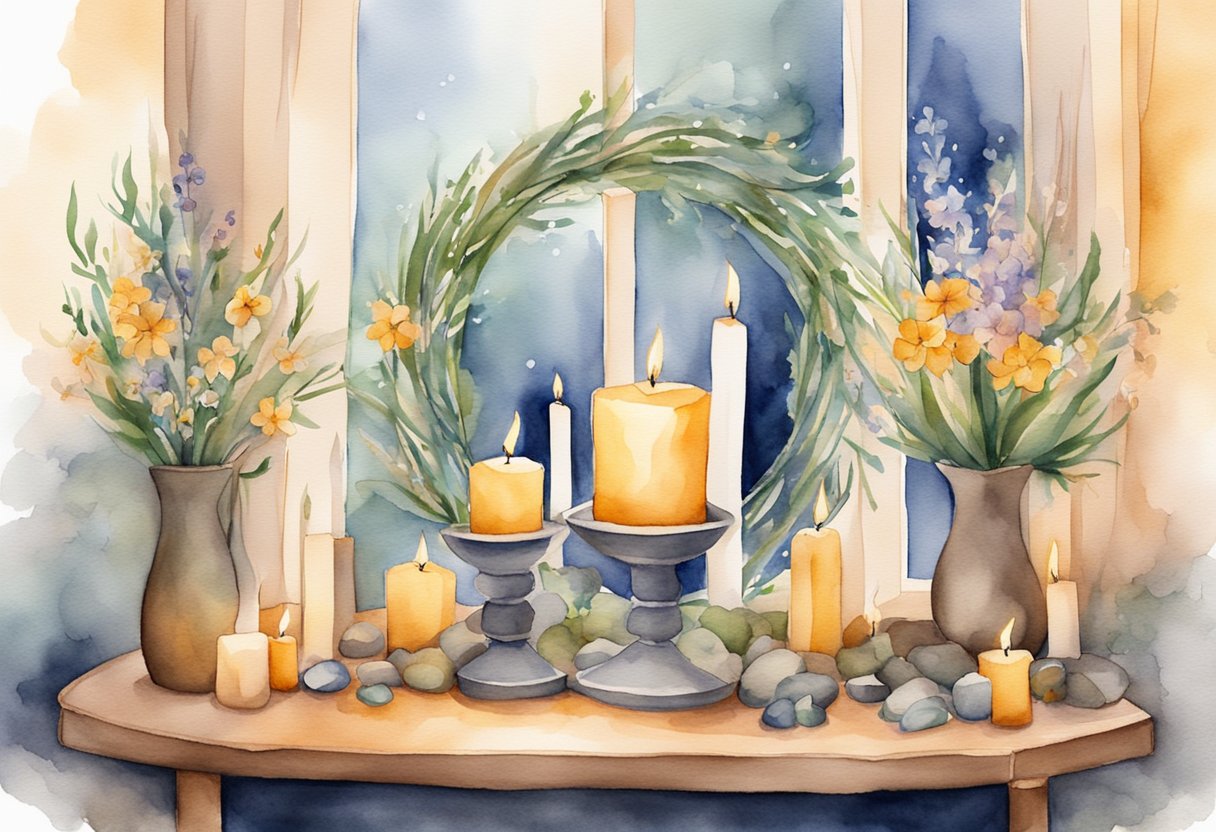
Fire and candles: At Imbolc, you’re not just warding off the darkness of winter but also inviting in the purity and warmth of the growing light. Light a candle or two to honor the goddess Brigid, the patroness of fire. The gentle flicker of a flame symbolizes the return of sunlight and the life it sustains.
- Candle colors: Incorporate white for purity, red for the empowering life force, and green for growth. Gold can also be used to represent the returning power of the sun.
Natural Symbols
Evergreens and snowdrops, for instance, carry the promise of renewal. Place these in your sacred space to connect with nature’s cycle of rebirth.
- Evergreens: representing endurance through the winter and the unyielding strength of life.
- Snowdrops: one of the first flowers to bloom, signaling the awakening earth.
Consider integrating ice symbols that will melt away, representing the transformation from winter to spring.
Altar Arrangement
Creating an altar for Imbolc invites you to focus your intentions on the season’s fresh beginnings.
- Brigid’s crosses: Weave together a Brigid’s cross with some straw or rushes as a protective talisman.
- Symbols of the sun: Brighten your altar with sun symbols to celebrate the growing power of sunlight.
Find a place for these elements on your altar or within your home, honoring their representation of the slowly waxing power of the sun and the stirring life beneath the earth. Your altar serves as a focal point, grounding your connection to the energies of Imbolc and the mystical transitions it celebrates.
Personal Practices for Imbolc
Setting Intentions
Kick start your Imbolc by lighting a candle and taking a moment to reflect on your aspirations. Writing down your intentions and goals not only solidifies your commitment to them but also aligns your energy with the season’s promise of new beginnings. Consider crafting a simple wish list or setting up a vision board that visually captures your dreams for the coming season.
- Examples of Intentions:
- Personal growth: Enhancing a skill or learning something new.
- Healing: Focusing on self-care and emotional well-being.
- Home: Creating a peaceful and organized living space.
Home Cleansing and Renewal
Your home is an extension of your inner world. To welcome the energy of Imbolc, give your living space a thorough cleansing. This can be both literal and symbolic. Start with decluttering—donate what you no longer need and organize what you decide to keep. Once you’ve tidied up, use sage or other herb bundles to purify each room. As you do this, imagine dispelling old energies to make room for the new.
- Cleansing Checklist:
- Declutter
- Organize
- Purify
Embracing Creativity
Imbolc is deeply associated with Brigid, the goddess of fire, healing, and poetry—which makes it the perfect time to rekindle your creativity. Engage in activities that resonate with your artistic side, be it crafting, writing, or even cooking. Creating something that is meaningful to you is a powerful act of spiritual renewal. Remember, it’s not about perfection; it’s about expression and the joy of making.
- Creative Activities:
- Craft a Brigid’s Cross
- Write a poem or journal
- Bake bread or try out new recipes
Community and Cultural Aspects

Celtic Traditions
So, you’re curious about the Celtic ways? Imbolc is your peek into a world steeped in mystique and nature’s rhythms. It started as a Gaelic festival marking spring’s coming warmth. In Ireland, communities would come together to celebrate this time of rebirth, often inviting signs of spring into their homes by decorating with early blooming flowers like the wood anemone.
Global Celebrations
It’s not just an Irish thing anymore. Across the globe, Imbolc has taken on shades of local flavors. Pagans and those with a love for Earth-centered spirituality gather to mark this special day, with candlelit processions, poetry reads, and shared feasts. You’ll see it observed in various forms, from simple, intimate rituals to large, community-centered festivals.
Imbolc and Modern Paganism
Today, if you’re into Pagan circles, Imbolc is a time to get in touch with your inner flame. It’s celebrated by modern Pagans as a way to reconnect with spiritual practices and honor the goddess Brigid. In this realm, it’s more than folklore; it’s a living breath of the collective spirit, where people celebrate the stirrings of new life and fresh beginnings.
[su_button url=”https://amzn.to/4iB8iJY” background=”#a62def” color=”#ffffff” size=”10″ icon=”icon: magic”]Shop Witchy Supplies[/su_button]
