
Baba Yaga, often referred to as the Wild Witch of the East, is an enigmatic figure deeply rooted in Russian folklore. If you’re delving into the forest of Eastern European mythology, chances are you’ll come across this fascinating character, whose reputation oscillates between that of a fearsome cannibalistic witch and a wise woman who holds profound knowledge. Sibelan Forrester, among others, has contributed to the understanding of Baba Yaga, presenting her complex nature through translations and studies of Russian fairy tales.
As you peel back the layers of tales and legends, you’ll find that Baba Yaga’s portrayal is anything but simple. Layered with symbolism, she has been depicted in ways that transcend the straightforward villain archetype. In some accounts, she guides the protagonist with cryptic advice; in others, she’s a monstrous figure threatening to gobble up the unwary. This duality of character makes her an iconic symbol in Slavic traditions, where she is as much a part of the cultural fabric as the vibrant Matryoshka dolls or the grand tales of Russian heroes.
Through art and illustration, Baba Yaga often takes on a visual form as wild and unpredictable as her narrative depictions. Picture a gnarled old crone traveling in a mortar wielding a pestle, her iron teeth gleaming, and her hut standing on chicken legs – such imagery has not only inspired artists but has seeped into popular culture, where her influence has endured far beyond the original folk stories.
Key Takeaways
- Baba Yaga embodies a complex character, feared and revered in Russian folktales.
- Her image as a witch is marked by distinctive features like a mortar and pestle and a chicken-legged hut.
- Baba Yaga’s tales and impact extend into art, culture, and modern interpretations.
Origins of Baba Yaga

Literary Debut and Researchers
To kick things off, your journey into Baba Yaga’s past starts with her first appearance in printed literature. Think back to the mid-19th century—this is when Aleksandr Afanas’ev published his collection of Russian fairy tales. Among them, Baba Yaga flies out of the pages for the first time, capturing imaginations far and wide. But hang on, it wasn’t just Afanas’ev who was enthralled by this wild witch. There was also Ivan Khudiakov, another scholar, who took a magnifying glass to these tales, peering into their murky depths.
In the traditional context, Baba Yaga pops up as a formidable figure in countless tales, often portrayed with a hut on chicken legs. But what did these scholars actually think of her? They saw beyond the creepy façade. They poked around the folklore fog to understand her role in Russian culture, and you know what? They discovered a complex character that threaded through the fabric of Slavic mythology.
Evolution in Russian Narratives
Now, let’s chat about how Baba Yaga’s story has shape-shifted in Russian narratives over the years. Listing every twist and turn would take ages, but here’s the nitty-gritty: she didn’t start as just a villain. In fact, sometimes she’s almost helpful—or as helpful as a spooky witch can get.
Originally, she’s like the eccentric neighbor in Russian folktales, always up to something with her cauldron. Russian fairy tales often cast her as the antagonist, but a closer look reveals layers to her madness. She challenges heroes and sometimes provides them with essential clues or items. It’s her way, perhaps, of teaching some harsh life lessons.
Over time, Baba Yaga became synonymous with the stereotypical witch figure—but with a uniquely Russian twist. It’s this transformation that makes her tales a go-to for anyone fascinated by the mystical and eager for a folkloric adventure.
So, you see, your understanding of Baba Yaga now has roots, branched out from the wild gardens of Russian folklore and carefully pruned by scholarly hands. Tread the paths of those narratives, and you’ll soon realize she’s far more than just a witch; she’s a symbol, a lesson, and a legend.
Iconography and Characteristics
Appearance and Tools
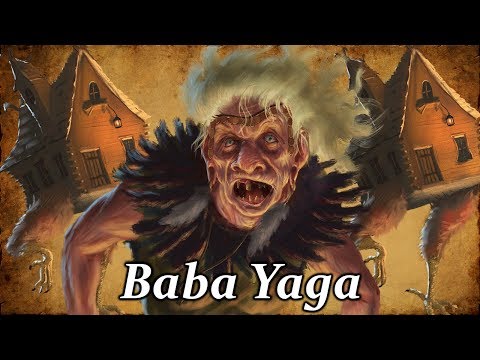
Imagine encountering Baba Yaga in the heart of an ominous forest. Her figure is unforgettable, often portrayed as a haggard old woman with bones for keys or in her jewelry—symbols of her connection to the earth and the cycle of life and death. Her attire, ragged and uncanny, accentuates her wild nature.
Baba Yaga’s infamous mode of transportation, a broom, is as unconventional as she is. Not just for sweeping, her broom is a magical tool that cleanses her path of traces and helps her navigate the dense woodlands.
Now picture her home: a peculiar hut perched atop chicken legs, which can move through the forest at her command. This bizarre abode not only shields her from unwanted guests but also reinforces her mastery over the natural world.
Symbolism in Folklore
You’ll find Baba Yaga is more than just a witch; she’s a symbol—intertwined with various facets of Slavic mythology. The forest she inhabits is a liminal space, a place of both danger and opportunity, where the unknown lurks and transformative quests commence.
Her bones are often seen as talismans with significant symbols—pointing to a deep understanding of the mysteries of life and death. They whisper tales of her role as a guardian of wisdom and a formidable figure who holds the keys to the fountains of life.
In stories, her appearance and tools underscore her duality: sometimes a helper, other times a menacing antagonist. Her paradoxical nature is precisely what makes her so enchanting—she embodies the uncanny ability to instill both fear and awe.
Baba Yaga in Art and Illustration

Renowned Artists
Ivan Bilibin stands out when you think of Baba Yaga’s portrayal. He brought this enigmatic figure to life at the turn of the 20th century with a style that’s both lush and evocative. Bilibin’s illustrations often feature the quintessential elements of Baba Yaga’s lore, like her chicken-legged hut and dense, foreboding woods. His works have a certain mystical charm that can transport you straight into the heart of a Russian folktale.
You might also recognize Baba Yaga creeping into the canvases of Victor Vasnetsov, another prominent Russian artist. Deeply rooted in Slavic mythology, Vasnetsov’s paintings present a more grandiose and symbolic take on the legend. Check out his work ‘The Knight at the Crossroads’—it’s not specifically about Baba Yaga, but you’ll feel her influence in the mythic atmosphere he creates.
Visual Interpretations
Through various historical periods, artists have been fascinated by Baba Yaga’s paradoxical nature. You’ll find her depicted as a terrifying creature, but you might be surprised to see other illustrations where she seems almost grandmotherly—albeit a somewhat sinister grandma. This dichotomy speaks volumes about her ambiguous role in Russian traditions, where she might hinder or help you, depending on her mood.
Browsing through a gallery of Baba Yaga illustrations, one thing is clear: each artist injects something of their own while staying true to the core traits that define her. Whether it’s through eerie sketches or vibrant oil paintings, Baba Yaga continues to cast her spell over the realm of art, reminding you that her story is as timeless as it is mystical.
Major Tales Involving Baba Yaga

Vasilisa the Beautiful
Imagine yourself in a dark, enchanted forest where Vasilisa the Beautiful, a classic Russian folktale, unfolds. After her mother’s death, Vasilisa is given a magical doll that aids her in times of need. Your path crosses with Baba Yaga’s when Vasilisa is sent to fetch a light from her. Baba Yaga assigns her impossible tasks to complete before she can receive the light. Vasilisa’s doll helps her succeed, indicating that Baba Yaga, despite her menacing mien, may also be a catalyst for transformation and growth.
Other Eminent Stories
Don’t stop at just one story; Baba Yaga’s lore stretches across the vast expanse of Russian myth. In tales like The Frog Princess, you encounter her in a different light. She plays a role in the heroine’s quest to revert from amphibian to human form. With the Firebird, another prominent figure in Slavic myths, Baba Yaga’s presence weaves through stories, shaping the fates of those who dare to seek the luminous creature. As you can see, Baba Yaga serves various roles: antagonist, helper, and even a touch of the enigmatic, shaping the deep, mystical fabric of Russian folklore.
Cultural Impact and Modern Representations

From fashion lines to digital media, Baba Yaga’s influence has permeated various aspects of modern culture. You’ll find the essence of this enigmatic witch reflected in everything from art installations to internet memes.
Fashion and Pop Culture
If you’ve seen tennis shoes with peculiar folk patterns or tee shirts boasting cryptic Slavic symbols, you might’ve already encountered Baba Yaga’s touch without even realizing it. Designers often pull inspiration from her rich lore, interweaving elements of mystery and wilderness into their creations. It’s not uncommon to spot tattoos that pay homage to this wild witch, showcasing her as a symbol of feminine strength and complexity.
Influence Beyond Russia
Her reach extends far beyond the Russian borders; Ukraine, for instance, shares a cultural heritage that includes Baba Yaga and has its similar tales and characters inspired by her. You’ll observe her presence in various forms, from literature contributions to pop culture references across Eastern Europe. Baba Yaga resonates as a narrative that transcends geographical boundaries, evoking a sense of ancient wisdom and untamed magic wherever her story is told.
Baba Yaga as a Cannibalistic Entity

You’re in for a sinister treat when delving into Baba Yaga’s culinary preferences. This infamous witch’s appetite for the macabre has rooted her firmly as a fearsome figure in Slavic folklore.
Fear and Awe in Folklore
Imagine wandering through the dense forests of Eastern Europe and stumbling upon a bizarre hut perched on chicken legs. This is the lair of Baba Yaga, a name that sends shivers down the spines of Slavic children. Folk stories often paint her as a cannibalistic witch who preys on the lost and the innocent. You’ve probably heard how she’s associated with eating children, presenting a tangible terror for anyone who dares to cross her path. Baba Yaga embodies the wild nature of magic and the unknown; her very presence in tales is enough to invoke both fear and awe.
Culinary Symbolism
The tales of Baba Yaga serve up more than just grisly stories; they’re rich with symbolism. Picturing her with a cannibal’s diet reflects humanity’s deep-seated fears of the wilderness and the feral unpredictability of nature. In cooking up such stories, you’ll find that she’s not just a mindless monster, but rather a complex symbol. Her hunger is often interpreted as a metaphor for the insatiable cravings of the soul or the destructive power of nature itself. So when you hear about her cannibalistic tendencies, remember that they provide flavorful insight into the human psyche.
Are you ready to peel back the layers of these tales like onions and discover the hidden meanings in Baba Yaga’s ghastly gastronomy?

A delightful read. Thank you.