
Tarot meditation is a contemplative practice that merges the rich symbolism of tarot cards with meditative focus to unlock deeper self-awareness and intuition. Each tarot card serves as a mirror, reflecting aspects of the subconscious that often remain hidden or unacknowledged. As individuals turn their attention inward, the images and archetypes of the tarot can guide them towards moments of profound insight and clarity.
In the quiet space of meditation, tarot cards become more than just tools for divination; they transform into gateways for personal development and spiritual growth. Preparing one’s space and mindset is crucial, creating a tranquil environment conducive to reflection. The engagement with the cards goes beyond mere observation—each participant journeys through the rich landscapes of the cards, uncovering messages and wisdom unique to their path.
Key Takeaways
- Tarot meditation combines visualization and reflection using tarot cards.
- This practice cultivates deeper intuition and personal insight.
- Integration of tarot meditation can enhance daily life focus and clarity.
The Essence of Tarot in Meditation
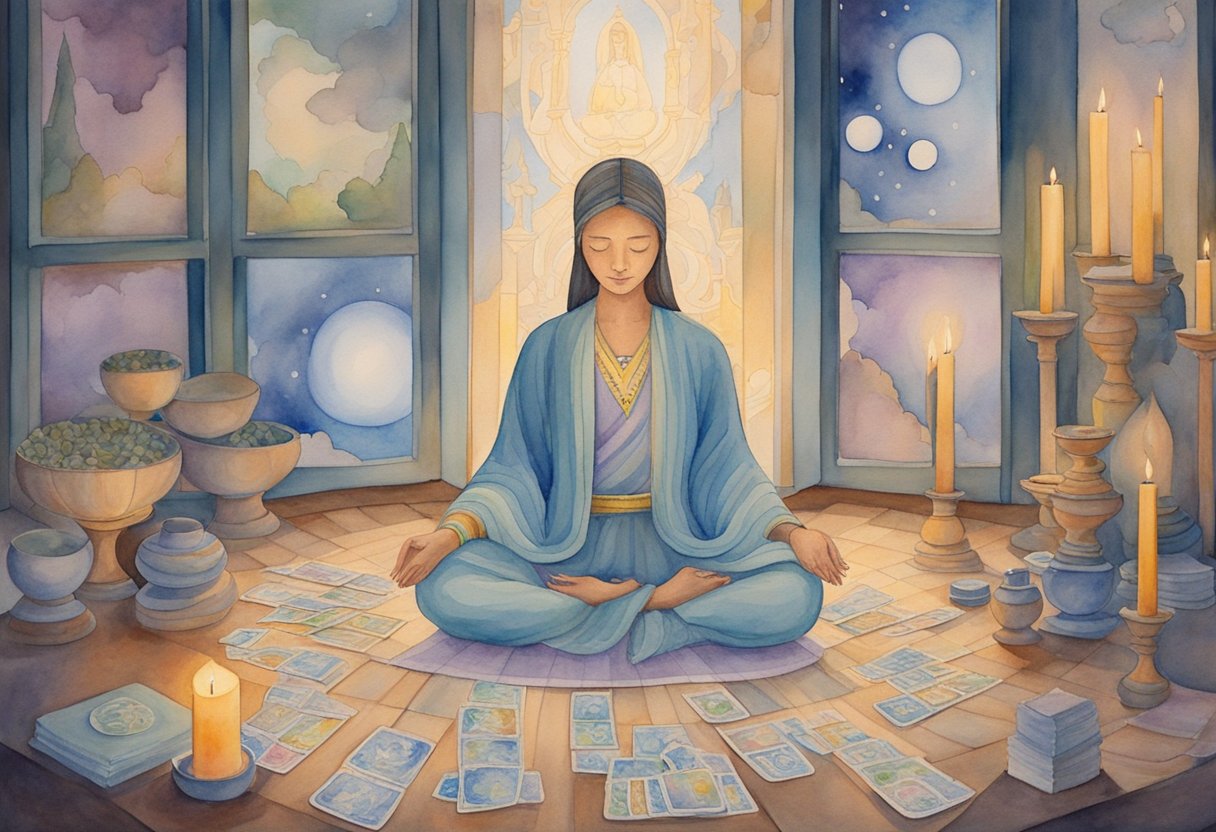
Tarot meditation is an enriching practice that marries the introspective nature of meditation with the symbol-rich imagery of tarot cards. It serves as a pathway to deeper spiritual understanding and self-discovery.
Historical Intersection of Tarot and Meditation
Historically, the use of tarot cards extends far beyond simple divination. Scholars and mystics have long recognized its potential as a meditative tool. In tarot meditation, one engages with the cards’ rich historical backdrop, utilizing their symbolism and archetypal imagery as a gateway to the subconscious.
Tarot Imagery as a Meditative Focus
The detailed imagery on tarot cards is inherently designed to stimulate the intuitive and reflective aspects of the mind. In meditation, focusing on a tarot card can anchor thoughts and facilitate deeper insight. The Fool’s journey, depicted across the Major Arcana, or the elemental representations found within the Minor Arcana, act as focal points to contemplate life’s myriad experiences and lessons.
Embracing the Mystical Through Tarot
Tarot meditation is a spiritual quest where the mystical elements of the cards meet the stillness of the meditative state. Practitioners often report an enhanced sense of connectivity to the collective unconscious, tapping into universal wisdom and truths. It transcends the physical representations of the cards and fosters a profound bond with the unseen and the mystical realms.
Preparing Your Space and Mind
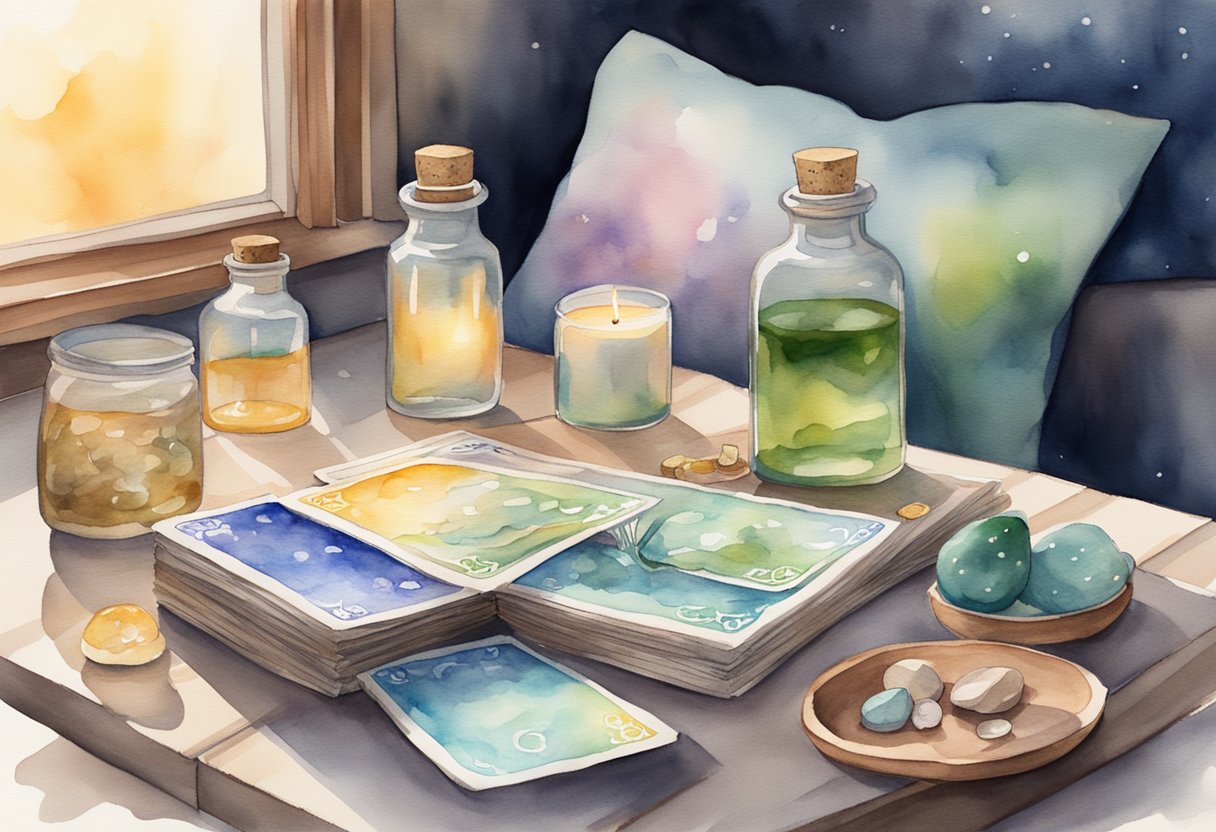
Prior to embarking on the enlightening journey of tarot meditation, one must thoughtfully prepare both their physical space and mental state. A tranquil environment and a focused mind are instrumental in achieving a profound meditative experience.
Creating a Sacred Environment
To foster a sacred space, they must start by decluttering their chosen area, allowing for physical and spiritual cleanliness. They may want to consider the following:
- Lighting: A candle’s soft glow not only illuminates but also consecrates the space.
- Seating: Comfortable seating is essential for a serene and prolonged meditation session.
Here is a checklist for crafting a conducive environment:
- Choose a Quiet Location: The absence of distractions enhances concentration.
- Clean the Area: A tidy space reflects an uncluttered mind.
- Arrange Seating Comfortably: A cushion or chair should support a relaxed posture.
- Incorporate Natural Elements: Elements like plants or stones can ground their energies.
- Use Aromatic Aids: Incense or essential oils can elevate the mystical ambiance.
Cultivating Mindfulness and Intention
Cultivating one’s mindfulness is critical; it brings awareness to the present moment and prepares the psyche for introspection. Embracing intention sets a purposeful direction for their tarot meditation practice. To nurture mindfulness and intention, one might:
- Breathe Consciously: Deep, steady breathing centers their mind.
- Set an Intention: Articulating a clear purpose sharpens their focus.
Consider the implementation of these practices for heightened mindfulness:
- Focus on the Breath: Observing the breath can quiet the internal chatter.
- Visualize Your Intention: Imagining the outcome fortifies their resolve.
- Mindfully Shuffle Your Deck: Handling the cards with intention merges their energy.
Successfully preparing both their surrounding environment and mental composure paves the way for a transformative tarot meditation experience. It’s through these sacred rituals that they connect deeply with their inner self and the timeless wisdom of the tarot.
Understanding Tarot Archetypes and Symbolism
Tarot cards serve as a key to unlocking the subconscious, presenting archetypes and symbols that hold profound meanings.
Major and Minor Arcana Explained
The Tarot deck is divided into two primary sections: the Major and Minor Arcana. The Major Arcana consists of 22 cards, each representing significant life themes and lessons. These cards reflect universal experiences that they may encounter on their life’s journey, from the innocence of The Fool to the completion symbolized by The World.
Major Arcana Cards:
- 0 The Fool – New beginnings, innocence, spontaneity
- 1 The Magician – Manifestation, resourcefulness
- 2 The High Priestess – Intuition, unconscious knowledge
- …additional cards continue up to 21.
In contrast, the Minor Arcana is comprised of 56 cards split into four suits: Pentacles, Cups, Swords, and Wands. Each suit corresponds to a different aspect of human experience. Pentacles deal with material aspects of life, Cups with emotions, Swords with intellect and conflict, and Wands with creativity and action.
Minor Arcana Suits:
- Pentacles: Material matters, financial health, work
- Cups: Emotions, relationships, connection
- Swords: Thoughts, words, conflicts
- Wands: Energy, motivation, passion
The Language of Tarot Symbols
Each tarot card is rich with symbols, contributing to its complex and layered meanings. These symbols can be colors, numbers, objects, or figures, with each image providing insights into the shared human consciousness. They discern that color symbolism plays a pivotal role; for instance, red may signify passion or strength, while blue can evoke feelings of calmness or spirituality.
Cards within the Major Arcana are densely packed with these symbols, often portraying archetypical figures like The High Priestess, who facilitates a connection with the inner self through her placement between two pillars, representing duality. Symbolism in the Minor Arcana includes the depiction of harsh landscapes in the Suit of Swords, suggesting challenges or conflict.
Examples of Symbolism:
- Chariot: Victory, willpower — horses pulling in different directions indicate control over opposing forces.
- Tower: Sudden change, upheaval — lightning bolt signifies a flash of insight or a disruptive event.
Symbols allow for a personal connection with the cards, and each individual may interpret the images slightly differently based on their own life experiences and intuition. This personal connection is what makes tarot a powerful tool for introspection and guidance.
Engaging With the Cards
In the mystical journey of tarot meditation, the practitioner must approach the cards as venerable gateways to the subconscious. By engaging with tarot cards, individuals embark on a path that marries intuition with the rich symbolism of the deck.
Shuffling as a Meditative Practice
Shuffling the tarot cards becomes a ritual in itself, setting the stage for the energy exchange between the seeker and the deck. As they shuffle, the practitioner centers their thoughts on the question at hand, imbuing the cards with their energy and focus. This act is not merely a practical preparation but a reverent communion with the cards, aligning one’s spiritual frequency with the pulse of the tarot.
Selecting Cards with Intuition
Once the cards have been thoroughly shuffled, the individual relies on their intuition to guide them to the cards that hold the messages they seek. It involves a conscious release of control, allowing their inner wisdom to draw them towards the cards that vibrate with meaning and resonance. This intuitive selection process forges a symbiotic bond with the tarot, ensuring that the practice is tailored uniquely to the individual’s journey and the energies they carry.
Discovering Personal Insights

Tarot meditation is a powerful tool for gaining clarity and understanding personal narratives. It aids an individual in unlocking profound insights across temporal states: past, present, and future.
Reflecting on Past, Present, and Future
One begins the journey of tarot meditation by focusing on three temporal pillars – the past, the present, and the future. This reflection is essential for discerning patterns and learning from life’s myriad experiences.
- Past: The individual contemplates previous experiences and acknowledges their impact.
- Present: One observes current circumstances, gaining awareness of one’s state of being.
- Future: The meditator envisions potential paths forward, informed by insights gleaned from the past and present.
Journaling for Deeper Understanding
Through journaling, individuals translate their reflections into a tangible format, which can later be revisited for additional insight. This practice enriches the meditative experience:
- Insights: They jot down immediate feelings or thoughts that arise from each card.
- Reflection: Written entries become a mirror, helping the writer to see personal growth over time.
- Journaling: The discipline of maintaining a regular journal enhances both focus and mindfulness.
In this way, tarot meditation becomes a mystical beacon, guiding one towards self-discovery and enlightenment.
Application in Daily Life
Tarot meditation seamlessly integrates into daily life, offering individuals a unique tool for personal development and a means to navigate life’s complexities. This practice is not just about foresight but also about cultivating a deeper understanding of oneself and the path one walks.
Tarot for Personal Growth and Self-Awareness
Individuals turn to tarot cards as mirrors reflecting their innermost selves, facilitating personal growth and self-awareness. Daily practices might involve pulling a card each morning to ponder a personal trait or situation one wishes to understand better. For many, this is a sacred moment of introspection. Consider the following steps:
- Select a Tarot Card: Choose a card that resonates with current emotions or circumstances.
- Contemplate the Card’s Imagery: Reflect on the symbols and how they relate to personal experiences.
- Journaling Responses: Write down insights to track progress over time and note evolving self-awareness.
Submerging into the imagery and symbolism of Tarot, they recognize patterns in their behavior and thoughts that may have previously eluded them. This revelation leads to an empowered sense of self.
Overcoming Challenges and Finding Clarity
When faced with obstacles, tarot meditation becomes a beacon of light, providing clarity and perspective. It encourages one to pause and reassess their situation from a fresh vantage point, often revealing solutions previously overshadowed by the tumult of emotions. Here’s what the process might look like:
- Concentrate on the Challenge: Focus the mind on the specific issue at hand.
- Draw a Tarot Card: Contemplate the relevance of the card’s meaning in relation to the challenge.
- Embrace the Insight: Apply the newfound understanding to develop strategies to surmount the difficulty.
Through this meditative dialogue with the Tarot, one may unearth inner wisdom that guides them through life’s challenges, thus illuminating paths that lead to clearer horizons.
Tarot Spreads for Meditation
In the realm of tarot meditation, selecting and interpreting a spread can be a transformative journey toward self-discovery.
Choosing the Right Spread
When one embarks on the path of tarot meditation, choosing the right spread is critical. Each spread is a unique constellation of symbols that offers a different lens through which to view oneself and the universe. For beginners, a simple three-card spread can illuminate past, present, and future insights. More complex spreads, like the Celtic Cross, can provide a broader and deeper exploration of one’s current state and potential directions. It is essential to select a spread that resonates with one’s intentions and the questions seeking answers.
Interpreting Spread for Self-Discovery
The art of interpreting a tarot spread for meditation requires an open heart and mind. Each card in the spread is a mirror reflecting aspects of one’s inner world. The seeker contemplates the images, symbols, and traditional meanings of the cards, considering their relevance to personal experiences and feelings. This interpretive process is less about predicting the future and more about uncovering profound truths and guidance from within. Through reflection, the tarot spread becomes a conduit for answers, leading to a richer understanding of oneself and one’s journey.
Integrating Lessons and Moving Forward
As individuals conclude their tarot meditation sessions, they unlock profound insights that can be applied to various facets of their lives. This critical phase involves taking the inspiration and lessons gained and weaving them into their personal narrative for continued growth and understanding.
Applying Insights to Personal Situations
She begins by reflecting on the revelations brought forth during meditation and considers how they might apply to current circumstances. For instance, if a card like The Hermit emerged during her meditation, she might recognize a call for introspection or the need to seek guidance from within in a situation where she feels alone in making a decision.
- Current Challenges: She examines the areas of her life that are demanding attention or resolution.
- Intrinsic Values: She reassesses what is truly important to her, using the symbolism of the tarot as a guide.
- Actionable Steps: She outlines practical measures, inspired by the tarot insights, that can be taken to address personal challenges.
Often, the integration process illuminates pathways previously hidden, shining light on solutions one was seeking.
Continuing the Journey of Self-Discovery
With the tarot as a compass, he voyages onward in his journey of self-discovery, knowing each card drawn serves as a catalyst for personal evolution. The lessons of the tarot are not fleeting moments but guiding stars for the future that help him remain centered and directed towards his true north.
- Journaling: He keeps records of each meditation journey, noting down thoughts and feelings associated with each card and session.
- Regular Practice: He commits to a regular tarot meditation practice to maintain the connection with his intuitive self.
- Openness to Change: He remains open-minded to the transformations each lesson brings, allowing personal growth beyond what he had envisioned.
In every step he takes, the tarot offers a profound wisdom that continues to unfold, ever deepening his understanding and personal growth.
