As the wheel of the year turns, Beltane emerges as a vibrant and spirited celebration marking the passage from spring into summer. This ancient festival, with its roots deeply planted in Celtic traditions, is embraced by the Wiccan community and many neopagans as a significant sabbat. Beltane ignites the fires of creativity and fertility, symbolizing the peak of spring and the beginning of the summer season. With the sun waxing in power, life bursts forth in an intoxicating dance of vitality and passion, as Beltane bears witness to the marriage of the Goddess and the God, embodying the union of Earth and Sun.
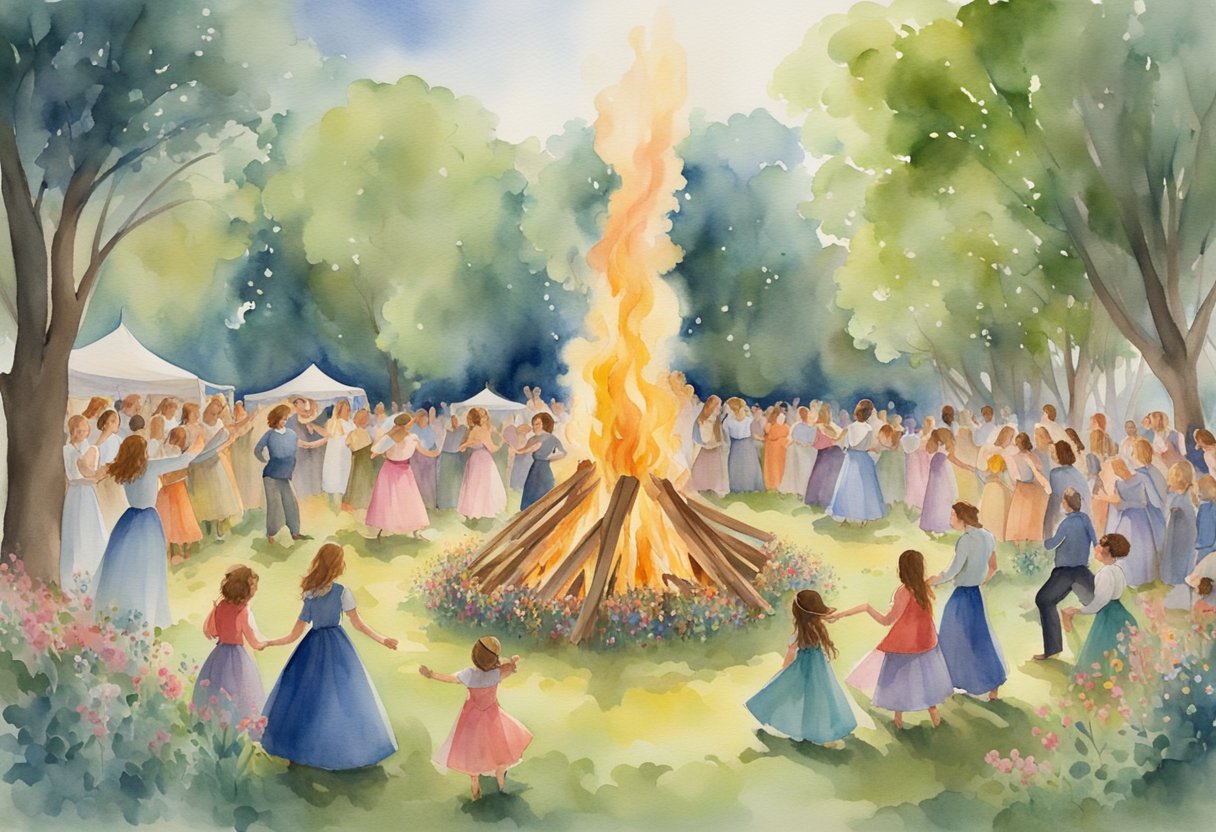
Beltane, traditionally celebrated on the first of May, is a time to revel in the abundance of the earth. Within Wiccan and neopagan traditions, the festival heralds new beginnings, embodying the strength of life and the potential for new growth. The fiery essence of Beltane is honored with bonfires, representing the light of the sun and the promise of longer days. These fires are a testament to the transformative power of the festival, encouraging individuals to leap through the flames to purify, protect, and bring fertility.
Key Takeaways
- Beltane celebrates the fertile union of the Goddess and the God with vibrant festivals of fire.
- As a Wiccan sabbat, Beltane marks a time for personal growth and spiritual reflection on the ebullient embrace of life.
- The festival encourages practical expressions of the joyful abundance of summer’s imminent arrival.
Historical Origins of Beltane
Celtic Beginnings
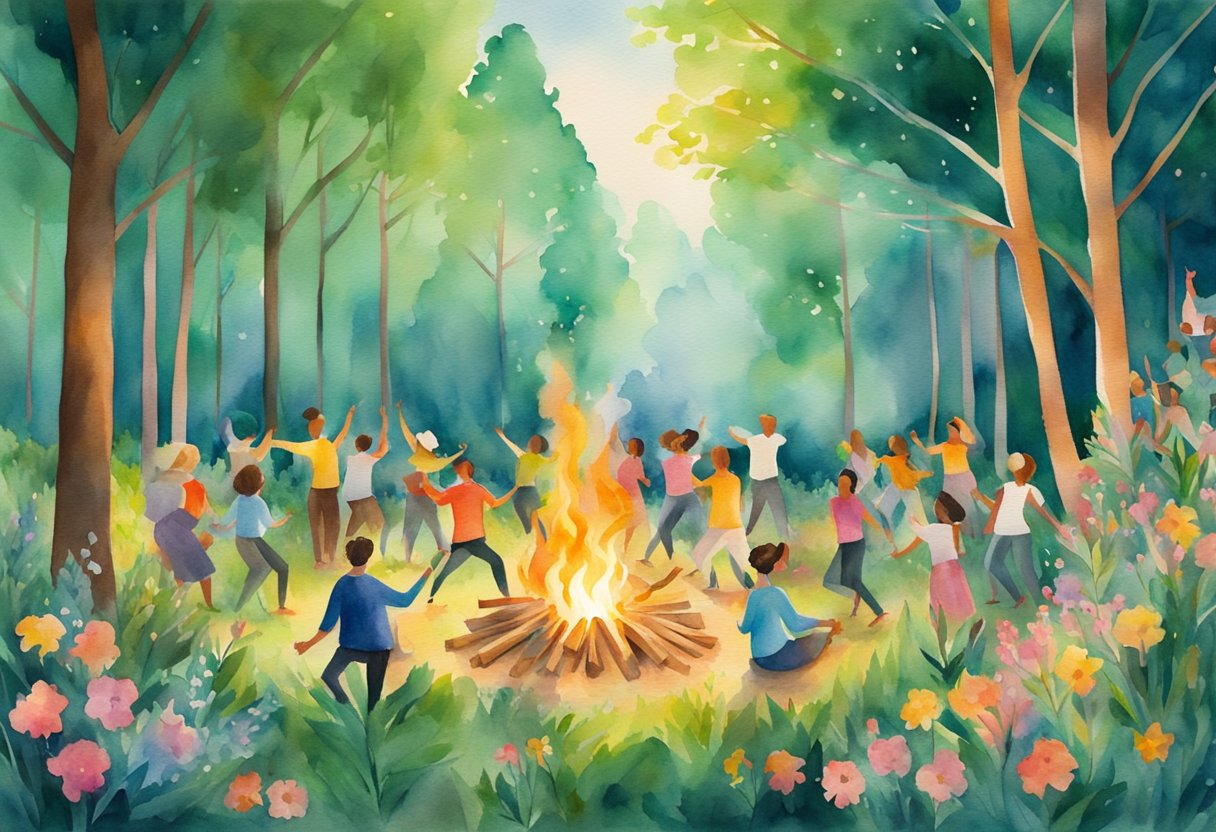
The festival of Beltane, as historical annals suggest, finds its embers in the pastoral lands of ancient Celtic Europe. It marked a time when pastoral communities would light bonfires and guide their herds between them, seeking protection and blessing for the animals. They saw this period as the transition from spring to summer, a point where the veil between worlds was considered thin, akin to Samhain, its opposite on the Wheel of the Year. Ireland, Scotland, and Wales all embraced and embellished Beltane within their distinct cultures, underpinning the event with lore and customs unique to each Celtic heartland. References to Beltane in Irish mythology, especially, illuminate its significance, portraying it as a moment when legendary figures would partake in its observance.
Belenus and Floralia
Rich with history, Beltane also drew connections with the sunlight’s dominion through the god Belenus, whom the Celts believed held sway over fertility and the bounties of the coming harvest. This deity, associated with purity and the bright blaze of the achiever’s fire, left a lasting imprint on the holiday’s essence, as Beltane itself translates to “bright fire.”
Beltane weaves in threads from Floralia, the Roman celebration of flowers, fertility, and the goddess Flora. Here, echoes of Europe’s pervasive spirit can be felt, as Floralia’s festive garlands find kindred spirits in the Maypole dances of Beltane, where ribbons intertwine and revelers mirror the renewal unfurling across the natural world.
In these rekindled flames and blooming festivities, Beltane stands as a bridge connecting ancient traditions across time, a beacon summoning the ardent spirits of history to dance once again under the spring moon.
Significance in Wicca and Neopaganism
Wiccan Sabbats
Within the Wheel of the Year, Wiccans embrace eight major sabbats, or holy days, that mark the changing seasons and significant transitions in the cycle of life. Each sabbat serves as a spiritual milestone, a moment for rituals that honor the dual aspects of the Goddess and the God. Beltane stands proudly among these sabbats, a beacon that celebrates the fires of creation and heralds the coming fullness of summer.
Key Elements of Wiccan Sabbats:
- Rituals: Integral to Wiccan practice, they connect participants with the divine and the rhythms of nature.
- Fertility: Many sabbats, including Beltane, emphasize fertility—as in creativity, growth, and renewal.
- Rebirth and Renewal: These themes are recurring in the sabbats, reflecting the cyclical nature of life.
Beltane’s Place in the Wheel of the Year
Beltane occurs on May 1st, precisely at the midpoint between the spring equinox and the summer solstice. This sabbat ignites a period of rebirth and renewal, where the potency of life is at its peak. It’s a time when the veil between the world of the seen and unseen grows thin, and the fertile earth, warmed by the strengthening sun, bursts into vibrant life.
Significance of Beltane:
- Fertility: Beltane is intrinsically tied to fertility, with rituals often focused on promoting the fruitful abundance of the earth.
- God and Goddess: They reach their full might at Beltane, their union representing the peak of creative power and the promise of coming harvests.
- The Wheel of the Year: The holiday is a critical juncture in this cycle, transitioning from the promise of new life in spring to the matured power of the coming summer.
Ceremonial Activities
Beltane Fire Ritual
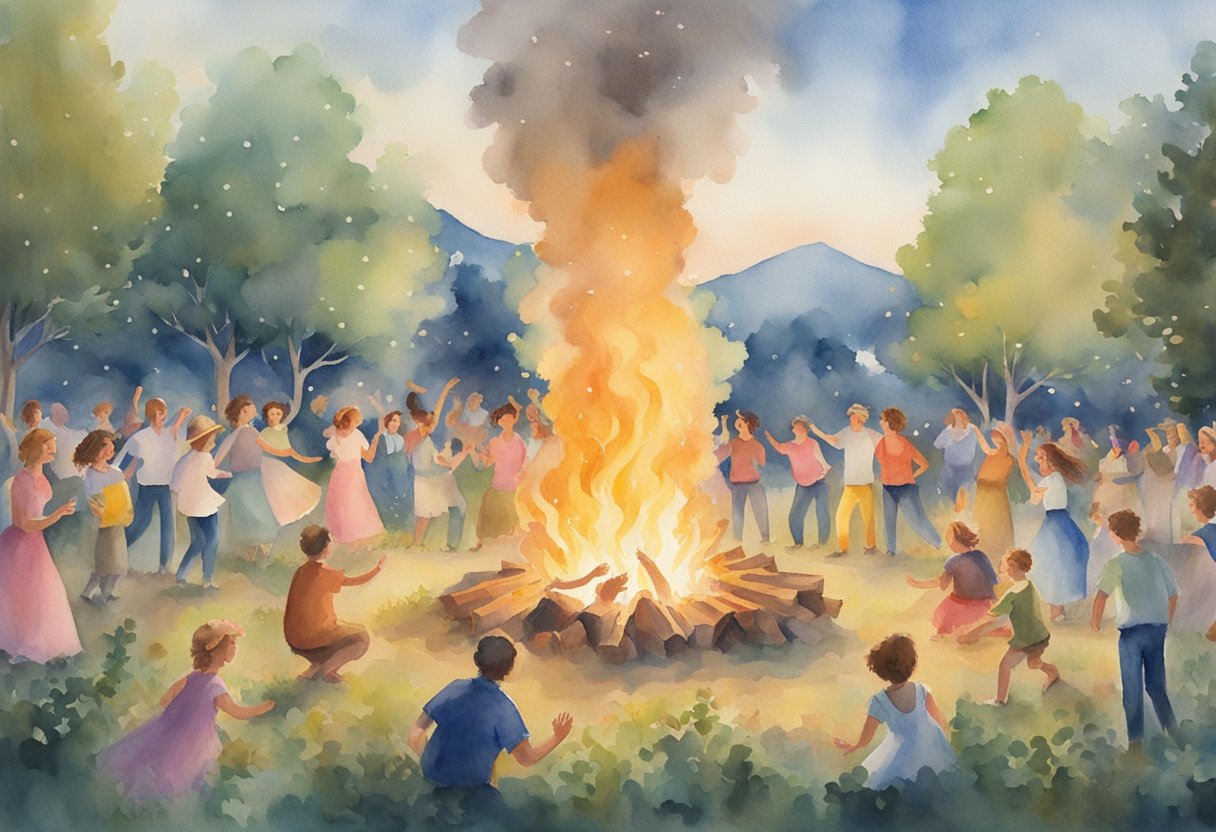
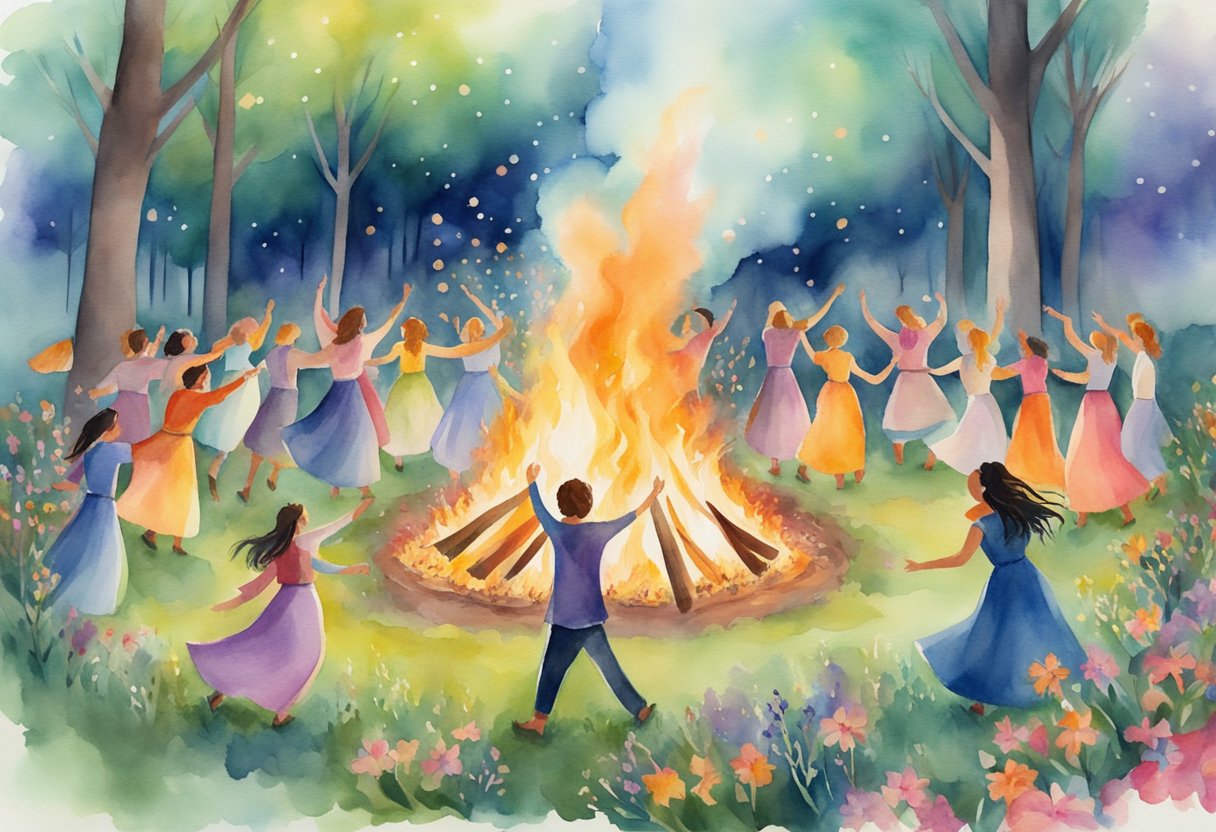
The flame serves as a beacon of purification and transformation during Beltane. Practitioners often light large bonfires as an embodiment of the sun, inviting warmth and vitality. This fire festival ritual begins with the kindling of a sacred fire, symbolizing the return of light and life. Participants may jump over the fire — a bold act of purgation and an ancient rite to bring fertility and good fortune.
Maypole Dancing and Decoration
A symbol of fertility and the axis of the springtime world, the maypole stands tall, bedecked with colorful ribbons. Dancers weave around it, creating a harmony that sings of unity and growth. Each ribbon’s hue holds its own silent tale, but together, they represent the vibrant palette of nature in bloom. The decorating and dancing are not mere revelry; they are movements of deep spiritual resonance that mirror the intertwining of life’s threads.
Handfasting Ceremonies
Amidst the fiery joy and ribboned dances, handfasting ceremonies often occur—a spiritual union of lovers, bound by the hand with cords or ribbons. These bonds may last a year and a day, a lifetime, or for all eternity. Such rites echo the deep-rooted connection between humans and the earth, sealed in the presence of the elements. The altar stands as silent witness to these vows, arrayed with symbols of the season, blessings of fertility, and the sacredness of Beltane.
Symbols and Traditions

Floral and Fire Symbolism
Floral imagery suffuses Beltane with layers of meaning. Flowers, in their resplendent bloom, epitomize the fertility and growth central to Beltane’s significance. Garlands woven of flowers, such as the May Queen’s wreath, are archetypical symbols, radiating the joy and color of the season. Fire, ever a purifying force, represents the sun’s increasing power as it breathes warmth into the earth, coaxing life to unfurl in a symphony of green.
- Flowers: Wreaths, bouquets, and garlands not only beautify spaces but also attract benevolent energies.
- Fire: Bonfires and candles are lit, serving as the heart of Beltane celebrations, where people gather to leap over flames, wishing for good fortune.
Colors of Beltane
Beltane heralds a palette as rich and bold as the festival’s spirit. The colors of Beltane—green, red, yellow, pink, and orange—weave a web of vitality and passion. They mirror the riotous hues of the burgeoning florals and the warm, life-giving rays of the sun.
- Green: Symbolizing the lushness of the earth, it stands for growth and new beginnings.
- Red: A powerful emblem of love and the life force, red embodies the dynamic energy of Beltane.
- Yellow, Pink, and Orange: These joyful colors evoke the essence of the sunlight, adorning altars and attire, and lighting up the festival with their brilliance.
Cultural Practices and Modern Celebrations

Festivities and Community Gathering
At the heart of Beltane are the community gatherings that rekindle the warmth of friendship and family bonds. Participants often convene at dawn to welcome the first light of May, symbolizing the ignition of life’s fires. Festivals are widespread, typically featuring the iconic maypole dance where ribbons are interwoven around a central pole, embodying the union of the masculine and feminine.
Feasting and Foods
The spirit of Beltane is also captured in the shared feasts, heavy with the season’s bounty. Tables are laden with dishes that highlight fresh, spring ingredients. A traditional menu might include:
- Breads and cakes: Often baked with symbolic shapes, featuring seeds and seasonal herbs.
- Dairy foods: A nod to the pastoral roots of the holiday with cheeses and creams.
- Spring greens and herbs: Gathered for their freshness and vitality.
These communal meals foster a sense of togetherness, steeped in gratitude for the earth’s offerings.
Marrying Secular and Sacred
Beltane gracefully interweaves secular joy with spiritual depth. The holiday transcends mere merriment, incorporating sacred practices such as the lighting of bonfires, which are believed to offer protection and blessings. These flames signify the return of light and warmth as the earth tilts toward the sun following the spring equinox.FIRE. Contemporary celebrations might also include rituals of intention or prayers for growth, reflecting the personal and collective aspirations for the coming season.
Spiritual Significance and Practices
Inner Reflection and Renewal
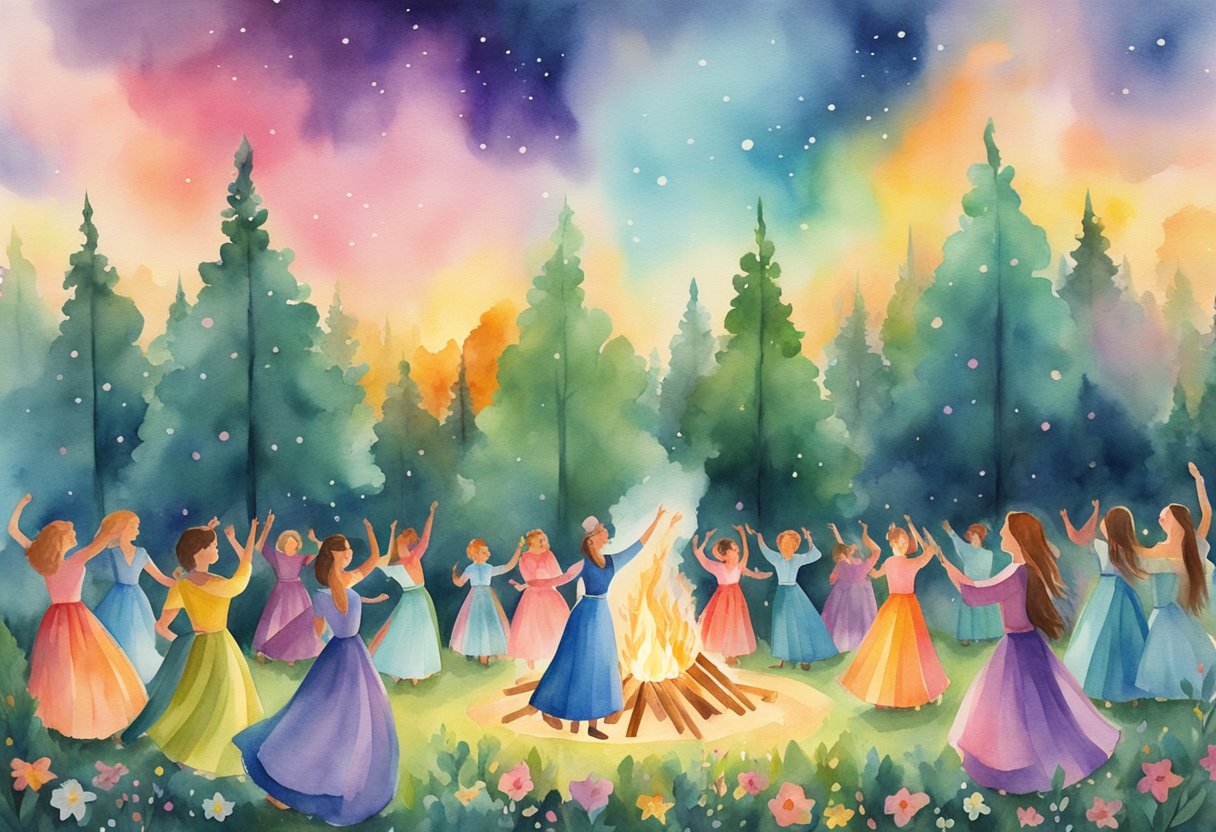
As Beltane ignites the fire of life, individuals often partake in personal rituals to mirror the revitalizing energy of the season. They may light bonfires, emblems of the sun, to symbolize the awakening of their own inner light and passion. Meditation and visualization are key practices for self-reflection and personal growth during this time. Practitioners welcome abundance by setting intentions for what they wish to manifest, grounding themselves in the energy that flows robustly through nature.
- Meditation Practices:
- Candle meditation for focusing intentions
- Guided visualizations to connect with seasonal energies
- Setting Intentions:
- Writing down aspirations and wishes
- Creating a Beltane altar with symbols of fertility and prosperity
Connection with Nature
The sacred union between the goddess and the god is celebrated during Beltane, mirroring the fertility that is evident all around in bursting blooms and verdant growth. Nature’s fullness is embraced wholeheartedly. Followers frequently choose this time to walk in lush forests or gardens, engaging with the land to form a deep, reciprocal bond. Rituals often include the collection of morning dew, believed to hold the essence of life, and the creation of May baskets filled with spring flowers to acknowledge the blossoming beauty. Such traditions allow for a harmonious flow with the abundant energy of the season.
- Nature Rituals:
- Collecting of morning dew to use in magic practices
- Creating floral garlands or crowns to wear as symbols of connection to the natural world
Practical Ways to Celebrate
Creating a Beltane Altar
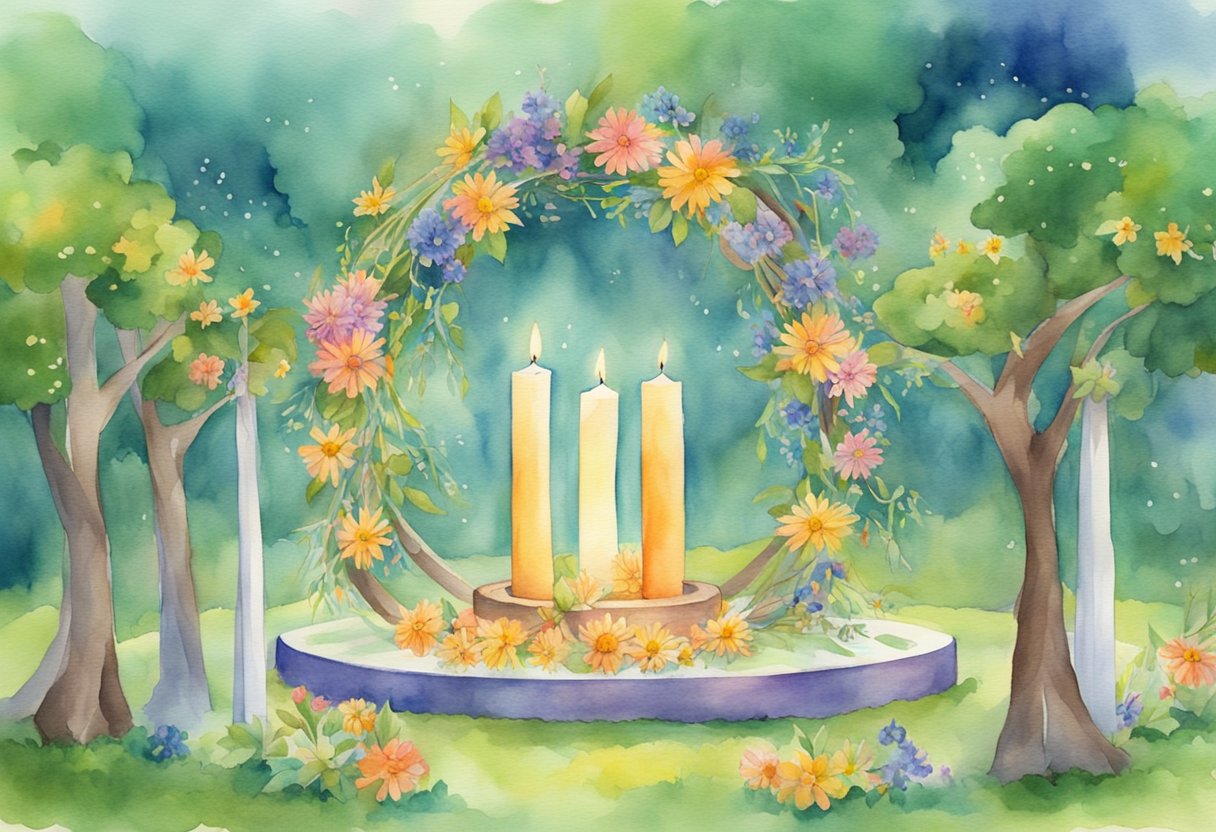
An altar serves as a focal point for the Beltane celebration, reflecting the festival’s essence through symbols and elements. To decorate an altar, they might include:
- Candles: symbolizing the fire of Beltane and the return of light.
- Crystals: such as rose quartz or emerald, to amplify love and harmony.
- Flowers: especially traditional Beltane blooms like marigold or hawthorn.
- Herbs: like mint or basil, to purify the space and invite positivity.
One may also choose to sprinkle petals or position vibrant fruits as symbols of abundance. Aligning the altar with the cardinal points can further ground the celebrant in the energy of the season.
Home and Hearth Customs
Beltane traditions extend into the very heart of the home, reminding inhabitants of the interconnection between their private sanctuary and nature. They might:
- Cleanse and purify their living space to welcome the fresh energies of summer.
- Hang garlands or place bouquets of flowers and greenery to honor the life in bloom.
- Infuse their homes with the scent of Beltane herbs by creating homemade potpourri or incense.
By intertwining herbs, flowers, and the joyful palette of spring’s fruits and vegetables within their decor, practitioners seamlessly blend the spirit of Beltane with their everyday surroundings.
Integrating Beltane into Daily Life
Everyday Rituals for Fertility and Growth
Morning Affirmations: As the sun peeks over the horizon, one might whisper affirmations of personal growth and fertility. They could stand barefoot on the earth, allowing the morning dew to anoint their feet, symbolizing nourishment and the seeds of their intentions taking root.
- Planting Seeds: Metaphorically or literally, planting can be an act of hope and intention. One could plant herbs or flowers that are associated with Beltane, such as rose for love or basil for fertility, nurturing them daily as a physical representation of their own growth.
Personal and Household Traditions
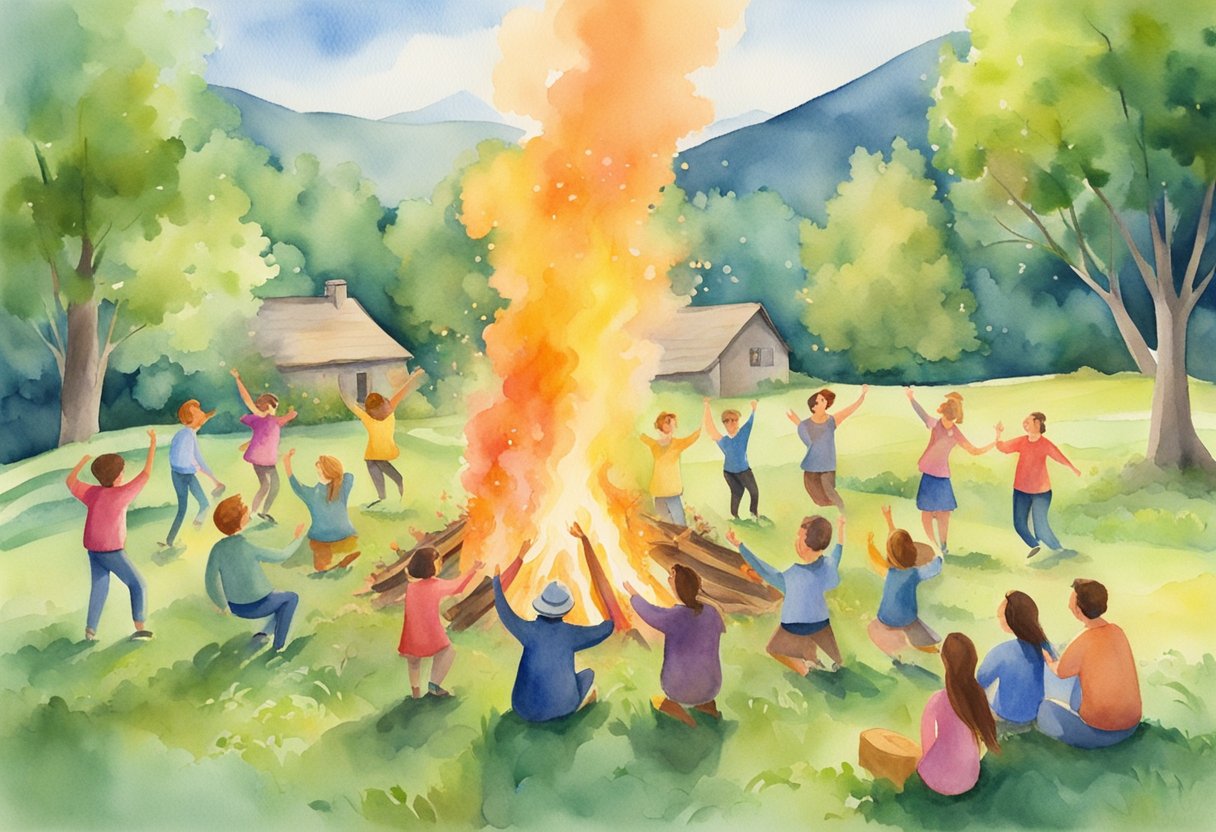
Beltane Hearth Fire: In the spirit of traditional Beltane fires, one could light candles to invite the warm glow of passion and vitality into their home. Choosing candles of red for love, green for growth, or white for purity can add a symbolic touch to the flame’s dance.
- Family Feast: Preparing a meal with loved ones serves as a powerful tradition to honor Beltane. Foods like dairy, honey, and oats, which represent abundance and comfort, can be shared in a feast to strengthen family bonds and celebrate life’s sweetness.
In weaving these practices into the fabric of their daily lives, individuals and their families can embrace the spirit of Beltane throughout the year.
Magical Aspects of Beltane
In the heart of spring emerges Beltane, a celebration woven with strands of potent magic. Wiccans recognize this sabbat as a time when the veil between worlds is thin, creating a passage for profound spiritual connection. It is a moment when they honor the union of the God and Goddess, a divine matrimony symbolizing fertility and the full burst of life.
They say the fires of Beltane burn brighter than any star, representing the Bright Fire from which the holiday takes its name. Bonfires become a centerpiece for rituals, their flames believed to hold protective properties. It is customary for attendees to leap over the fire, inviting purification and driving away negativity.
On this enchanting occasion, maypoles are more than mere decorations. Adorned with ribbons and flowers, they stand as beacons of the season’s fertility. Participants engage in a dance, weaving the ribbons around the pole in a physical manifestation of the interplay between the masculine and feminine energies.
Altars are set with great intention, graced with symbols of sexuality, vitality, and abundance. Typical objects include:
- Brightly colored candles to symbolize fire
- Flowers representing the bounty of earth
- Symbols of fertility such as seeds or eggs
Wiccans channel Beltane’s power to cast spells for fertility, love, and prosperity. They embrace the transformative energy of the season, using the sprouting seeds of intentions to actualize their desires. As they weave their rituals under the watchful eye of the waxing sun, they usher in a period of growth, abundance, and boundless potential.
Food and Recipes
Traditional Beltane Dishes
One cannot think of Beltane without the sweet allure of honey winding its way into various dishes. Honey cakes are of particular importance, embodying the essence of life’s sweetness and the abundance of spring. Oatcakes and bannocks also hold their place of honor in Beltane feasts, serving as the earthy base to which the celebration’s flavors are anchored. Fresh fruits such as strawberries, a first blush of the season, alongside tender asparagus spears, make their presence known on the Beltane table, reflecting the festival’s connection to growth and vitality.
- Dairy: In juxtaposition with the more solid grains, dairy foods, soft and rich, are used in abundance. Creamy cheeses and butters are often incorporated into recipes or served alongside other dishes.
- Wine and Mead: No spiritual gathering would be complete without the addition of fermented libations. Mead, particularly, is a drink steeped in pagan tradition, with its honey base embodying Beltane’s sweetness and joy.
Modern Twists on Ancient Favorites
The warmth of old traditions mingles with the zest of modern creativity, bringing forth a symphony of flavors designed to honour the old ways while embracing the new.
- Herbed Oatcakes: Contemporary pagan kitchens may infuse their oatcakes with fresh, seasonal herbs, bringing a burst of flavor and color to this staple item.
- Strawberry Wine: While traditional wines hold their ground, today’s Beltane may see a glass or two of homemade strawberry wine, tying in the fertility theme with the fruit’s symbolization of love and passion.
The foods prepared for Beltane are more than mere sustenance; they are threads of ancient practice and vibrant, current-day celebration, stitched together to create a feast that feeds both body and spirit.
The Global Impact of Beltane

Celebrations Across Cultures
In the Northern Hemisphere, Beltane marks the vibrant return of vitality after winter’s slumber. Ireland is the heartland of Beltane, where its roots run deep into the soil of ancient Celtic traditions. Here, communities light traditional fires and dance around maypoles, intertwining ribbons as a symbol of life’s entwining paths. Across Europe, these flames of Beltane beckon the season of growth, with echoes of this festival found in various guises, all celebrating the power of the sun and earth’s fertility.
Venturing beyond, the influence of Beltane glimmers globally; its essence is woven into the cultural fabric of places where the Gaelic diaspora settled. They carry with them the ‘Bright Fire’ that enlightens and enriches multifaceted cultural landscapes.
Beltane in the Southern Hemisphere
While Beltane ignites festivities in May in the Northern Hemisphere, the Southern Hemisphere observes this spirited day on November 1st, harmonizing with their transition from spring to summer. The seasonal shift prompts a mirrored celebration where the spirit of Beltane thrives under the Southern Cross. Even as they honor the same core themes of passion, fertility, and growth, traditions are adapted to the local flora and seasonal rhythms, underscoring the adaptability and global resonance of Beltane.
Southern celebrants exchange the European Beltane’s maypole and spring flowers for local customs that embrace their unique environmental context, showcasing Beltane’s ability to blossom in diverse climates and societies. The global footprint of Beltane is a testament to the human spirit’s connection to the cycles of nature, regardless of hemisphere or culture.
Additional Resources
Books and Online Material
Books:
She turns to a library of books to quench her thirst for wisdom. A seeker of Beltane’s mysteries might first look to titles such as “Wicca: A Guide for the Solitary Practitioner” by Scott Cunningham for foundational knowledge. For those wanting to explore the folklore and historical practices, “The Spiral Dance” by Starhawk offers insights into the celebration and its significance.
Online Material:
The digital realm blooms with knowledge, like a field of flowers under the Beltane sun. Online articles and e-books provide ample material for understanding Beltane’s customs and rituals. Websites like Wicca Academy and Wicca Living feature articles detailing celebration ideas, while downloadable PDFs and online communities on platforms such as Witchvox.com offer practical advice and shared experiences from practitioners around the world.
Community and Events
Community:
In the warm embrace of the community, the spirit of Beltane flourishes. Local Wiccan covens and Pagan meetups provide spaces for those who wish to celebrate Beltane with others. Engaging with local spiritual shops or online social media groups can also lead to connections with the wider Wiccan community.
Events:
Like the fires of Beltane, events ignite the passion of togetherness. Public Sabbat celebrations and festivals are often held by Pagan organizations, giving one the chance to participate in ceremonies and enjoy the company of fellow followers of the path. The Witch’s Voice (witchvox.com) provides listings for such events, ensuring that one does not have to observe the turning of the Wheel of the Year in solitude
